Dew Point Temperature: Definition and Challenges
What is dew point temperature?
The dew point temperature is the temperature at which the air becomes saturated with water vapor and begins to produce condensation (see what is condensation for the phenomenon itself).
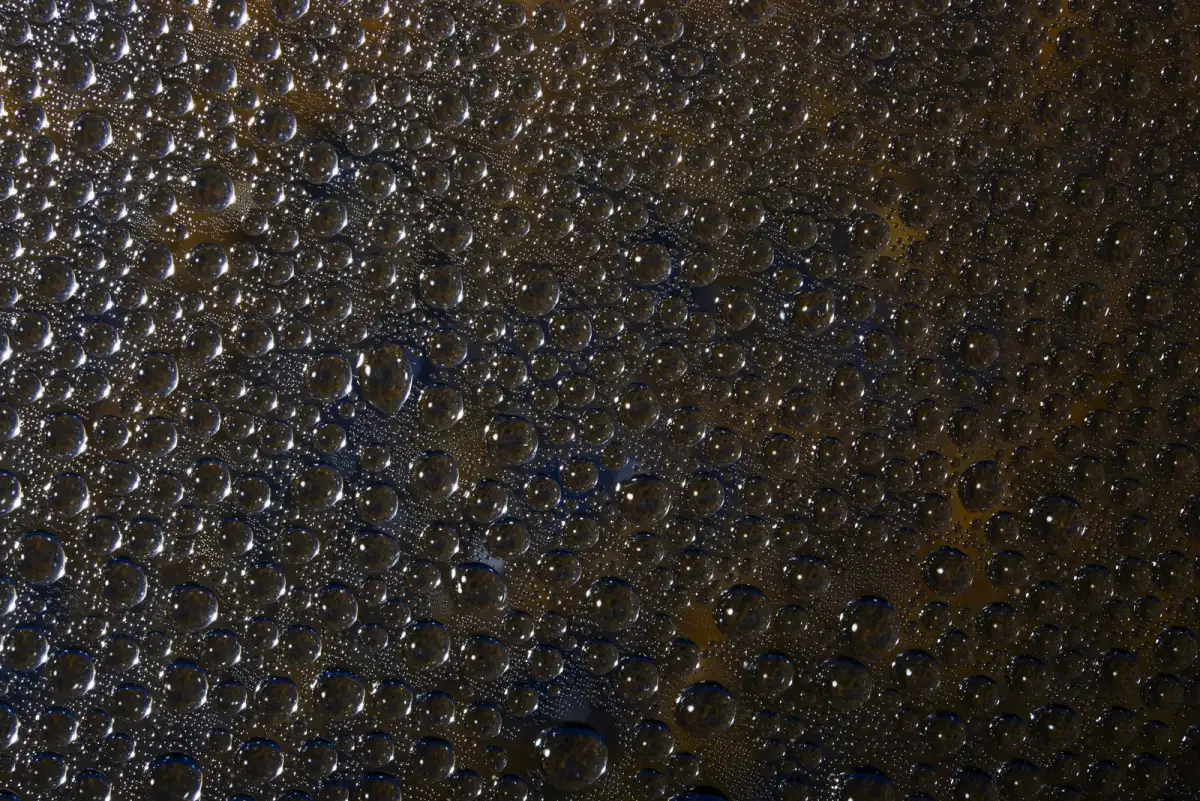
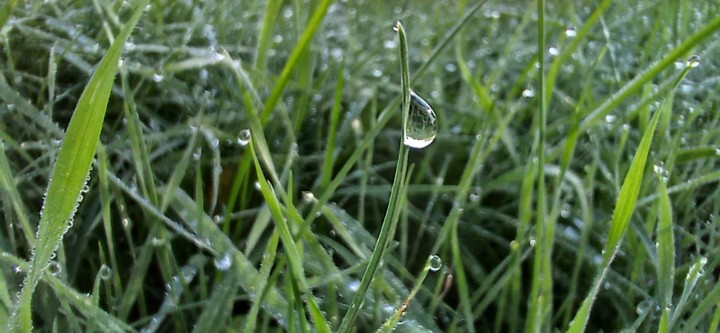
At this precise moment, relative humidity reaches 100%, and the water vapor present in the air transforms into droplets. This phenomenon causes morning dew or the appearance of humidity on cold surfaces.
How does dew form?
Dew typically develops as air cools overnight.
At dawn, surfaces (plants, roofs, outdoor objects) are often colder than the surrounding air.
When the air temperature drops to the dew point, the water it contains condenses — this is the appearance of dew.
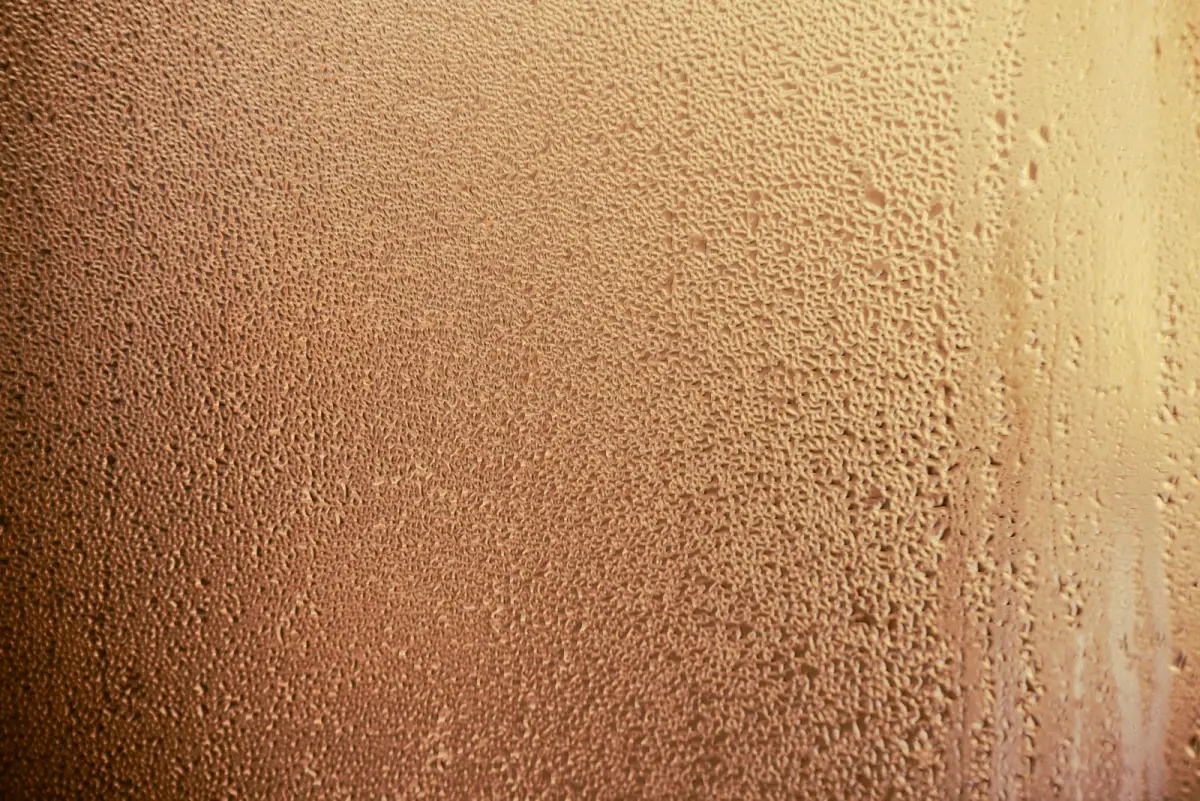
The same principle explains condensation inside homes: if a wall (window, tile) is colder than the dew point temperature, water deposits on it.
How do you calculate dew point temperature? (Simplified version)
In practice, the calculation relies on scientific equations that link:
- The quantity of water vapor present in the air
- The ambient temperature
- The saturated vapor pressure of water
Rather than detailing the formulas, remember this:
If the air contains a certain quantity of water vapor, we can determine at what temperature this water will condense by comparing this value to water saturation data.
Simple example
In a room at 20 degrees C and 50% relative humidity:
- The air contains a moderate quantity of water vapor
- By comparing this quantity to water saturation values, we find that the dew point temperature is approximately 9.3 degrees C (a value confirmed by the Magnus-Tetens approximation linking temperature, relative humidity and dew point)
This means that:
If a surface in the room drops to 9.3 degrees C, condensation will form on it.
This is exactly what happens on cold walls, winter glazing, or thermal bridges.
Why is the dew point important?
Understanding this temperature allows you to:
- Anticipate condensation risks in a room
- Prevent humidity damage on surfaces
- Avoid wall degradation
- Better manage heating
- Optimize ventilation
As soon as a surface is colder than the dew point, condensation appears.
Stabilize humidity to limit condensation
Interior condensation depends on two factors:
- Surface temperature
- The quantity of water vapor in the air
By reducing ambient humidity, you decrease the likelihood that the air reaches its dew point.
Air Sponge: a passive solution for limiting excess humidity
Air Sponge relies on a patented mesoporous material capable of adsorbing humidity when the level exceeds about 60%, then releasing it naturally when the air dries.
Its advantages in a dew point context:
- It stabilizes ambient humidity, reducing the risk of reaching 100% Relative Humidity (RH)
- It works without electricity
- It does not permanently saturate
- Zero waste unlike silica gel sachets or salt tablets
- Flexible installation (adhesive, magnetic, tape), ideal for condensation-prone areas
So Sponge solution
Putting adsorption physics to work for humidity control
So Sponge's mesoporous SRD alumina captures water vapor through capillary condensation above a humidity threshold — exactly the physics described above. The result: a sticker or ribbon that regulates the internal humidity of an IP enclosure without energy, without consumables, and that regenerates on its own.
Sources
- M. G. Lawrence, The Relationship between Relative Humidity and the Dewpoint Temperature in Moist Air, Bulletin of the American Meteorological Society, 2005 — reference relationship between relative humidity and dew point.
- Dew point calculation (Magnus-Tetens formula), Oregon State University — equations and worked example.