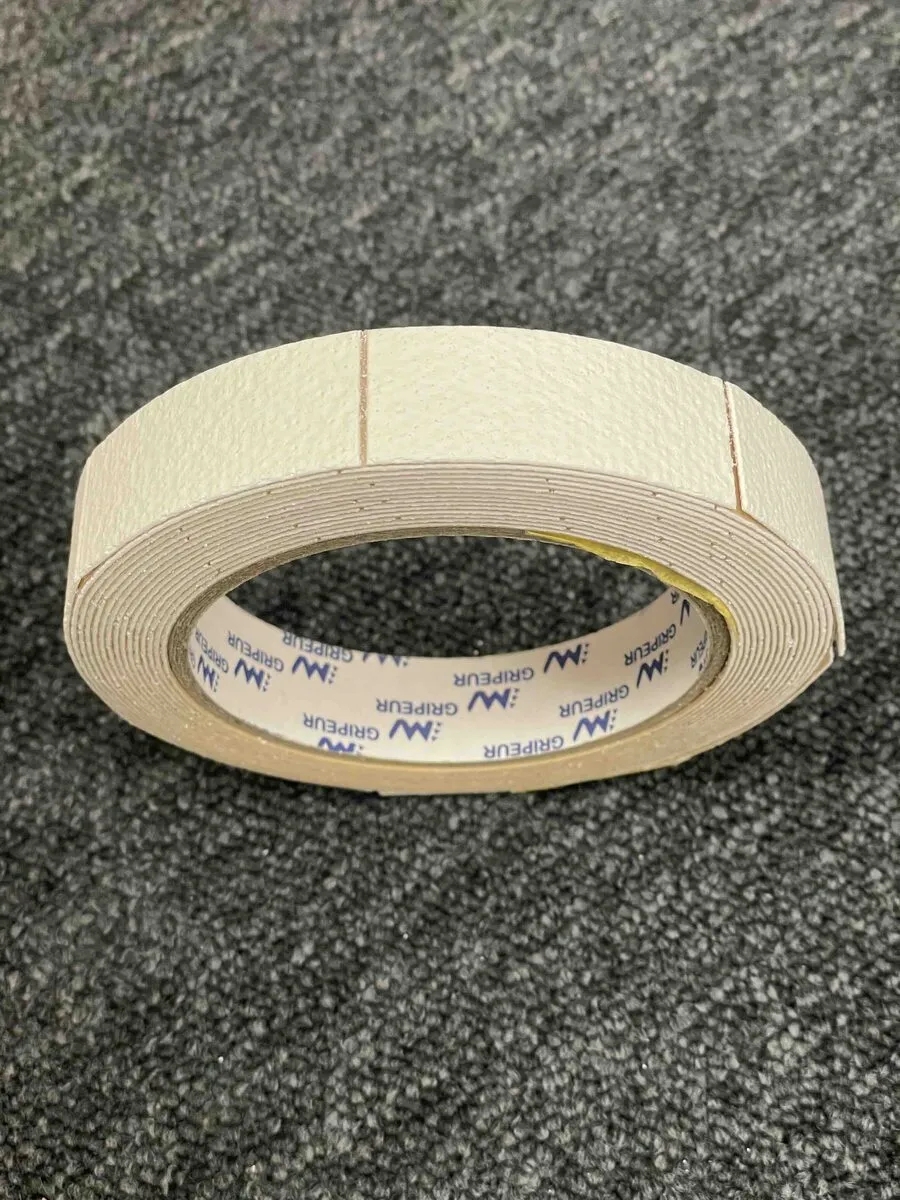
AirSponge AS-B is a self-adhesive anti-condensation sticker for electronic enclosures, based on the self-regenerating SRD desiccant.
50 × 20 mm, about one sticker per litre of enclosure, bonded to an inner wall. 8x the useful capacity of silica gel in the 60–90% RH risk zone, no energy, no maintenance, unlimited lifespan.
Zero energy
Self-regenerating
8x risk zone
REACH compliant
✓ Performance validated in 5 sectors — test reports from reference players, 85-day field trial
The AS-B sticker is designed for small and medium volume enclosures (up to 20 L). For larger volumes (cabinets, containers, shelters), see the AS-C format.
Comparative test run by the manufacturer on autonomous mobile machines: one camera fitted with a 10 cm² sticker, one identical control camera. Fogging on the control, none on the equipped one. The fleet is being fitted in series.
A 0.6 L IP67 camera enclosure in outdoor monitoring, with no on-site intervention possible. 48 h in a climate chamber at −1/+3 °C and 90–94 % RH: inner glass and optics completely dry. The customer was evaluating heated glass in parallel and chose the passive solution, at 0 W.
ApplicationIP65+ camera and electronics enclosures
Validation
✓ Validated by the engineering team
IP65+ camera and electronics enclosures on autonomous agricultural machines, in two formats (~3 L and ~50–60 L). Silica gel and pressure compensators were already fitted and were not sufficient. With the compensator still in place, the sticker draws the moisture out.
ApplicationIP54 instruments, service life > 10 years
Validation
✓ Validated by the engineering team
IP54 instruments whose internal condensation must be controlled for over ten years. The manufacturer ran its own thermal cycling, with and without the sticker, under controlled humidity and without us. On the strength of its measurements, it started listing the product for series production.
Large sealed volumes housing critical electronics, with fire and smoke qualification required on any added material. No condensation on the equipped side while the control box exceeds 100 % RH, performance validated at both 160 and 300 cm², and smoke and flammability tests passed at an independent laboratory.
Sealed connected water-analysis sensors, manufactured in volume. Evaluation carried out in our laboratory on the customer’s actual housings, results in line with their expectations, then moved to series integration on the production line in pre-cut reel format.
IP65 and higher certified enclosures protect electronic components from liquid water and dust, but they are not airtight against water vapor. Temperature variations between day and night create a thermal breathing phenomenon: hot air escapes during the day, then humid outside air enters at night. Over successive cycles, internal relative humidity gradually increases until reaching the dew point, causing condensation on cold surfaces — printed circuit boards, connectors, sensors. This condensation leads to corrosion, leakage currents, battery discharge and fungal growth. Conventional solutions such as pressure equalization vents do not control internal humidity; silica gel saturates within a few months and must be replaced. The AS-B sticker solves this problem by adsorbing excess water vapor and regenerating spontaneously, without intervention.
Technical data
What are the AS-B Sticker technical specifications?
×8
vs silica gel — risk zone (60-90% RH)
60%
RH threshold
IP65+
compatibility
0 W
power consumption
∞
lifespan
REACH
Material
Mesoporous alumina (SRD)
Principle
Capillary condensation — adsorption/desorption
Adsorption capacity
8x useful capacity vs standard silica gel (60-90% RH)
The AS-B sticker is an anti-condensation adhesive tape based on mesoporous SRD (Self-Regenerating Desiccant) material patented by So Sponge. Designed for IP65 and higher enclosures, it adsorbs water vapor through capillary condensation when relative humidity exceeds approximately 60%, then spontaneously regenerates at room temperature when the air dries out. Unlike silica gel, it offers 8 times greater useful adsorption capacity in the risk zone (60-90% RH), requires no replacement and operates without energy or maintenance.
How does the AS-B compare to silica gel?
The AS-B offers 8 times greater useful adsorption capacity than silica gel in the risk zone (60-90% RH). Unlike silica gel which saturates and must be replaced or regenerated by heating, the SRD material in the AS-B spontaneously regenerates at room temperature. Its lifespan is unlimited, it produces no waste and requires no maintenance.
How does the AS-B compare to pressure equalization vents?
Pressure equalization vents stabilize internal pressure but do not control humidity inside the enclosure. A comparative test in a climate chamber demonstrated that the AS-B completely eliminates condensation in IP66 enclosures, where a pressure equalization vent fails. The AS-B actively adsorbs internal water vapor.
In which enclosures can the AS-B be installed?
The AS-B sticker is designed for all IP65 and higher sealed enclosures: outdoor IoT enclosures, electrical cabinets, junction boxes, telecommunications equipment, EV charging stations, surveillance cameras and any electronic device subject to temperature and humidity variations. It sticks directly onto an internal wall of the enclosure.
What is the lifespan of the AS-B sticker?
The AS-B lifespan is unlimited. Thanks to the spontaneous regeneration of the SRD material, the sticker never saturates and maintains its effectiveness indefinitely. Real-world tests have confirmed that no performance degradation has been observed after prolonged continuous use.
Is AS-B compatible with a tropicalized PCB (acrylic or silicone conformal coating, magic gel)?
Yes. The AS-B sticker coexists without interaction with a tropicalized PCB inside the same enclosure. Solvents that outgas from the conformal coating (acrylic, silicone, encapsulating gel) during the first days after application are organic molecules in gaseous form — they do not saturate the SRD. The mesoporous material has a strong selective affinity for the H₂O molecule via capillary condensation, and remains indifferent to other molecules present at low concentration in the enclosure air.
Can the sticker be degraded by dust, splashes or residues inside the enclosure?
The SRD has a mesoporous structure with pores in the order of ten nanometers. No solid particles (dust, production residues, abrasive particles) can physically penetrate these pores and degrade adsorption performance. The only possible degradation case would be the entire adsorbing surface being covered by a continuous impermeable liquid film (e.g. sprayed oil or sprayed varnish onto the sticker), which would block water molecule access. Under normal use inside a sealed IP65+ enclosure, this scenario does not occur.
How should AS-B stickers be stored before integration in production?
Standard ambient workshop conditions: in original packaging, away from direct water splash and high humidity (RH < 80%). No need for a dry room or specific controlled conditioning. During application on the assembly line, the production environment must also be in normal conditions (typical ambient temperature and humidity) to avoid premature saturation of the sticker before the enclosure is closed.
Is the AS-B sticker safe to handle by production operators?
Yes, no specific PPE required. The active SRD material is a mineral product (mesoporous aluminum oxide), chemically neutral, non-toxic to humans or the environment. The substrate and pre-applied adhesive use standard polymers (polyethylene, cellulose-type) without hazardous chemicals. Direct bare-hand handling is possible during integration on the assembly line.
Where is the AS-B sticker manufactured?
100% French production. Mesoporous materials are sourced in France, coating is performed by our French industrial partner specialized in deposition processes for several years, and the So Sponge team is based in Lyon. The SRD technology stems from research conducted at Université Claude Bernard Lyon 1 and IFP Énergies Nouvelles, licensed via Pulsalys (the Lyon Saint-Étienne tech transfer office).
How can I test AS-B on my own enclosures in a representative way?
Common pitfall in evaluation protocols: a test on a brand-new enclosure can lead to a misleading conclusion, since pristine seals are tight enough that no condensation appears over a few cycles. Yet field service returns related to condensation typically arise after 1 to 2 years of seal aging through thermal cycling. Two recommended approaches to make a test on a new product representative: (a) add a small amount of liquid water inside before closing, to simulate an aged enclosure that has already breathed; (b) instrument with an internal RH+T sensor and cycle in a climate chamber over several weeks to reveal cumulative drift. Our team can help define the protocol.
Is the product UL qualified?
AirSponge is not yet UL Recognized at this stage. However, we can provide material data sheets, test results, and consider a UL submission if volume justifies it.
What is the environmental impact of the AS-B sticker?
The AS-B is a zero-consumable, zero-collection-logistics and zero-replacement solution. Unlike silica gel, which saturates and generates dozens of grams of waste per enclosure per year, the AS-B has a service life aligned with that of the equipment. A direct lever for your eco-design and ESG objectives. Learn more about our sustainability approach →