Humidity control: Air Sponge test with CAPSA
Context of experimentation in containers
After promising results in a climate chamber, So Sponge conducted a field experiment in partnership with CAPSA, a specialist in the design, transformation and fitting of maritime containers to create modular and durable spaces for professional or event use.
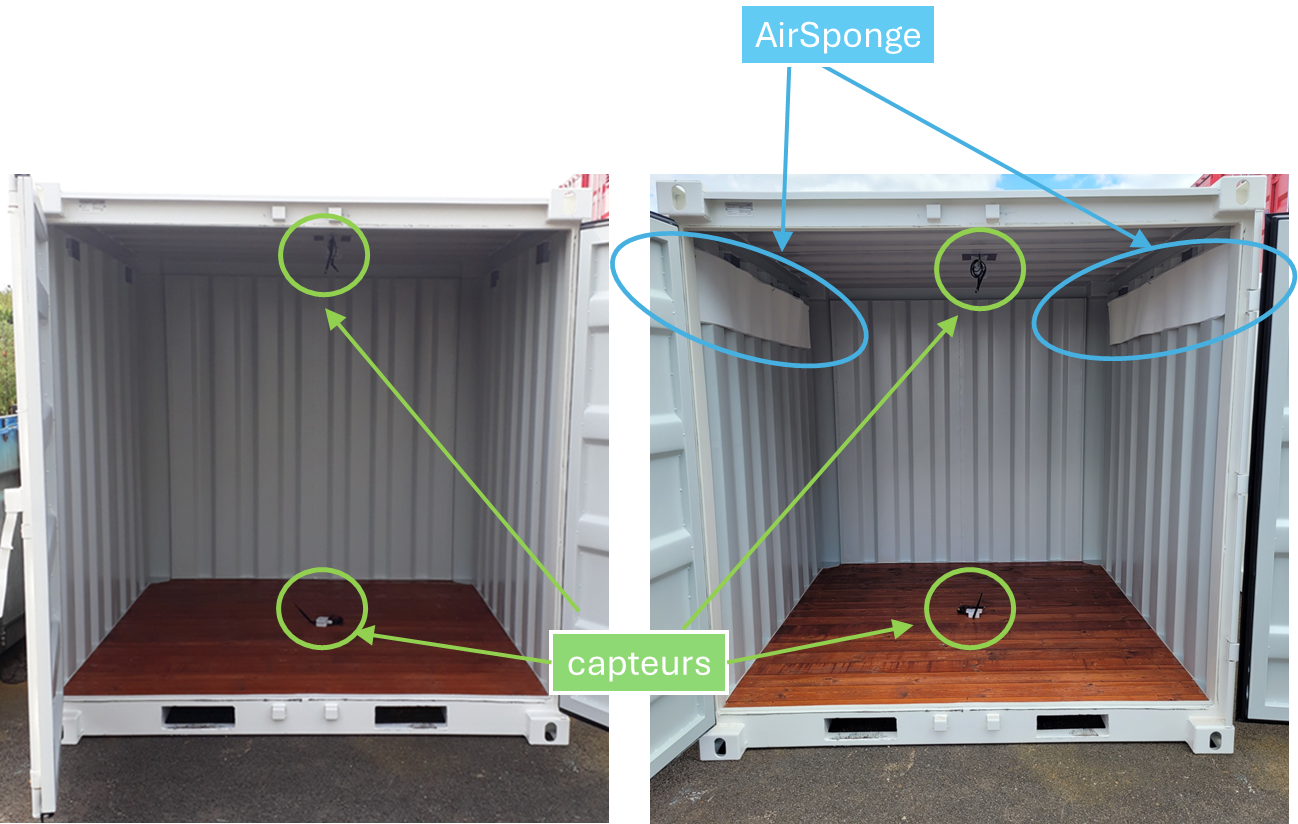
We used two uninsulated 10-foot containers to test the effectiveness of the Air Sponge moisture absorbent tape.
Test protocol for measuring humidity
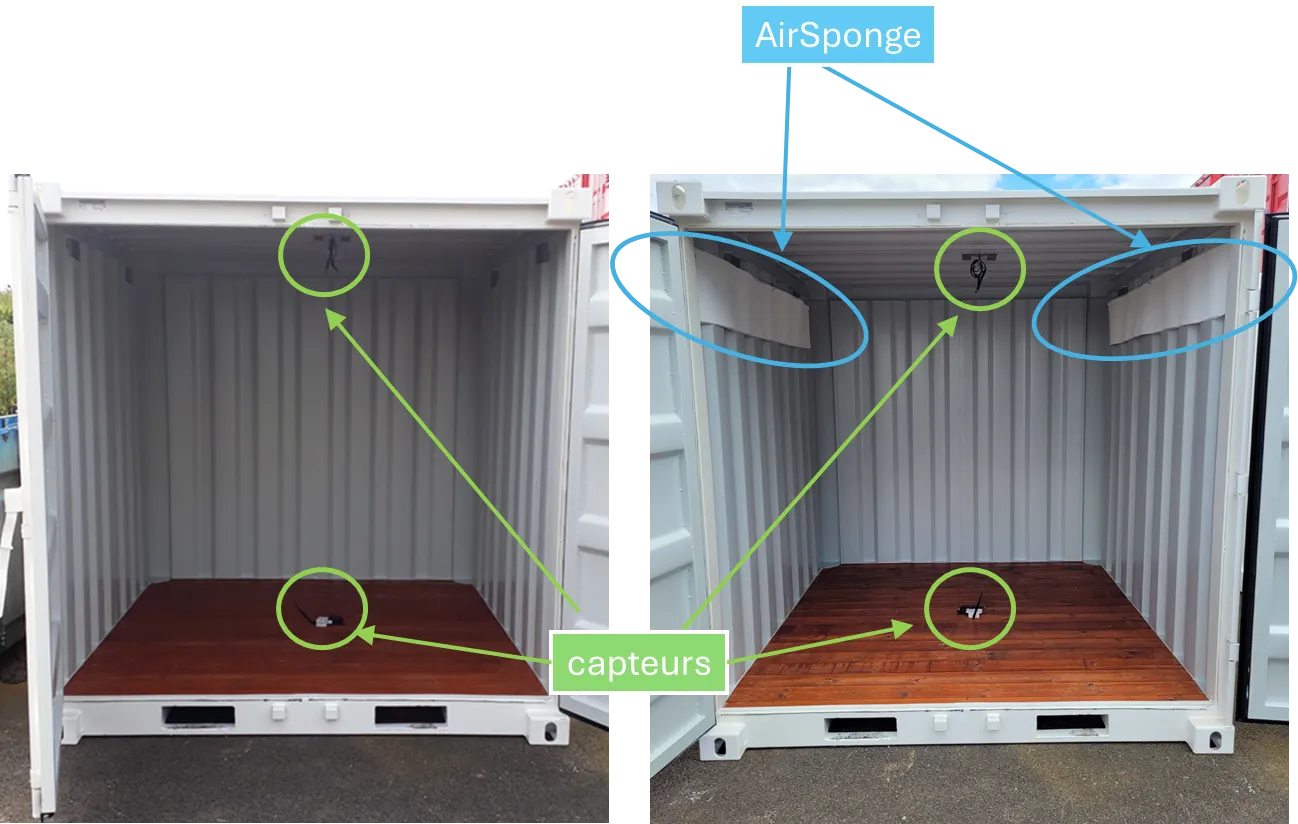
1. Selecting containers and installing sensors
Both containers received professional humidity and temperature sensors for rigorous monitoring.
2. Preliminary phase
For 3 days, measurements tracked temperature and relative humidity in empty containers to ensure identical baseline conditions.
3. Adding the Air Sponge ribbon
After validation, dimensioned ribbon was installed in one container. Surveys continued for several months to observe effects on ambient humidity.
Results: effectiveness of the tape against condensation
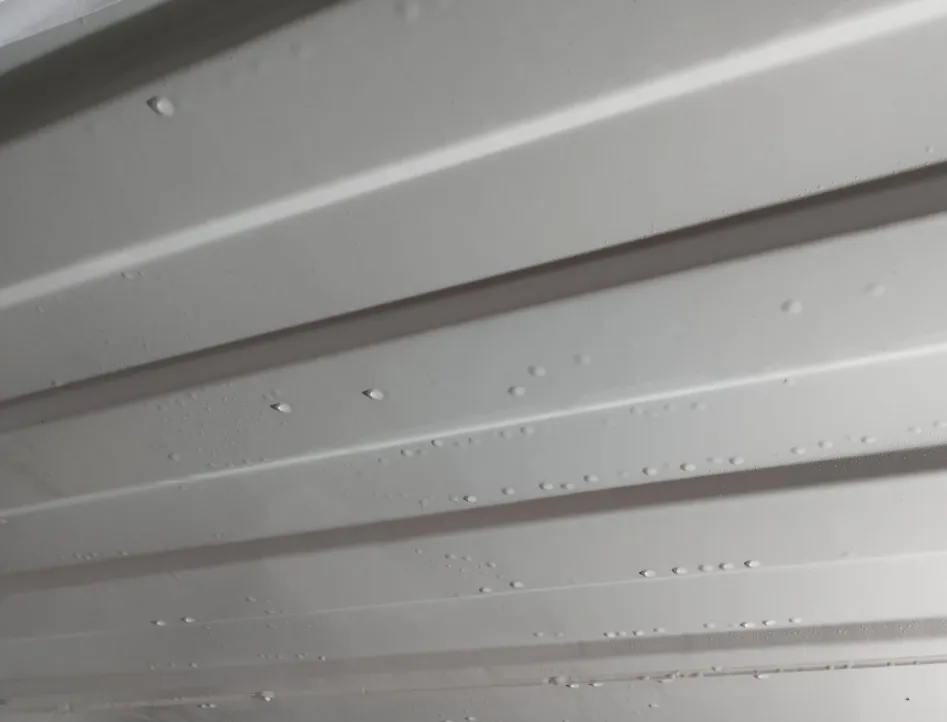
A common occurrence: container rain
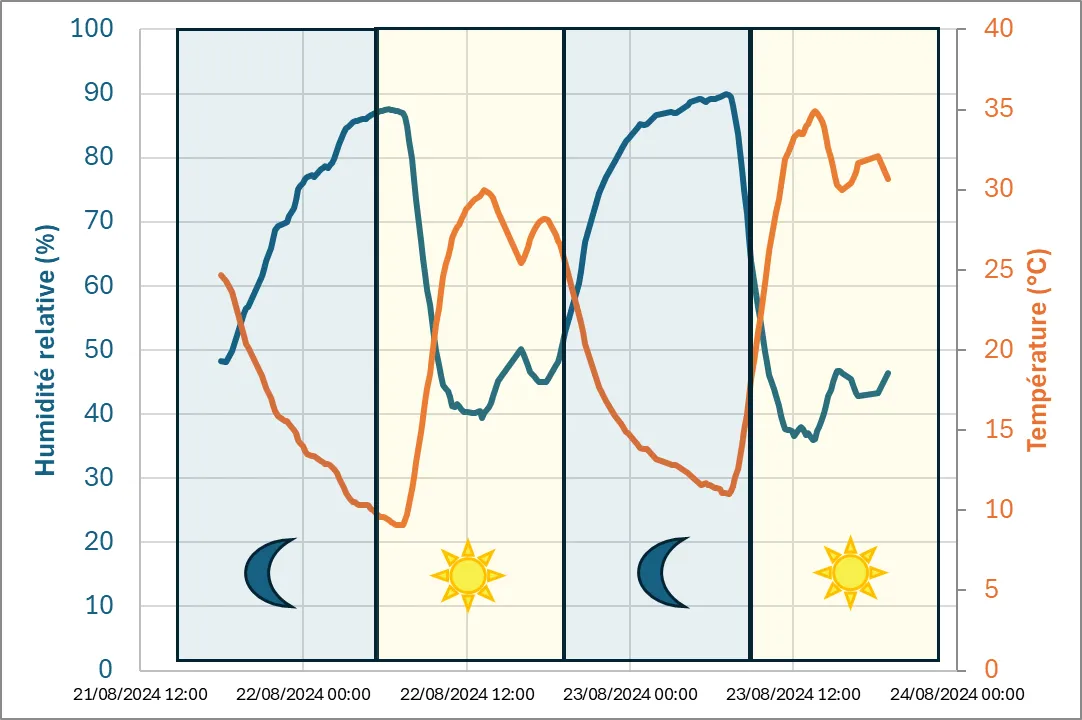
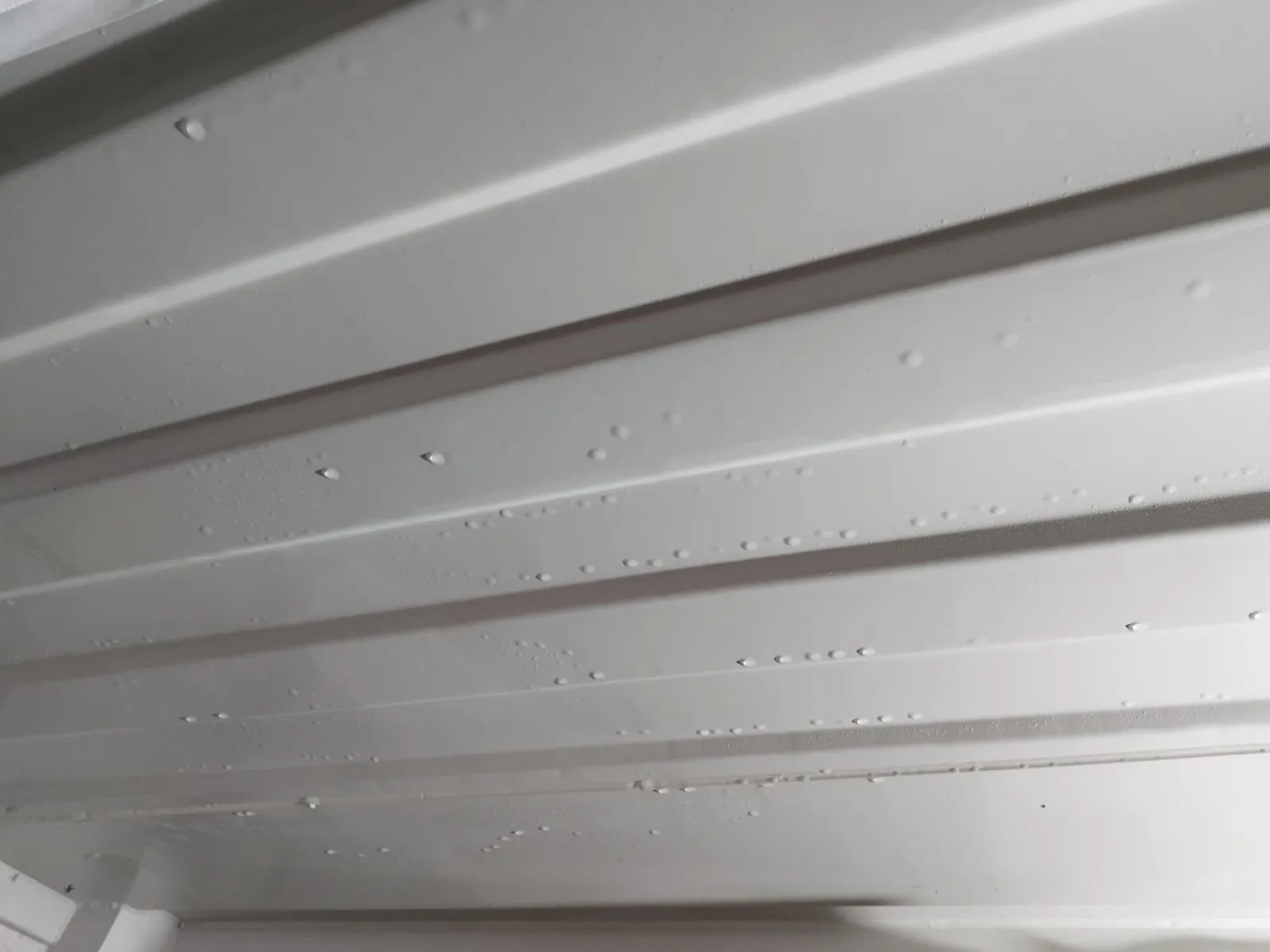
The readings revealed typical patterns:
- During the day: temperature rises, humidity decreases
- At night: temperature drops and humidity increases strongly
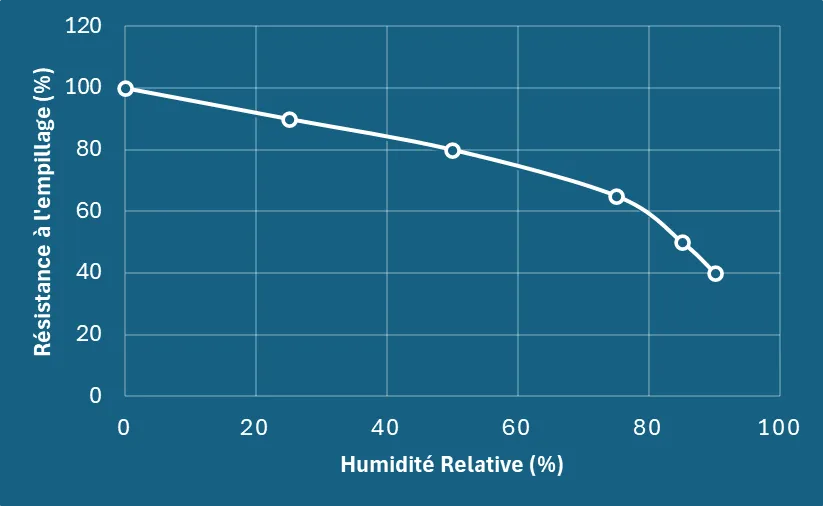
When humidity exceeds 90%, condensation risk emerges, a phenomenon called “container rain.”
Air Sponge: a durable absorbent fabric
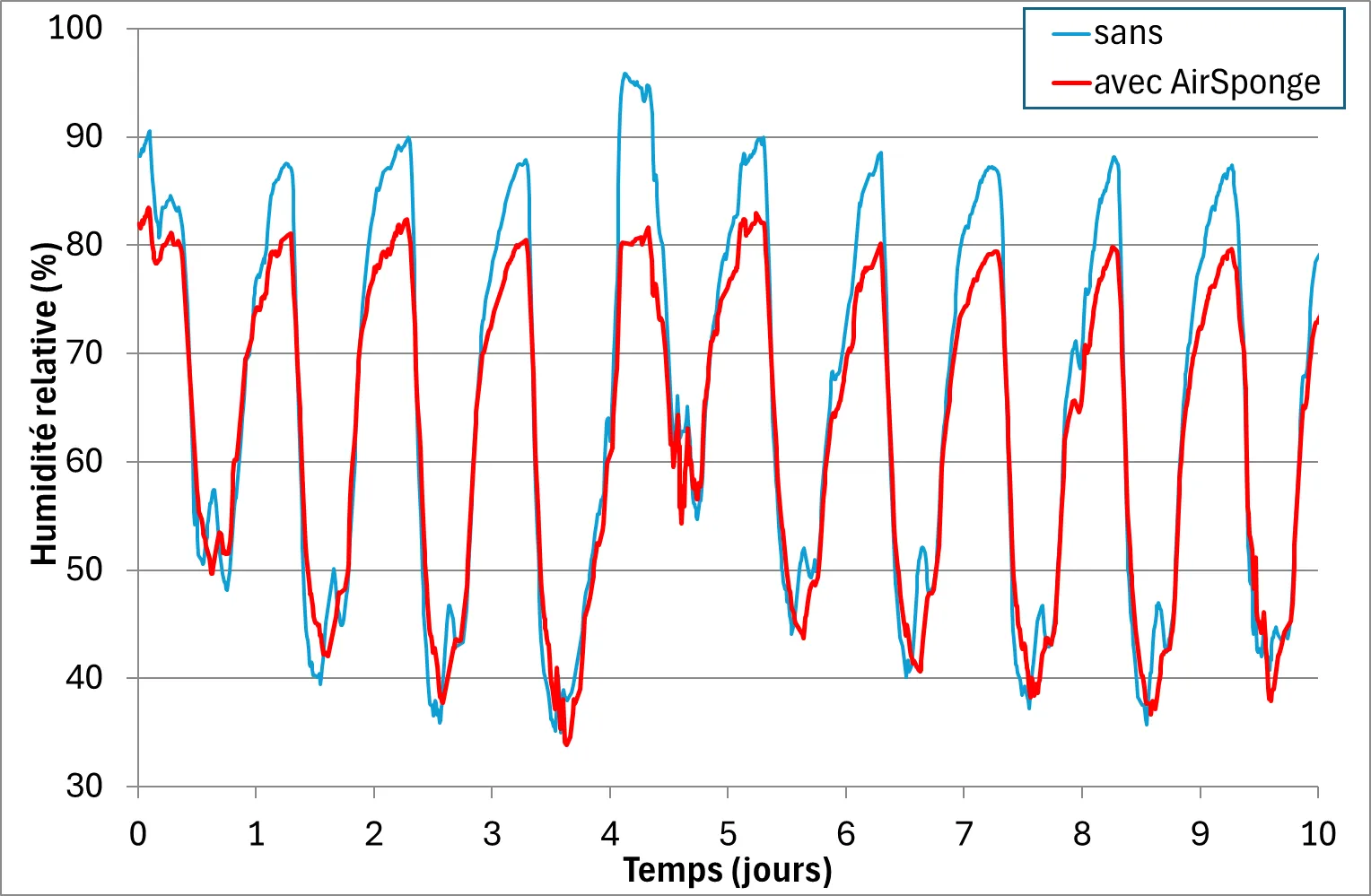
The comparative humidity curve demonstrated that Air Sponge fabric maintains humidity levels below 80%, protecting containers from condensation. The tissue regenerates spontaneously during daylight hours, maintaining performance. Testing showed no deterioration after nearly one year of continuous use.
Conclusion and thanks

This humidity control test validated Air Sponge effectiveness in real-world conditions. Thanks to CAPSA for their partnership and container provision.