Relative humidity formula: how to calculate RH
Relative humidity (RH) is the amount of water vapor actually in the air, expressed as a percentage of the maximum the air could hold at the same temperature. RH = (partial vapor pressure ÷ saturation vapor pressure) × 100. At 100 % RH, air is saturated and what is condensation begins.
Relative humidity definition
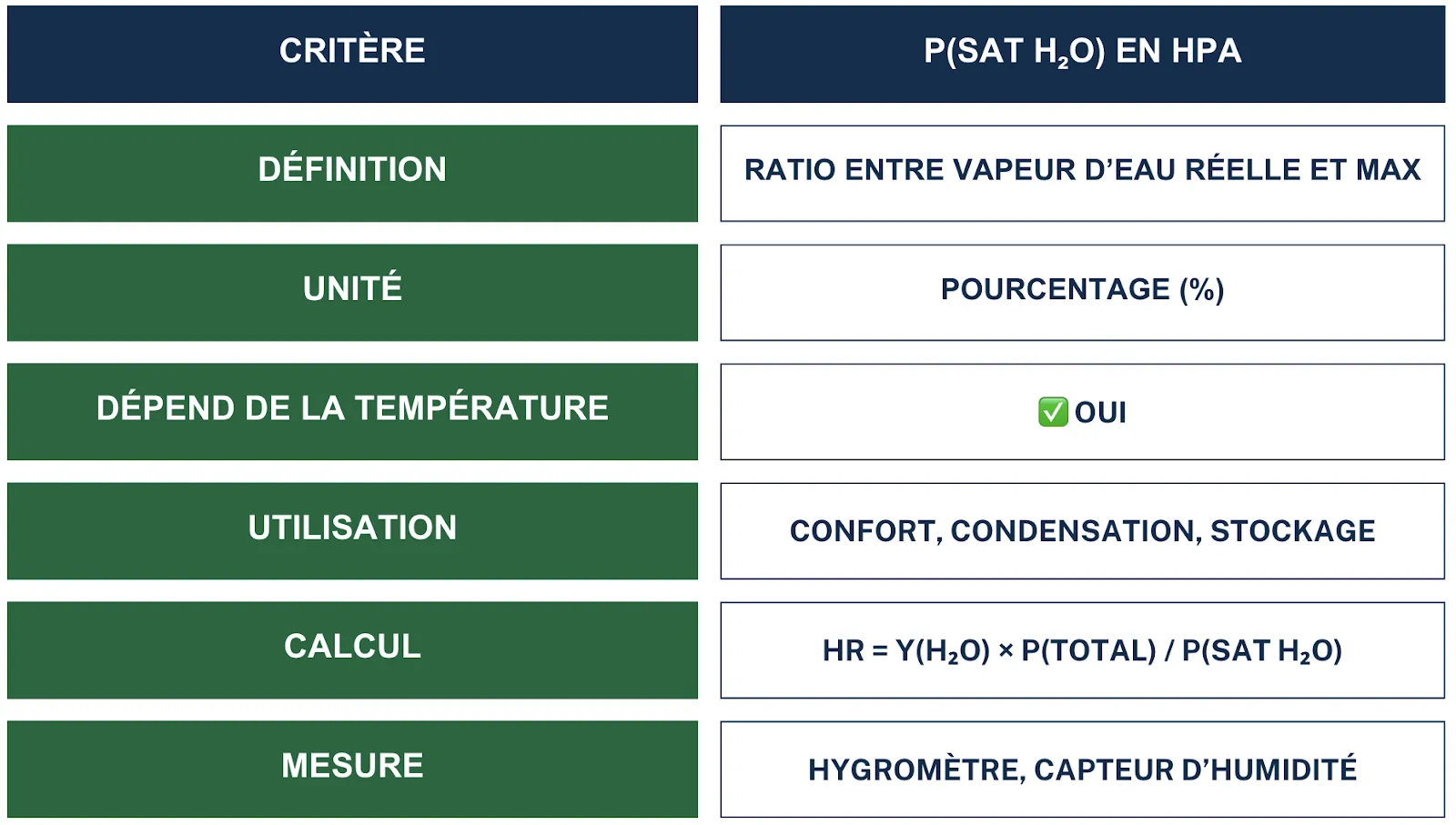
Relative humidity (RH) represents the ratio, expressed as a percentage, between the current quantity of water vapor present in the air and the maximum quantity that this air can contain at a given temperature before condensation.
In other words:
- RH = 0%: perfectly dry air
- RH = 100%: saturation, water starts to condense
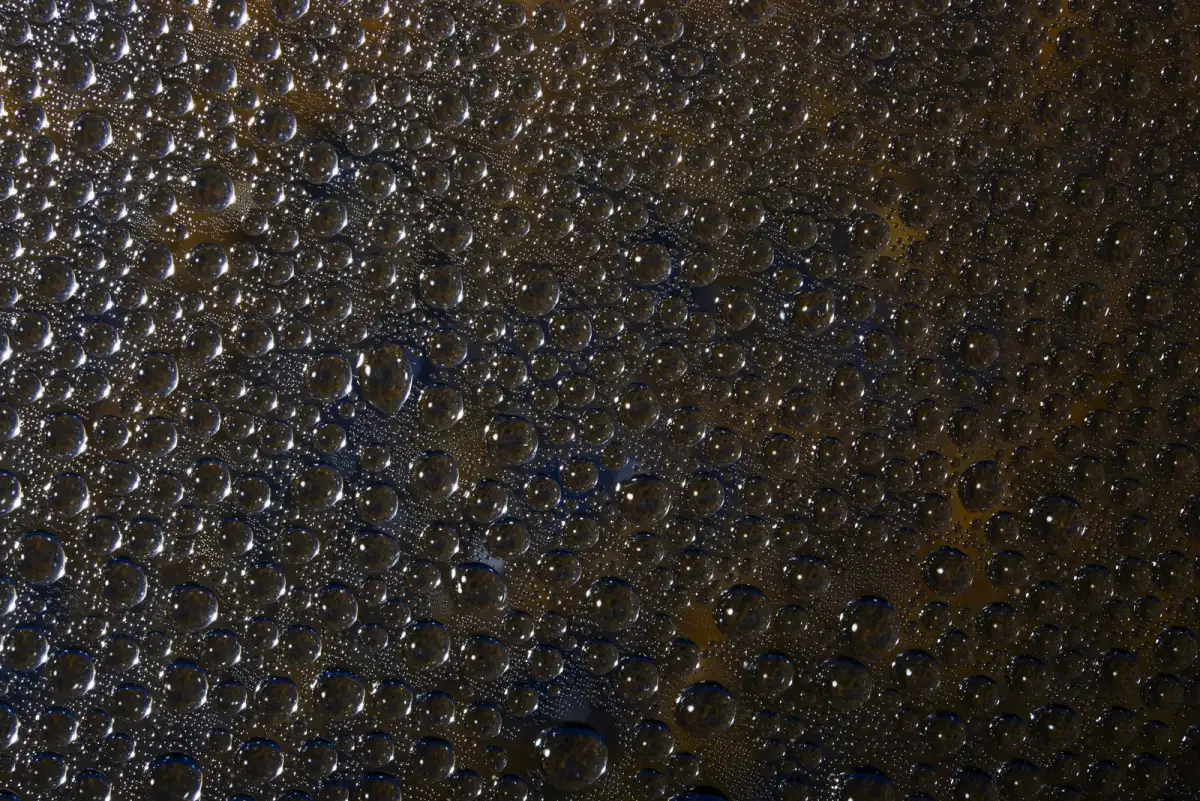
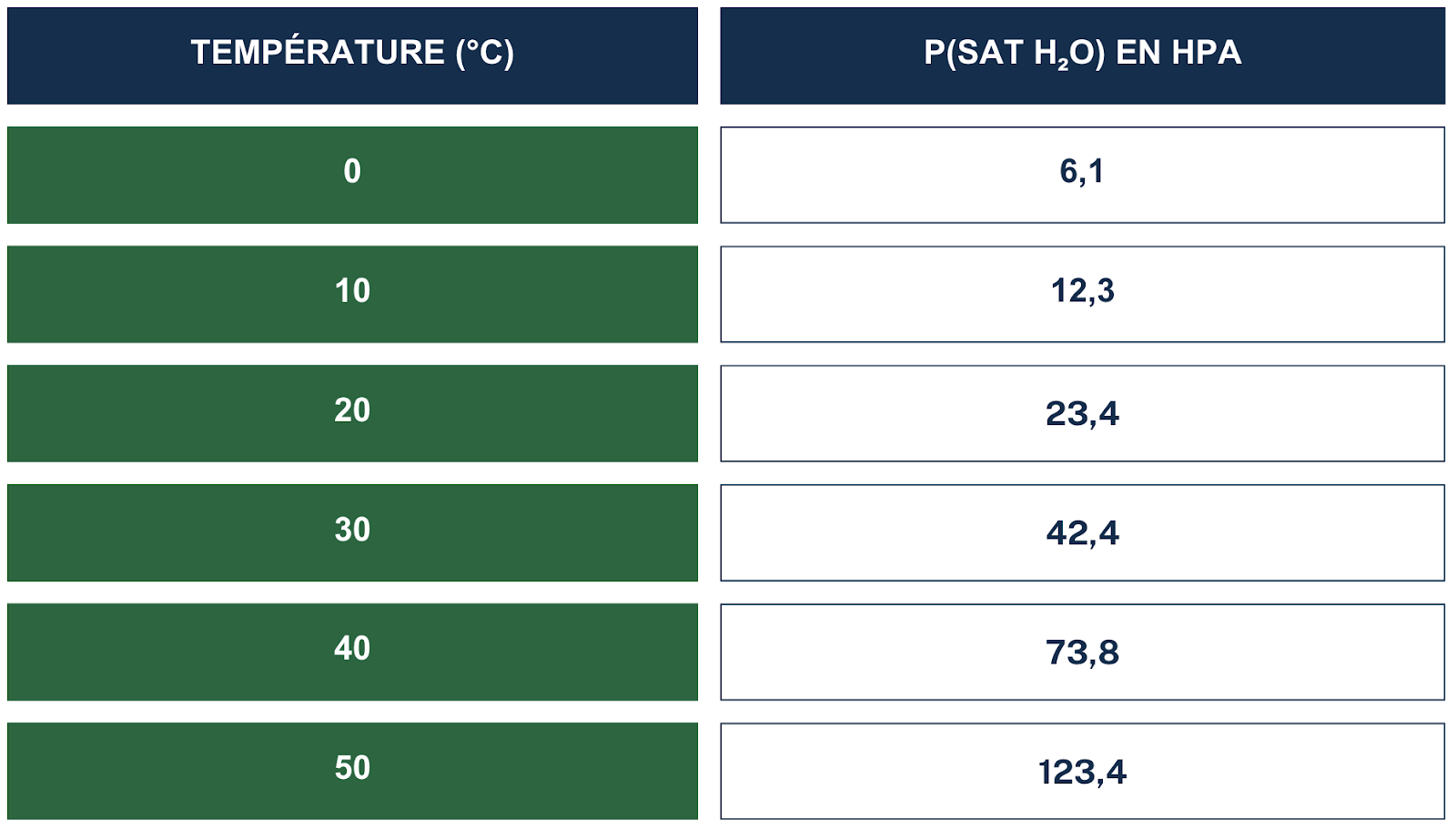
The capacity of the air to contain water vapor increases with temperature. This is why, when hot, humid air cools, it can reach a saturation point, causing condensation (dew point) to form.
🧮 Tool: calculate the condensation risk of your enclosure — dew point and recommended AirSponge area, free, across 82 European climates.
Relative humidity calculation
The calculation of relative humidity is based on the relationship between the actual water vapor pressure and the saturated vapor pressure at a given temperature.
Here is the rigorous physical formula:
HR = P(H2O) / P(sat H2O) = Y(H2O) x P(total) / P(sat H2O)
With:
- P(H2O): partial pressure of water vapor in the air (Pa)
- P(sat H2O): saturation vapor pressure (Pa)
- Y(H2O): molar fraction of water vapor
- P(total): total pressure of the mixture (Pa)
This formula is used in professional tools such as humidity sensors, humidity meters, or in thermodynamic modeling. The associated dew point is computed in practice using the Magnus-Tetens approximation (Oregon State University).
Why is calculating relative humidity important?
The relative humidity level is a key indicator in:
- Thermal comfort (homes, offices)
- Condensation prevention (ceilings, walls)
- Storage of sensitive products (industry, pharmacy)
- Humid area management or controlled climate environments
- The use of devices such as a dehumidifier or a moisture absorber
A rate between 40% and 60% is generally recommended for a healthy environment — a range associated with a lower prevalence of humidity-related health effects (Arundel & Sterling, Environmental Health Perspectives, 1986).
Concrete application: see our guide on humidity control in sealed enclosures for IP65/IP67 outdoor electronics.
What tools are available to measure relative humidity?
- Humidity tester (or moisture meter)
- Humidity sensor digital or analog
- Indoor weather station
- Smart humidity controller (with alert)
Link with the dew point
The dew point is the temperature at which air becomes saturated with water vapor (RH = 100%) and water begins to condense.
It can be calculated from the relative humidity level and the ambient temperature.
The dew point calculation is based on the same logic as relative humidity, via the saturating vapor pressure.
In summary
Did you know?
When it is hot, we cool our body by evaporating sweat from the surface of our skin. If the relative humidity in the air is too high, evaporation is much slower and it is difficult to regulate our internal temperature. That is what happens in hot, humid climates.
Conversely, if the relative humidity is too low, then our mucous membranes dry out, which causes irritation and sometimes nosebleeds. This explains the feeling of discomfort during long plane trips, as the air in the cabin is often very dry.
So Sponge solution
Putting adsorption physics to work for humidity control
So Sponge's mesoporous SRD alumina captures water vapor through capillary condensation above a humidity threshold — exactly the physics described above. The result: a sticker or ribbon that regulates the internal humidity of an IP enclosure without energy, without consumables, and that regenerates on its own.
Sources
- M. G. Lawrence, The Relationship between Relative Humidity and the Dewpoint Temperature in Moist Air, BAMS, 2005; calculation (Magnus-Tetens), Oregon State University.
- Arundel, Sterling et al., Indirect health effects of relative humidity in indoor environments, Environmental Health Perspectives, 1986 — healthy range ~40-60% RH.