Silica gel: the blind spot of industrial eco-design
Silica gel is everywhere: in shoe boxes, drug bottles, electrical cabinets, outdoor IoT sensors. Its discretion is such that we forget it is a disposable consumable, industrially produced at very large scale, generating a recurring waste stream that most eco-design efforts ignore altogether.
This article offers a quantified overview and questions the relevance of substitution in industrial applications.
An industrial-scale consumable
The global silica gel desiccant market represents, depending on the source, between USD 0.8 and 1.1 billion, with an annual growth rate of 2.3% for the desiccant segment alone (Straits Research, Grand View Research). Global annual production is estimated at approximately 950,000 tonnes across all applications (sector extrapolation, to be taken as an order of magnitude).
Converted to a typical 1 g sachet format, this represents on the order of several hundred billion sachets produced every year, distributed across packaging, pharmaceutical, electronic, food and industrial channels.
Typical specifications and replacement cycle
A standard 1 g sachet measures approximately 39 × 20 mm and protects about 2 L of enclosed air (Interteck, Yomesorb). For a 10 to 50 L electrical enclosure, typical usage is 5 to 25 g in multiple sachets.
Lifespan depends directly on ambient humidity (Wisedry, Desiccant-Packs):
- Low humidity (< 30% RH): 6 to 12 months
- Moderate humidity: 3 to 6 months
- High humidity (> 60% RH — typical of outdoor IP65 enclosures): 2 to 3 months
- Tropical or confined climate: can drop to 2 to 4 weeks
In concrete industrial applications — street cabinets, outdoor telecom, EV charging, IoT sensors — we are almost systematically in high humidity. The typical replacement frequency is therefore 3 to 6 times per year.
The recycling problem
Silica gel is not accepted in household recycling streams in Europe (North London Waste Authority). It ends up in general waste, therefore landfilled or incinerated.
More problematic: certain variants dyed with cobalt chloride (for the blue → pink saturation indicator) are classified as hazardous waste under REACH. These sachets require a specific treatment stream rarely applied in practice across distributed fleets.
On the carbon footprint side, there is no peer-reviewed life cycle assessment for the standard sachet. The main precursor — sodium silicate — weighs approximately 1 kg CO₂e per kg produced (ResearchGate). Added to packaging, transport and end-of-life, the unit carbon weight remains modest — but recurring, and that is the real point: multiplying by the number of replacements over an equipment’s lifetime changes the order of magnitude.
The eco-design blind spot
The invisible consumable creates three structural problems for an industrial sustainability approach:
-
It is not on the BOM. The sachet does not appear on the final bill of materials or on the product datasheet. It is consumed in use, purchased separately, replaced in maintenance — and rarely traced.
-
It is not in Scope 3. GHG Protocol categories 1 (Purchased Goods), 5 (Waste) and 12 (End-of-life) should include this flow. In practice, few companies have consolidated it because it is diffuse and low-unit.
-
It breaks the announced lifespan. Equipment advertised for 10-15 years that requires a consumable replacement every 3 months does not share the same “durability” definition as truly autonomous equipment.
Yet the three recent regulatory evolutions — ESPR (UL Solutions), CSRD via ESRS E5 (EY), Waste Framework Directive — push in the same direction: the recurring consumable becomes visible, accounted for, and reported.
Segments where substitution makes the most sense
Not all silica gel uses are equivalent from a substitution perspective. The segments where enclosure volumes, field service cost and regulatory exposure all converge are the most relevant:
- Outdoor telecom & 5G — market USD 3.1B in 2024, projected USD 5.9-9.4B by 2033 (Business Research Insights). Each cabinet = several replacements/year × thousands of sites.
- EV charging stations — fast-growing fleets, natural alignment with mobility operators’ carbon roadmap.
- Outdoor IoT & Smart Cities — distributed sensors on streets, alignment with target battery lifetime.
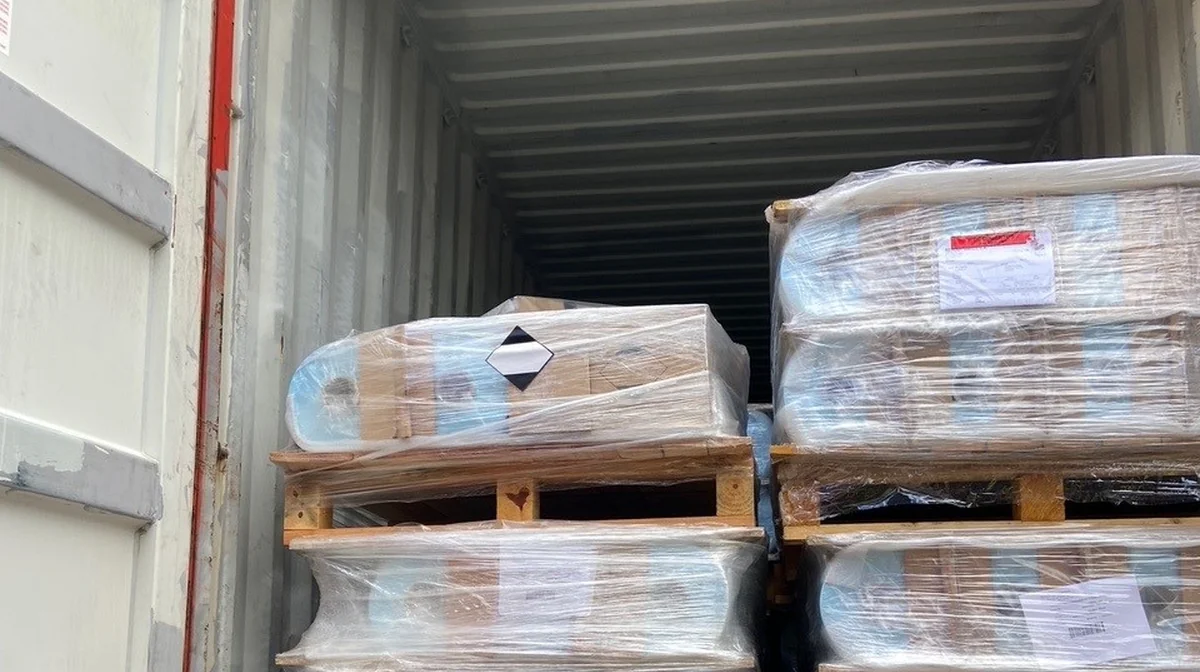
- Equipment in shipping containers — several kg of silica gel per shipping cycle, as much a logistics question as an environmental one.
The food/pharma packaging segment has a different logic (low per-unit volume, FDA/EU 10/2011 regulatory constraints) and is not a priority target.
A material alternative
Self-regenerating materials — like the SRD (Self-Regenerating Desiccant) developed by So Sponge — lift the consumable constraint. The material adsorbs moisture like silica gel, but regenerates spontaneously at every thermal cycle, without intervention, for the entire lifetime of the enclosure.
The arithmetic changes: for a 1 L enclosure equipped with an AS-B sticker, the 10-year balance is 0 g of waste generated versus approximately 150 g for a sachet replaced three times per year. Applied to a fleet of 1,000 equipment units, the difference represents 150 kg of waste avoided and the complete elimination of the associated reverse logistics.
Scaling up: fleet, addressable market, TAM
These per-enclosure orders of magnitude compound quickly across a market counted in millions of units per year. On the conservative assumption of 15 g of silica gel consumed per enclosure per year (5 g × 3 replacements):
| Scope | Volume | Waste avoided / yr | Over 10 years |
|---|---|---|---|
| A typical customer fleet | 1,000 enclosures | 15 kg | 150 kg |
| So Sponge addressable market (17% of global IP65+ electronics/IoT TAM) | ~1.3 M enclosures/yr | ~20 tonnes | ~200 tonnes |
| Global IP65+ electronics / IoT TAM | 5-10 M enclosures/yr | ~75-150 tonnes | ~750-1,500 tonnes |
Compared with global consumption across all applications (~950 kt), the volume remains modest — but the impact is measured mainly through the elimination of the recurring flow and its associated logistics, not through mass volume alone.
Conclusion
Silica gel is not a polluting product per se. Its impact comes from its recurrence: a consumable multiplied by equipment lifetime × distributed fleet × millions of maintenance points worldwide.
This is exactly the type of flow that ESPR/CSRD regulations are turning today from “invisible detail” into “declarable line item”. Industrials anticipating this transition — by substituting recurring consumables with passive, durable solutions — are not only reducing their waste: they are strengthening the host product’s durability in the regulatory sense, and stepping out of the recurring maintenance budget in the financial sense.
To assess the impact on your own fleet, use our AS-B ROI calculator or browse our sustainability page for an overview of the approach.
Image credit: Silica gel bag by Cjp24, CC BY-SA 4.0, via Wikimedia Commons.