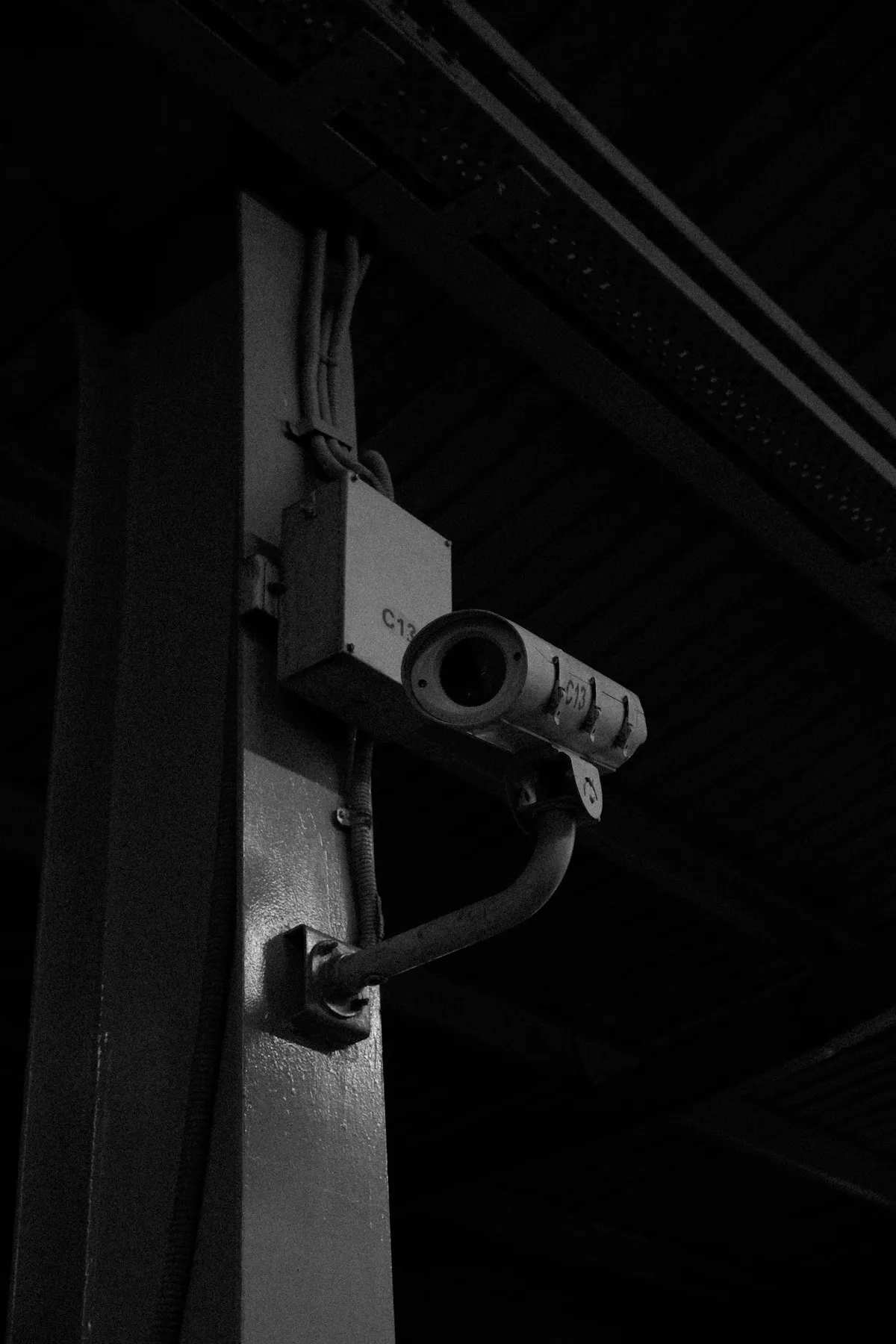
Urban sensor mounted on streetlight

Electronics & IoT Application

Urban smart city sensor humidity protection IP65+

An urban sensor mounted on a streetlight is an asset deployed in full outdoor exposure for 10 to 15 years, whose maintenance requires municipal authorization, night intervention with lift, and a tight municipal OPEX budget. Measurement gaps are not tolerated: urban data feeds public indicators (air quality, traffic, parking occupancy) or municipal decisions.

The AS-B sticker protects the internal air of urban smart city sensors IP65+: traffic sensors, ambient air quality (PM2.5/PM10/NO2/O3/CO), urban noise, parking occupancy, waste container level, smart streetlight controllers, urban multi-parameter environmental stations.

8× usable capacity vs silica gel 0 W — no energy OPEX on dispersed fleet Compatible IP65/IP66/IP67, IK10 10-15 year lifetime for municipalities

Smart city specifics

Exposure + constrained maintenance + zero data gap tolerance

Smart city imposes different constraints than other outdoor IoT verticals:

  • Full exposure on streetlight or pole: no shelter, direct south exposure possible, cumulative atmospheric pollution
  • Constrained maintenance: municipal authorization, lift, night intervention, cost × 2-3 vs standard industrial intervention
  • Local government persona: tight OPEX budget, 10-15 year lifetime required, strong sensitivity to TCO over elected mandate
  • Critical urban data: zero tolerance for measurement gaps (air quality, traffic, parking, waste)
  • Multi-actor purchase persona: municipality + integrator (Bouygues, Veolia, Suez, Engie Solutions) + telecom operator

Three direct technical consequences on urban data

1. Drift on ambient air quality sensors (PM2.5, NO2, O3, CO)

Optical particle sensors require a stable measured air flow. Any internal humidity drift in the electronic compartment adjacent to the measurement chamber disturbs the air pump, modifies humidity-temperature correction algorithms, and distorts values published on public air quality indicators.

2. False positives/negatives on traffic and parking sensors

Inductive loop traffic sensors and parking magnetometers are sensitive to leakage currents induced by internal humidity. Result: erroneous vehicle counting or incorrect parking occupancy = degraded user experience and distorted operational data.

3. Radio transmission losses on LoRaWAN/Sigfox/cellular

Urban sensors typically transmit via LoRaWAN, Sigfox, NB-IoT or 4G/5G cellular. Internal humidity drift on RF components degrades link budget and increases retransmission rate — reducing battery lifetime and creating unacceptable data gaps on public service quality data.

Physical mechanism in urban environment: severe thermal cycles, atmospheric pollution, urban heat island in summer (housing T° 50-65°C on south-facing exposure), freeze-thaw cycles in winter (multiple 0°C → -5°C → 0°C transitions in a few hours). Over 10-15 years = more than 5,000 cumulative thermal cycles.

Operational cost

Operational cost on urban sensor fleet

10-15 years

lifetime required by municipalities

Elected mandate × 2 — long-term TCO requirement

$220-1,320

per urban intervention

× 2-3 vs standard industrial (authorization, lift, night)

5,000+

thermal cycles over 10-15 years

Summer heat island + winter freeze-thaw

Zero

tolerance for data gaps

Public indicators: air quality, traffic, parking, waste

On a 500-sensor fleet at a smart city operator or metropolitan area:

  • Humidity-related failures (corrosion, RF losses, sensor drift): 3-7% per year = 15-35 sensors/year = $3,300-46,000 OPEX/year
  • Avoided early replacement (air quality sensors at $1,650-5,500 per unit): nominal lifetime × 1.5 = strong ROI
  • Municipal image: repeated failures on public indicators = elected/public opinion sensitivity
  • CSRD/scope 3 argument: valuable in municipal CSR reports

Scope

Concerned verticals and urban sensor types

Urban air quality sensors

  • PM1/PM2.5/PM10 ambient particle sensors (AQMesh, Libelium, Aclima, micro-stations)
  • Urban gas sensors: NO2, O3, CO, SO2, VOC
  • Multi-parameter stations air + noise + weather
  • Urban odor / olfactometry sensors

Traffic and mobility sensors

  • Traffic magnetometers (inductive loops, vehicle counting)
  • AI camera traffic sensors (Vivacity Labs, Numina)
  • Anonymous Bluetooth/Wi-Fi sensors (pedestrian flow, bike trajectories)
  • Average speed ANPR/LPR sensors

Parking, noise, waste

  • Parking spot magnetometers, AI camera parking sensors
  • Permanent sound level monitoring stations
  • Waste container level sensors
  • Neighborhood noise nuisance sensors

Smart lighting, hydraulics, urban safety

  • Smart streetlight controllers (luminosity variation, presence counting)
  • Manhole level sensors (flooding alert)
  • Urban furniture vibration / vandalism sensors
  • Person fall detection sensors in public spaces

State of the art

Why current solutions don't suffice

Integrated silica gel pouch

  • Saturated in 6-12 months on exposed urban sensor
  • Disassembly in urban environment nearly impossible without expensive intervention (municipal authorization, lift, night)
  • Pouch never replaced over the next 14 years of service

→ AS-B solves this central pain point for the smart city market.

Pressure compensating vent

Doesn't control internal humidity. On urban thermal cycles with summer heat island + winter freeze-thaw, breather alone = sensor that condenses.

→ Complementary to AS-B.

Integrated heating element

  • Permanently consumes — energy OPEX multiplied by thousands of urban sensors = municipal budget impact
  • Requires power supply (rare on autonomous battery/solar sensors)
  • Component that can fail = new constrained maintenance point

→ AS-B is a better replacement, no energy OPEX on dispersed fleet.

Format selection

Which AS-B format for your urban sensor type

Sensor typeInternal volumeAS-B format
Air quality micro-station (PM/NO2/O3)0.5-2 LAS-B/S or AS-B/M
Compact traffic/parking magnetometer0.1-0.5 LAS-B/XS
AI camera traffic / parking1-3 LAS-B/M
Urban sound level / noise sensor0.5-1.5 LAS-B/S or AS-B/M
Waste container level sensor0.3-1 LAS-B/S
Smart streetlight controller0.2-0.8 LAS-B/XS or AS-B/S
Urban multi-parameter station2-8 LAS-B/L (40 cm²)
Manhole level sensor0.3-1 LAS-B/S

Animation

Silica gel vs SRD: adsorption isotherms under humidity cycling

Observe how the compared materials behave over a single cycle, then across time.

0.9 0.8 0.7 0.6 0.5 0.4 0.3 0.2 0.1 0 0 20 40 60 80 100 Relative humidity (%) Water adsorbed (mL/g) Cap 0.4 mL/g Silica accumulated: 0.00 mL/g SRD current load: 0.00 mL/g Silica gel (isotherm) SRD (isotherm)
Scrub timeline slow-mo
↤ cycle 1 slow-mo fast cycles →

Cycle

1

Current RH

50%

Silica gel saturation 0%

Cap 0.4 mL/g

⚠ REPLACE
SRD saturation 5%

Cap 0.87 mL/g

0 cycles complete

Lab validation

Lab IP66 test — scope-direct proof for compact urban sensors

The lab IP66 test by So Sponge is directly applicable to the scope of compact urban sensors (volumes 0.5-3 L for most models).

ConfigurationResult
Bare housing (control)Significant fogging from 30 minutes
Housing with pressure ventFogging matching control
Housing with AS-B stickerNo fogging over test duration

FAQ

Urban sensors and anti-condensation

On an air quality sensor with optical particle measurement chamber, does AS-B disturb the measurement?

No. AS-B sits in the electronic compartment separated from the optical measurement chamber. The air flow measured by the particle sensor passes through its dedicated measurement cell — AS-B doesn't intervene on this flow. On the contrary, by stabilizing humidity in the adjacent electronic compartment, AS-B improves the precision of embedded T+RH correction algorithms.

Difference with the "Weather & agricultural sensors" LP?

Weather/agricultural sensors target smart agriculture LoRaWAN low-power 5-10 year battery (parcels, livestock, viticulture). Urban sensors target smart city with municipal persona, 10-15 year lifetime, specific urban exposure. Very different purchaser personas.

Difference with the "Industrial instruments" LP?

Industrial instruments target certified high precision (GMP pharma, semicons, airports) with lab calibration. Urban sensors target public smart city data with lifetime + municipal OPEX requirements. Different precision and persona.

Is AS-B compatible with Bosch Smart City, Libelium, AQMesh, Aclima sensors?

Yes without interaction. AS-B is a passive accessory placed inside the electronic compartment, no modification of the external enclosure or sealing gaskets. IP65/IP66/IP67 certification preserved.

Compatibility with European smart city standards?

No incompatibility. AS-B is not a normed measurement device — it is a passive technical accessory that extends sensor lifetime and reliability. CSRD scope 3 argument valuable in municipal CSR reporting.

On a battery/solar-powered urban sensor — does AS-B impact autonomy?

No. AS-B is fully passive (zero electrical consumption). The battery energy budget is fully preserved for radio, microcontroller and the sensor itself. Strong argument vs heating element that would cut autonomy by half.

What about urban sensor fleet already deployed for several years?

Retrofit possible but urban intervention cost high. Recommended strategy: integrate AS-B at next scheduled renewal or during a planned maintenance operation (firmware update, battery swap). Don't disassemble specifically for AS-B unless failure rate is high.

MOQ and lead time for sensor manufacturer?

Standard MOQ: 5,000 units AS-B/XS, 10,000 units AS-B/S+. Lead time 6-8 weeks. Express on request.

Performance in extreme urban climate?

AS-B operating range: -20°C to +70°C. Capillary adsorption functional across full range. SRD material is inert to standard urban atmospheric pollution. For extreme pollution zones or strong coastal salinity, case-by-case study.

CSRD and carbon reporting: argument valuable in municipal CSR report?

Yes, doubly. (1) By extending urban sensor lifetime and reducing renewal frequency, AS-B reduces scope 3 carbon footprint reported annually by the municipality. (2) By reducing energy OPEX vs heating element, AS-B contributes indirectly to the smart city low-carbon trajectory. Argument relevant for cities signing the EU Covenant of Mayors.

Evaluation

Request your free samples

Evaluate the AS-B sticker on your own urban sensors. So Sponge provides free samples for B2B evaluation and offers a free dimensioning study.

Going further

Related technical resources