Outdoor and machine vision cameras: the condensation problem
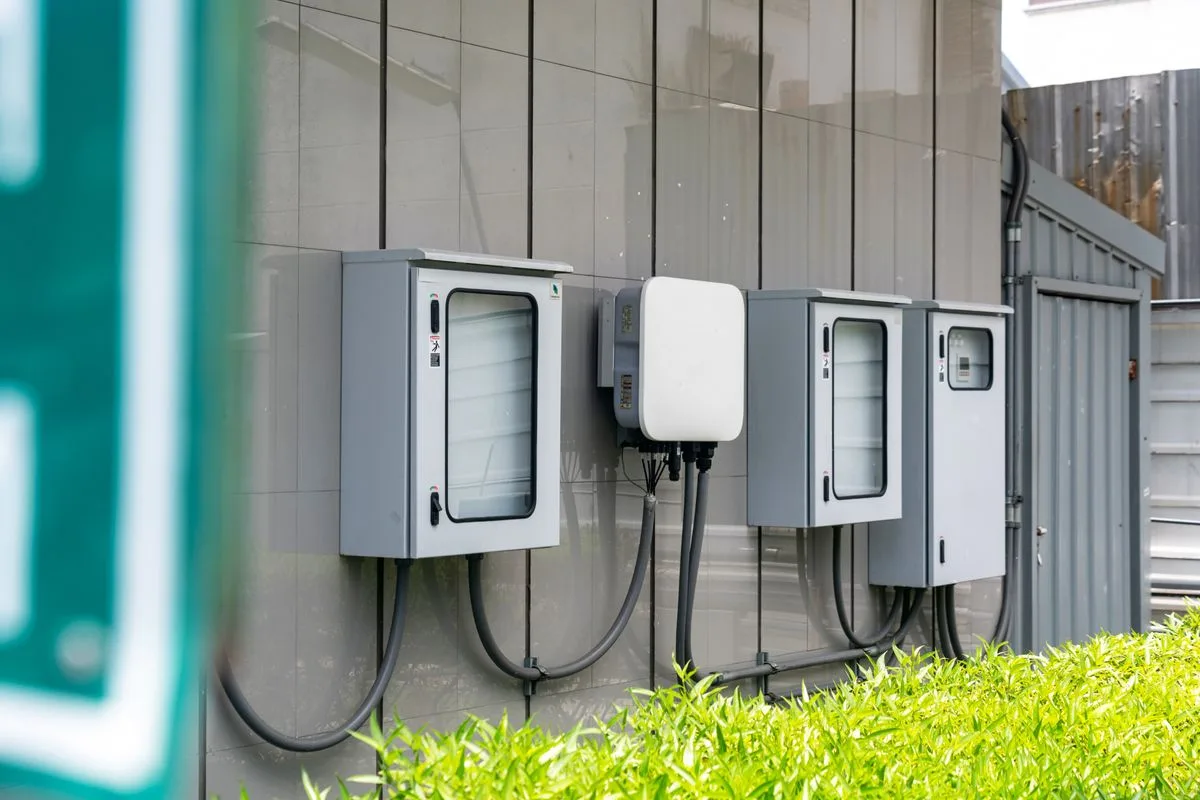
Machine vision cameras — 3D vision, machine guidance, quality control, obstacle detection — are increasingly deployed in outdoor environments: open-air production lines, autonomous vehicles, construction site monitoring, automated sorting, and port logistics.
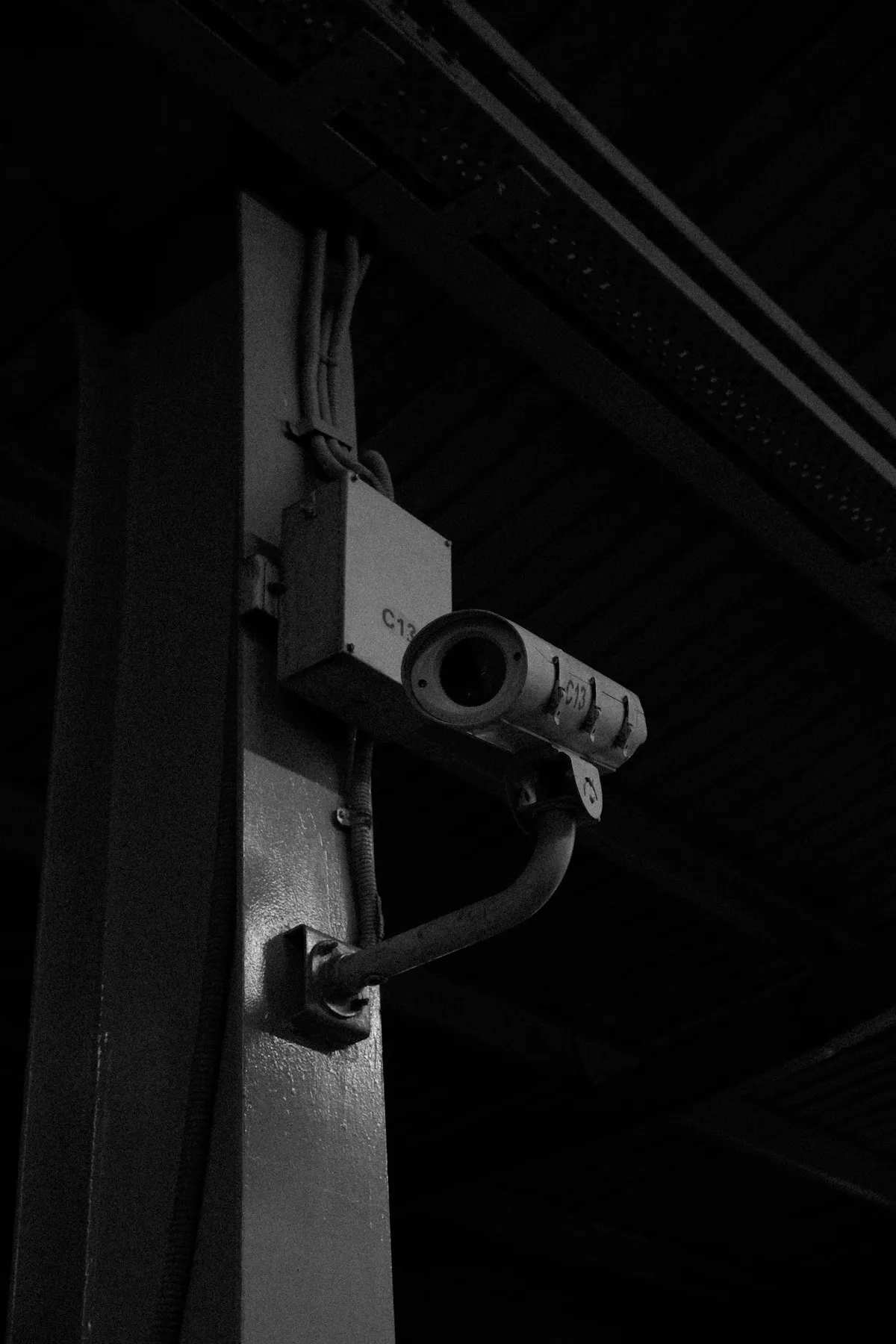
The same problem hits outdoor surveillance and traffic cameras: CCTV domes, number-plate recognition, video analytics, wildlife and site monitoring. Their enclosure is certified IP65 or IP67 to withstand the elements. But this protection does not shield them from a phenomenon that silently degrades their performance: internal condensation.
The dual problem of outdoor vision cameras
A fogged surveillance image is still a failure: infrared night vision turns into a white halo, and video analytics or plate recognition stop working long before a human operator notices. A machine vision camera goes further: it feeds image processing or 3D measurement algorithms. The slightest optical alteration has direct consequences:
- False dimensional measurements: a thin layer of fog on the lens or sensor distorts calculated distances
- Recognition failures: object detection algorithms lose reliability
- False alarms: safety systems (obstacle detection, anti-collision) can trigger without cause
- Production shutdowns: a machine guidance system that can no longer “see” correctly causes an emergency stop
How condensation forms inside the enclosure
The mechanism is identical to that affecting all sealed electronic enclosures exposed to temperature variations:
The air sealed in at assembly
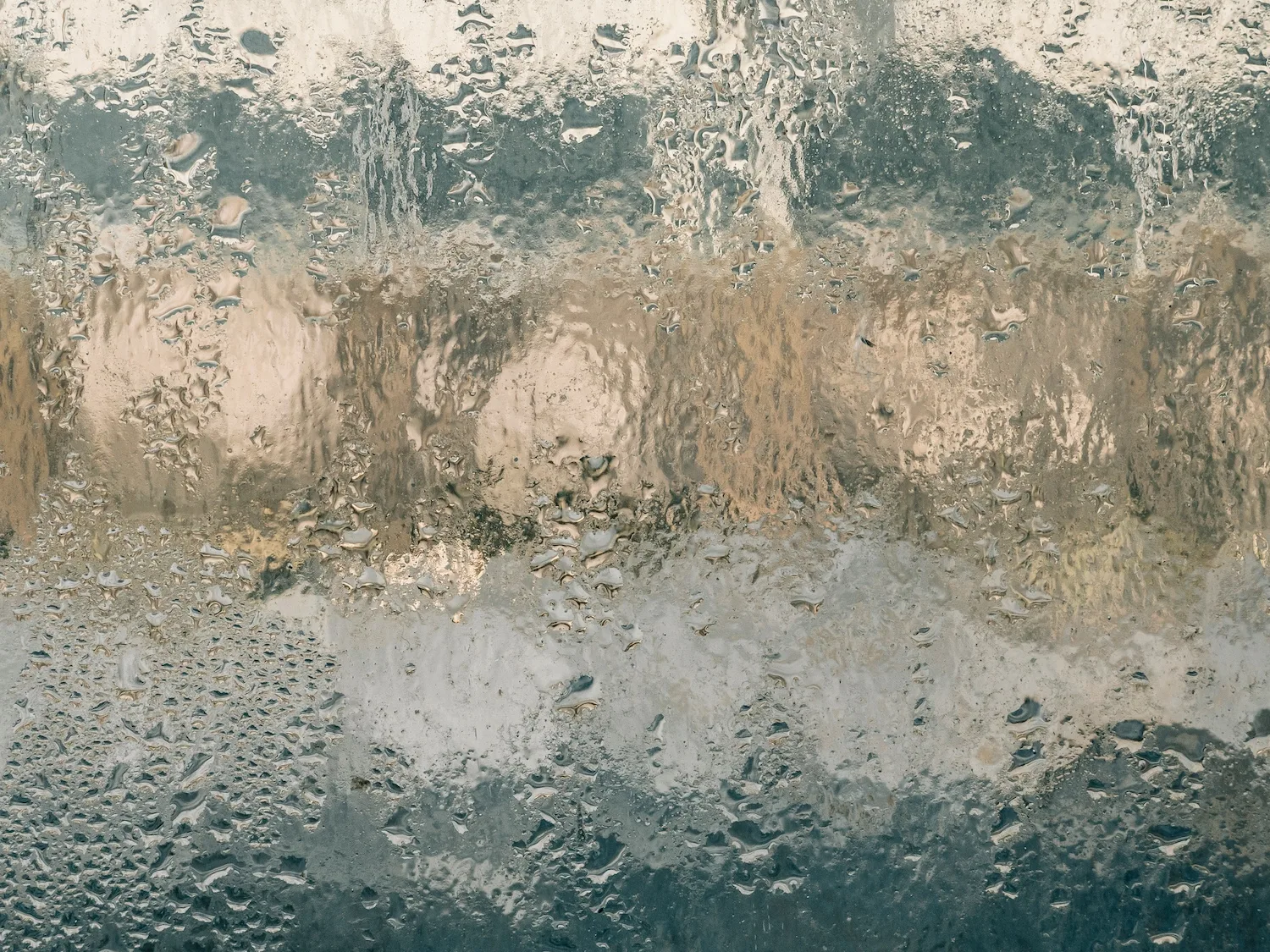
An often-overlooked point: even a perfectly hermetic enclosure contains air — the workshop’s air at the moment it was closed. If the camera is assembled in a warm, humid environment, that humidity is sealed inside. On the first cold excursion it crosses the dew point and condenses on the optics, without any vapor ever entering from outside. Closing the enclosure in a dry atmosphere (or placing a desiccant inside before sealing) is part of good assembly practice.
Thermal breathing
- During the day: sunlight or environmental heat warms the enclosure. Internal air expands and escapes through micro-gaps in the seals
- At night (or during rapid cooling): internal depression draws in humid external air
- Over repeated cycles: moisture gradually accumulates inside
Critical condensation points
In a vision camera, condensation forms preferentially on:
- The lens (coldest surface, exterior side) → direct fog on the optical path
- The image sensor (CMOS/CCD) → signal alteration
- Connectors and processing circuits → risk of corrosion and short circuits
- The heat sink → reduced cooling efficiency, overheating
Why the camera’s own heat does not protect the optics
While operating, a camera dissipates heat and warms the internal air — one might assume this prevents fogging. It is a false friend: the viewport glass and the front lens element stay in direct thermal contact with the outside and remain the coldest surfaces in the enclosure. Water vapor migrates to the cold spot: it condenses precisely on the optical path, even while the rest of the enclosure is warm. Only lowering the absolute humidity of the internal air (adsorption) removes the phenomenon.
Particularly exposed applications
Autonomous vehicles and machine guidance
3D cameras mounted on construction equipment, autonomous forklifts, or agricultural vehicles endure extreme conditions: dust, vibrations, and above all sudden temperature swings between operation (hot engine) and shutdown (cold night).
Logistics and ports
Vision systems installed on loading gantries or outdoor sorting areas are exposed to marine air (saline and humid) and constant day/night cycles.
Quality control in semi-open environments
Partially sheltered production lines (open hangars, loading bays) combine ambient humidity and air currents that promote rapid temperature variations.
Structural and construction site monitoring
Monitoring cameras installed on bridges, dams, or long-duration construction sites are exposed for months or years without the possibility of frequent maintenance.
Vehicle-mounted cameras
Cameras mounted on vehicles — machine roofs, rail or road fleets, agricultural equipment — combine the worst conditions: a vehicle parked or serviced in a warm, humid depot that then moves into cold air crosses the dew point on every rotation, sometimes daily. Fog then forms on the viewport glass and on the lens itself, including on ruggedized IP67-rated cameras: the IP rating protects against external water, not the vapor already present in the internal air (see our IP-rating guide). And in rolling operation, opening the enclosure to wipe the optics is rarely an option.
A documented and recurring problem
This condensation phenomenon in camera enclosures is not theoretical — it is extensively documented by industry professionals:
Documented cases
-
Cameras certified IP67 (higher than IP65) from manufacturer Hikvision were reported with water, fog and mist inside by professional installers on the Use-IP forum, despite proper installation.
-
The professional forum IPVM reports recurring cases of camera failures in high-humidity environments, including industrial installations.
-
Prolonged moisture inside an enclosure can lead to fungal growth on optical surfaces, causing permanent lens damage.
Impact on reliability
Standard industrial tests (IEC 60068-2-78) subject cameras to 85% relative humidity at 85°C for 1,000 hours. But these tests do not replicate the repeated thermal cycles (day/night) that are the primary cause of progressive moisture accumulation under real-world conditions.
Manufacturer Teledyne FLIR highlights that MTBF (Mean Time Between Failures) values are only meaningful when environmental conditions — temperature, vibration and humidity — are specified. A camera rated at 70,000 hours MTBF at 25°C may have a significantly shorter lifespan in a humid outdoor environment.
Conventional solutions and their limitations
Silica gel
Silica gel sachets are often placed inside camera enclosures. But they saturate within months, especially in humid environments. Replacement requires opening the housing — which temporarily breaks the seal and may introduce even more moisture.
Heating element / lens heater
Some enclosures include a heating element to maintain temperature above the dew point. Effective but consumes energy permanently, generates parasitic heat (problematic for sensitive sensors) and increases system complexity.
Anti-fog spray
Anti-fog coatings on the lens reduce surface condensation but do not protect the inside of the enclosure. Their effectiveness diminishes over time and requires regular reapplication.
Integrated ventilation
Ventilated housings equalise pressure but allow water vapour in. They do not solve the moisture accumulation problem.
Heated window or passive desiccant?
It is the question camera designers ask us most often. The two do not act on the same fog.
| Heated window or lens heater | Passive desiccant sticker (AS-B) | |
|---|---|---|
| What it acts on | The temperature of the glass: keeps it above the dew point | The water vapour in the internal air: captures it during the cold hours |
| Fog on the inside of the window | Prevented while powered | Prevented |
| Frost, ice or rain on the outside of the window | Yes, this is where a heater is irreplaceable | No effect |
| Power | Several watts, continuously or on a thermostat | 0 W |
| Battery or solar-powered camera | Hard to fit in the power budget | No impact |
| Parasitic heat near the sensor | Yes | None |
| Failure mode | Heater, thermostat or connector failure, and the fog returns | None: no part to fail |
| Space | Heating film, wiring, control | A 50 × 20 mm sticker |
The practical rule:
- Internal fog only (the classic case: a sealed housing that cools at night): the desiccant is enough, without power.
- Frost, snow or freezing rain on the outer face: you need a heater, or a hood. The desiccant does nothing outside the housing.
- Both: combine them. The heater then only has to handle the outer face, and can run less often, because it is no longer fighting the vapour inside.
The full comparison, with a five-year cost example, is in Enclosure heater vs desiccant.
The SRD sticker: passive protection for vision systems
The SRD (Self-Regenerating Desiccant) material from So Sponge addresses the specific constraints of machine vision cameras:
- Self-regenerating: releases what it captured during each warm phase, so it does not fill up like a sachet and never needs replacing
- ×6 useful capacity in > 60% RH compared to silica gel: effective even in port or tropical environments
- Zero maintenance: no need to open the enclosure for the entire system lifespan
- Zero energy: no consumption, no parasitic heat — ideal for sensitive sensors
- Adhesive sticker format: applied to the inner wall of the enclosure without modifying the design or affecting IP certification
The AS-B sticker captures water vapour as soon as the internal humidity rises above about 60% RH, and holds it during the cold hours, so the air around the optics does not reach saturation and the optical path stays clear.
Where to place the sticker in a camera housing
- In the same air volume as the optics. If the lens sits in a separate compartment, put the sticker in that compartment.
- Out of the field of view, on a side wall or under the lid, never on the window itself.
- Away from hot spots that can exceed +70 °C, such as heat sinks or power components, and away from infrared LEDs.
- In open air, not covered by cables or foam, so that the internal air reaches it.
- Before closing, ideally in a dry room, so that the air sealed in at assembly is already dry.
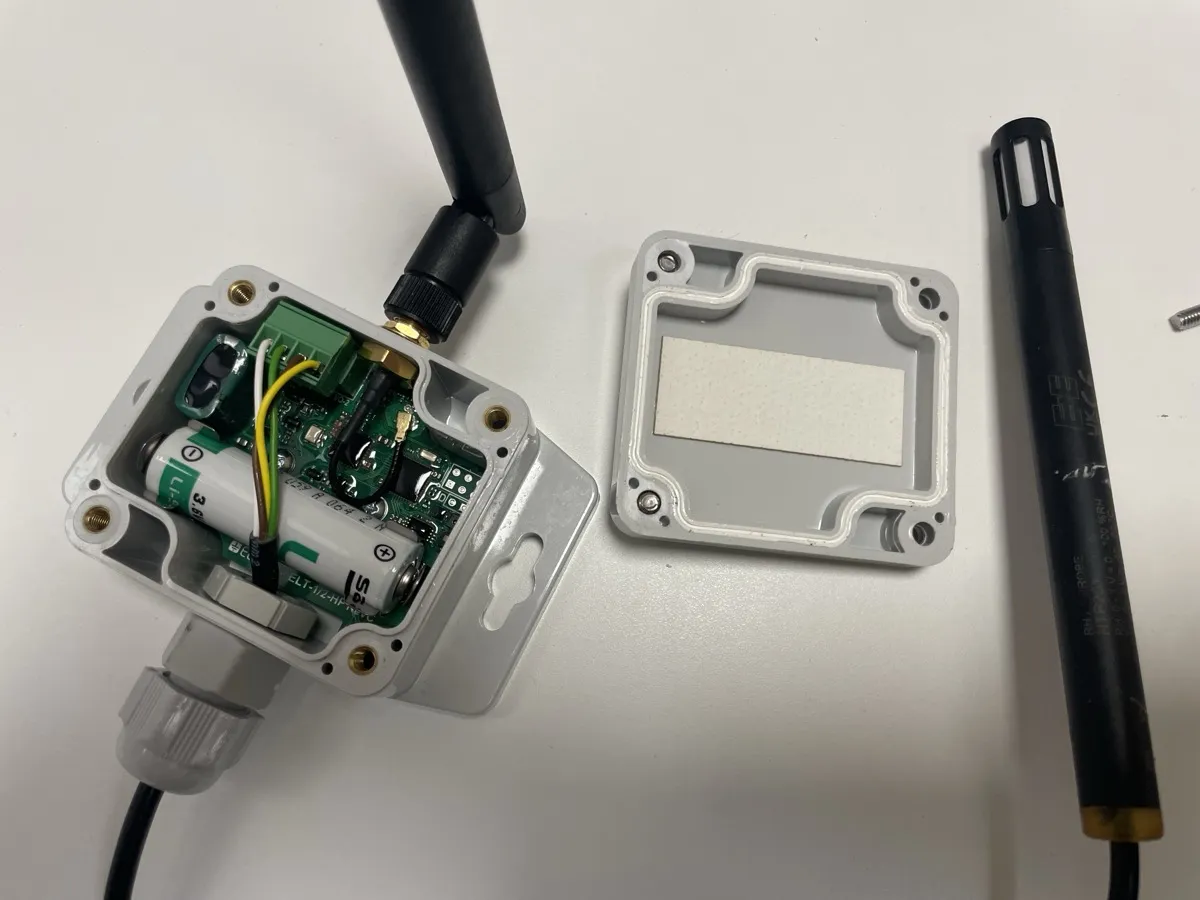
- Sizing: about one 10 cm² sticker per litre of internal volume, and at least one sticker even in a very small housing. A 0.6-litre IP67 camera housing stayed clear with a single sticker after 48 hours between −1 and +3 °C at 90 to 94 % RH (validated use cases).
To check the result on your own camera before a full qualification, follow our test protocol without a climate chamber.
Frequently asked questions
Heated window or desiccant: which one do I need? For fog on the inside of the window, a passive desiccant is enough and needs no power. For frost, ice or rain on the outside, you need a heater or a hood. Many outdoor cameras benefit from both: the heater handles the outer face, the desiccant the internal air.
Can a ruggedized IP67-rated camera still fog up? Yes. The IP rating describes resistance to water and dust entering from outside; it says nothing about the air already sealed inside the enclosure. If that air is humid and an internal surface drops below the dew point, fog forms — regardless of how rugged the camera is rated.
How do you tell external fog from internal fog? External fog settles on the outer face of the viewport: it wipes off and evaporates with wind or sun — a normal, harmless phenomenon. Internal fog forms under the viewport and on the lens: unreachable without opening the enclosure, it is the one that blinds the camera and signals an internal humidity problem.
Is the camera’s own heat enough to prevent fogging? No. It warms the internal air, but the viewport and lens remain the coldest surfaces — and vapor migrates to the cold spot and condenses there. You need to lower the internal air’s humidity, not just heat it.
How do you detect internal condensation without opening the enclosure? The camera’s own video feed is the best witness: a milky veil, halos around light sources, or a loss of sharpness in the cold hours (late night, early morning) that clears during the day are typical signatures of internal fog. Reviewing time-stamped frames over a few day/night cycles is enough to confirm the diagnosis.
Summary
| Criterion | Silica gel | Heating element | Anti-fog coating | SRD Sticker |
|---|---|---|---|---|
| Prevents internal fog | Temporary | Yes | Surface only | Yes |
| Protects electronics | Temporary | Partially | No | Yes |
| Self-regenerating | No | n/a | No | Yes |
| Zero maintenance | No | No | No | Yes |
| Zero energy | Yes | No | Yes | Yes |
| No parasitic heat | Yes | No | Yes | Yes |
| Lifespan | ~6 months | 5-10 years | ~3 months | Unlimited |
Sources: Reolink — Condensation in CCTV Cameras, IPVM — Cameras in High Moisture Environments, OpTraffic — Weather Effects on Optical Lens