Tilt sensors: when condensation skews readings
Tilt sensors and inclinometers are precision instruments used in critical sectors: civil engineering, structural monitoring, construction machinery, wind turbines, solar trackers and offshore platforms. Their measurement accuracy can reach 0.02% — but this performance is directly threatened by an invisible enemy: humidity.
Why tilt sensors are exposed to condensation
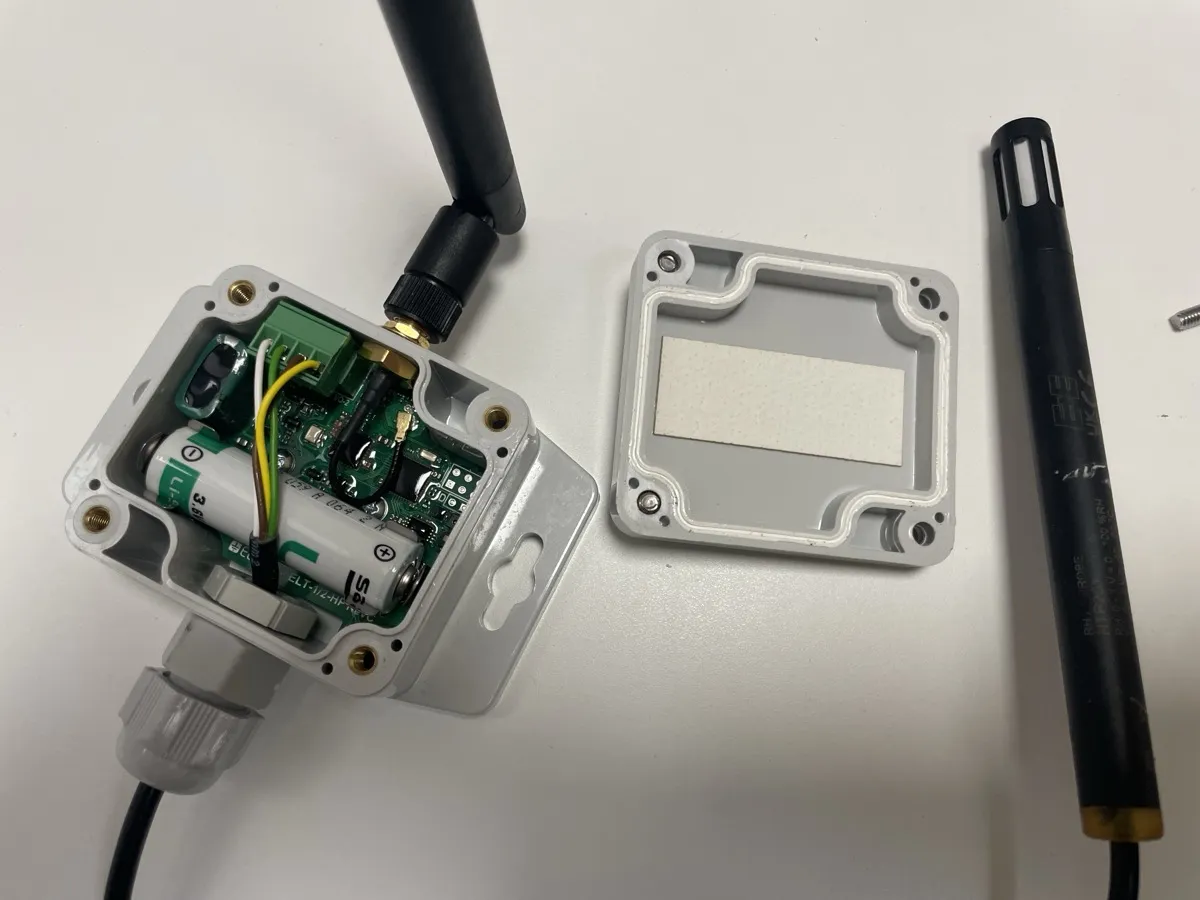
A tilt sensor installed outdoors is protected by an IP65 or IP67 sealed enclosure. This certification guarantees resistance to dust and water jets. But it does not protect against water vapour.
The thermal breathing mechanism
The phenomenon is identical to that affecting all electronic enclosures exposed to the elements:
- During the day: the sun heats the sensor housing. Internal air expands and escapes through micro-gaps in the seals
- At night: cooling creates a depression that draws in humid external air
- Cycle after cycle: moisture gradually accumulates inside the enclosure
When the internal temperature reaches the dew point, water vapour condenses directly on the sensing element, circuit boards and connectors.
Aggravating installation conditions
Tilt sensors are often installed in particularly harsh conditions:
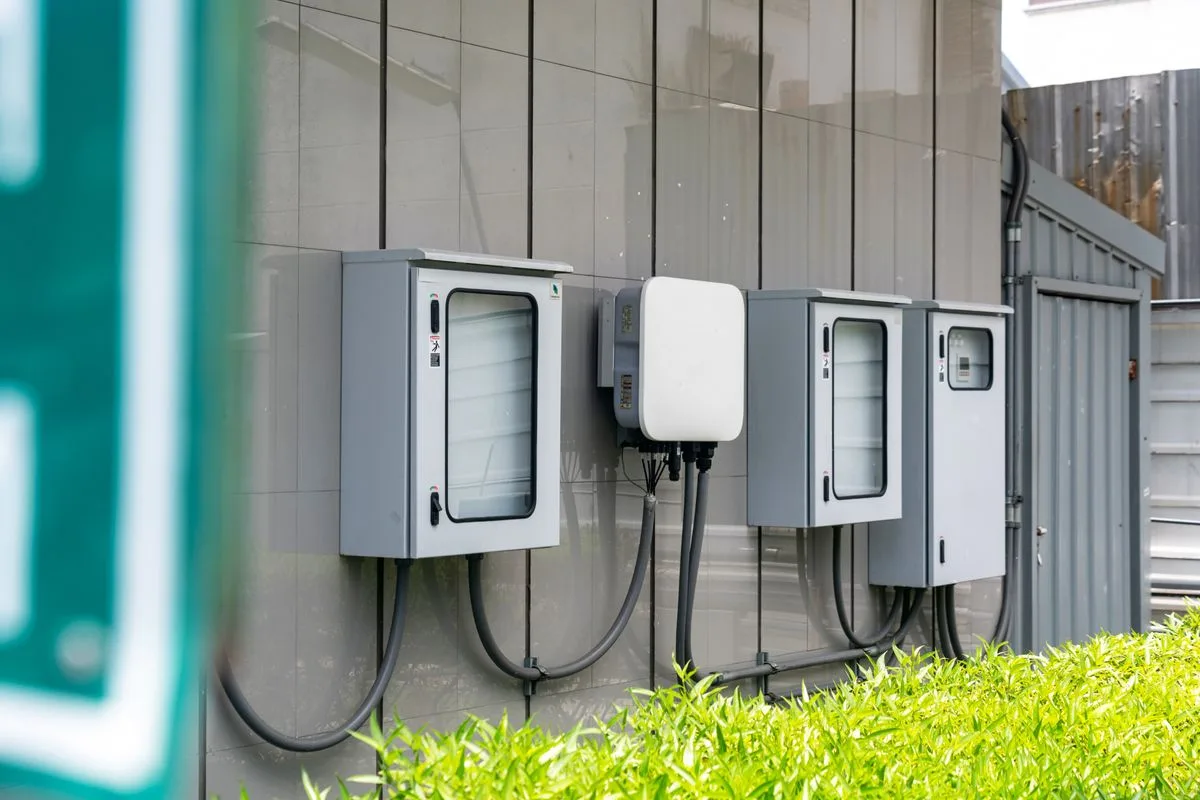
- Under construction equipment chassis: exposed to splashes, vibrations and extreme temperature swings
- On civil engineering structures (bridges, dams, retaining walls): permanently outdoors, with no possibility for frequent maintenance
- On wind turbines: tens of metres high, exposed to wind and rapid temperature variations
- On solar trackers: daily day/night cycles with direct sun exposure
The consequences of humidity on measurement accuracy
Sensor drift
Condensation forming on the sensing element changes its electrical properties. Capacitive and MEMS sensors are particularly sensitive — a thin film of water on the detection surface is enough to corrupt the angle measurement.
This drift is insidious: it develops gradually, making measurements increasingly unreliable without triggering any alarm.
Component corrosion
Condensed water causes progressive oxidation:
- Connectors: contact resistance increases, generating electrical noise and false contacts
- PCB traces: copper oxidises, increasing resistance and altering signals
- Solder joints: corrosion weakens mechanical and electrical connections
Premature failure
In the most severe cases, condensation causes:
- Short circuits between traces or components
- Destruction of the sensing element (irreversible)
- Complete sensor failure, requiring costly replacement — especially when access is difficult (wind turbine, civil engineering structure)
Existing solutions and their limitations
Improving installation
Mounting the sensor horizontally or slightly tilted upward allows condensation to drip away from the sensing element. A partial solution — it reduces impact but does not prevent moisture accumulation.
IP67 or IP68 enclosure
Increasing the IP protection level slows water vapour ingress but does not eliminate it. No enclosure is perfectly gas-tight — thermal breathing always ends up introducing moisture.
Silica gel
Silica gel sachets absorb moisture but saturate within months. In a sensor installed at the top of a wind turbine or embedded in a structure, regular replacement is impractical.
Heated probe
Some manufacturers offer a heated probe that maintains the temperature above the dew point. An effective solution but one that consumes energy permanently and increases system complexity.
The SRD sticker: passive protection suited to sensors
The SRD (Self-Regenerating Desiccant) material from So Sponge addresses the specific constraints of tilt sensors:
- Self-regenerating: the material regenerates spontaneously with each thermal cycle — it never saturates, even after years of exposure
- ×6 useful capacity above 60% RH compared to silica gel: effective even in very high humidity environments
- Zero maintenance: no intervention needed for the entire sensor lifespan
- Zero energy: entirely passive operation, compatible with battery-powered autonomous sensors
- Adhesive sticker format: integrates into the existing enclosure without modification, preserving IP certification
The AS-B sticker is applied directly to the inner wall of the sensor housing. It regulates internal humidity around 60% RH, well below the condensation threshold, protecting the electronics and the sensing element.
Summary
| Criterion | Silica gel | IP67/IP68 alone | Heated probe | SRD Sticker |
|---|---|---|---|---|
| Prevents condensation | Temporary | No | Yes | Yes |
| Self-regenerating | No | n/a | n/a | Yes |
| Zero maintenance | No | Yes | No | Yes |
| Zero energy | Yes | Yes | No | Yes |
| Compatible with autonomous sensors | No (replacement) | Yes | No | Yes |
| Lifespan | ~6 months | n/a | 5-10 years | Unlimited |
Sources: Vaisala — Common Humidity Measurement Problems, Jewell Instruments — Sensor Seal Ratings, NCD — Industrial IoT Tilt Sensor