Condensation in electronic devices: solutions
Moisture absorbers are often used to protect electronic devices against the effects of humidity and condensation.
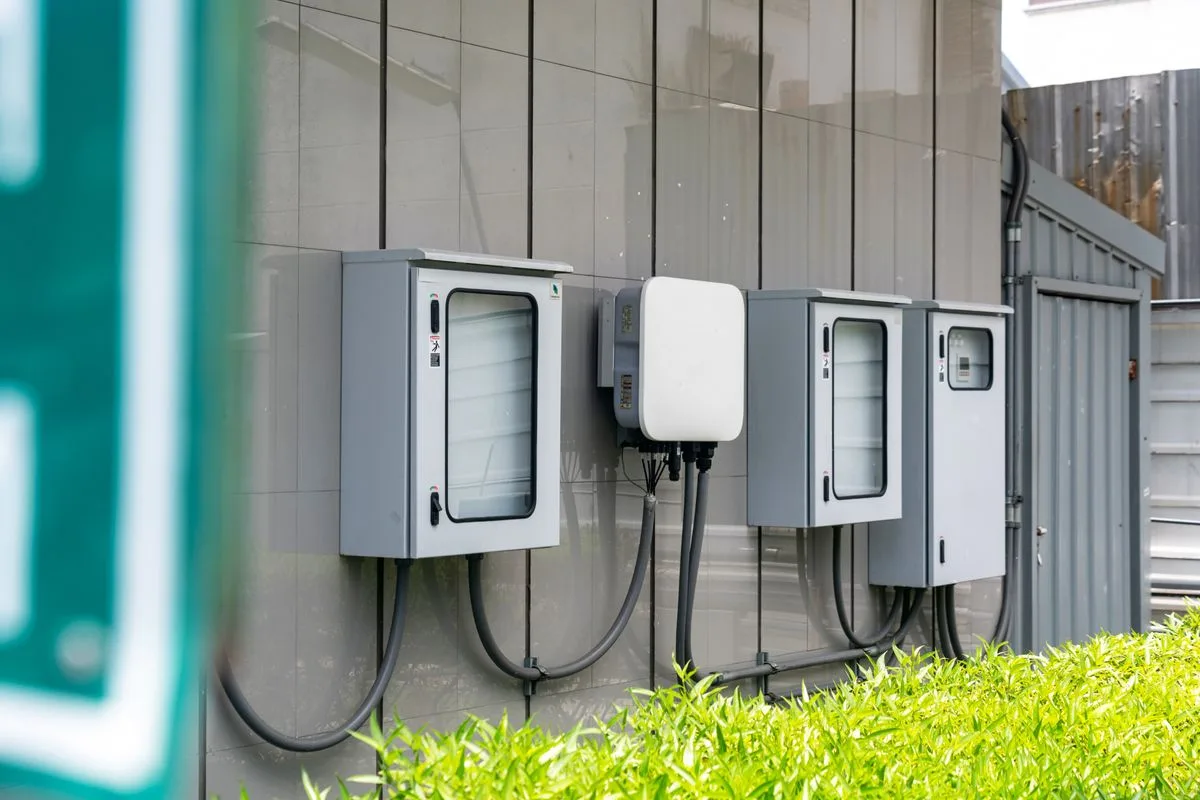
In waterproof electrical enclosures or electronic equipment exposed to humid environments, water vapour can gradually accumulate and cause degradation.
Several solutions exist to limit these risks: protective coatings, internal heating, or desiccant moisture absorbers.
But not all these solutions offer the same effectiveness, particularly when devices undergo significant temperature and humidity variations.
Conformal coating
Applying a conformal coating to printed circuit boards protects electronic components against:
- Humidity
- Dust
- Certain corrosive chemicals
These coatings are typically polymers such as:
- Acrylic
- Silicone
- Parylene
- Polyurethane
They are applied as a very thin layer (a few tens of micrometres) directly on the surface of printed circuit boards.
However, this solution has several limitations.
The thermal expansion coefficients of solder joints differ greatly from those of coatings. When a device undergoes temperature cycles, this generates mechanical stress that can damage the protection. This failure mode is documented by the reference standard for conformal coatings, IPC-CC-830: beyond the recommended thicknesses (typically 25–75 µm for acrylic and polyurethane, 50–200 µm for silicone), the risk of cracking under thermal cycling rises — precisely because of this expansion mismatch (Chase / HumiSeal).
These thermal variations can come from:
- Heat generated by internal components
- Changes in external environment temperature
Yet it is precisely these rapid thermal variations that promote the appearance of condensation in electronic enclosures. Moreover, conformal coating protects PCBs but does not prevent condensation from damaging other system components.
Heating element
Another approach involves installing a heating element inside the enclosure.
The objective is to slightly raise the internal temperature to reduce relative humidity and limit condensation.
This solution is sometimes used in certain outdoor electrical enclosures.
However, it presents several constraints:
- Difficult to implement in small volumes
- Permanent energy consumption
- Risk of electronic component overheating if regulation is poorly controlled
Pressure compensating plugs
There are also pressure compensating plugs, sometimes called equalisation plugs. They are often presented as anti-condensation solutions for electrical enclosures.
In reality, their primary function is to reduce mechanical stress on seals when internal pressure varies. They help limit seal wear, but have no direct effect on condensation. So Sponge has conducted research on the effectiveness of this product.
Silica gel
Silica gel is one of the most widely used moisture absorbers.
This desiccant material adsorbs water vapour from the air and is widely used in the form of:
- Anti-humidity sachets
- Silica gel beads
In a perfectly airtight enclosure, silica gel can be very effective at reducing humidity.
However, it has several important limitations.
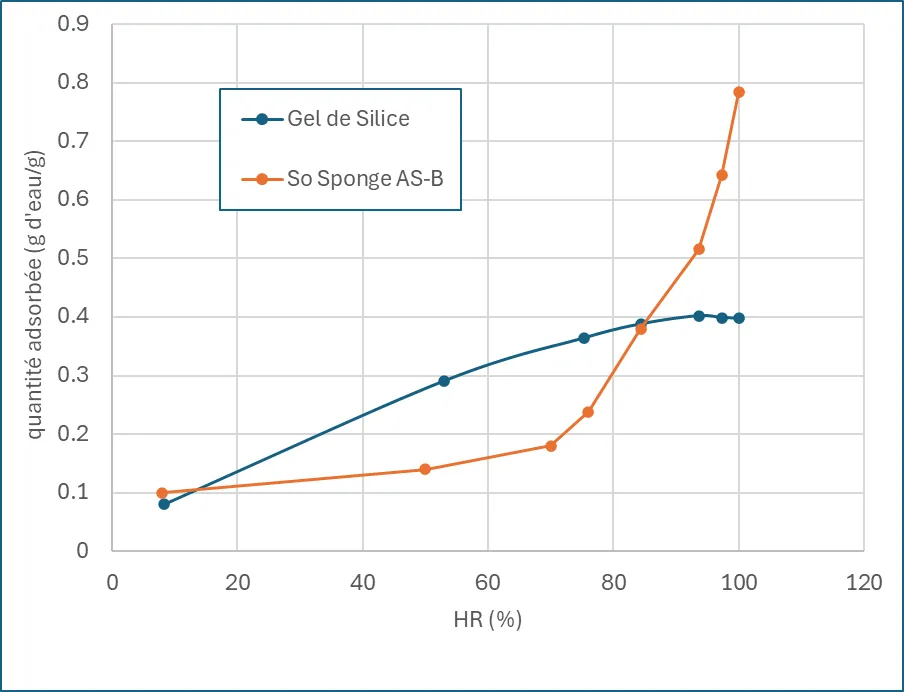
Its behaviour at high humidity is often poorly described: its total capacity does not fall, but above roughly 70% RH the material approaches saturation — a plateau around 35 to 40% of its weight in water. Its residual buffering capacity then collapses, and it saturates all the faster (silica isotherms, Sorbent Systems; Thomson, Silica Gel for Humidity Control, WAAC). Once saturated, it loses its effectiveness.
Furthermore, silica gel sachets contain mobile beads. In equipment subject to movement or vibrations, these sachets can shift and damage the internal components of the enclosure.
Durable solution: AirSponge AS-B
The patented AS-B product is a moisture absorber designed to prevent condensation under particularly demanding conditions:
- High ambient humidity
- Rapid temperature drops
- Repeated thermal cycles
Unlike some conventional desiccants, it maintains a high adsorption capacity even when relative humidity is elevated.
Why AS-B outperforms silica gel
The AS-B product offers several advantages:
- High adsorption capacity at high relative humidity
- Effectiveness maintained beyond 70% RH
- Spontaneous regeneration when humidity decreases
- No permanent saturation
It acts as a passive humidity regulator, capable of stabilising humidity in a waterproof electrical enclosure. This solution works without energy and without maintenance.
Limiting risks from seal deterioration
The AS-B product can also reduce risks in case of liquid water intrusion in an enclosure.
This can occur when seals deteriorate over time.
In this case, the adsorbent material accelerates liquid water evaporation and facilitates extraction of moisture present in the enclosure volume.
A durable product
The AS-B material has been designed to withstand extreme conditions.
Laboratory tests have shown that it can operate in environments between:
- -25°C and 110°C
- 8% to 100% relative humidity
No significant degradation has been observed under these conditions.
Integration in electronic devices
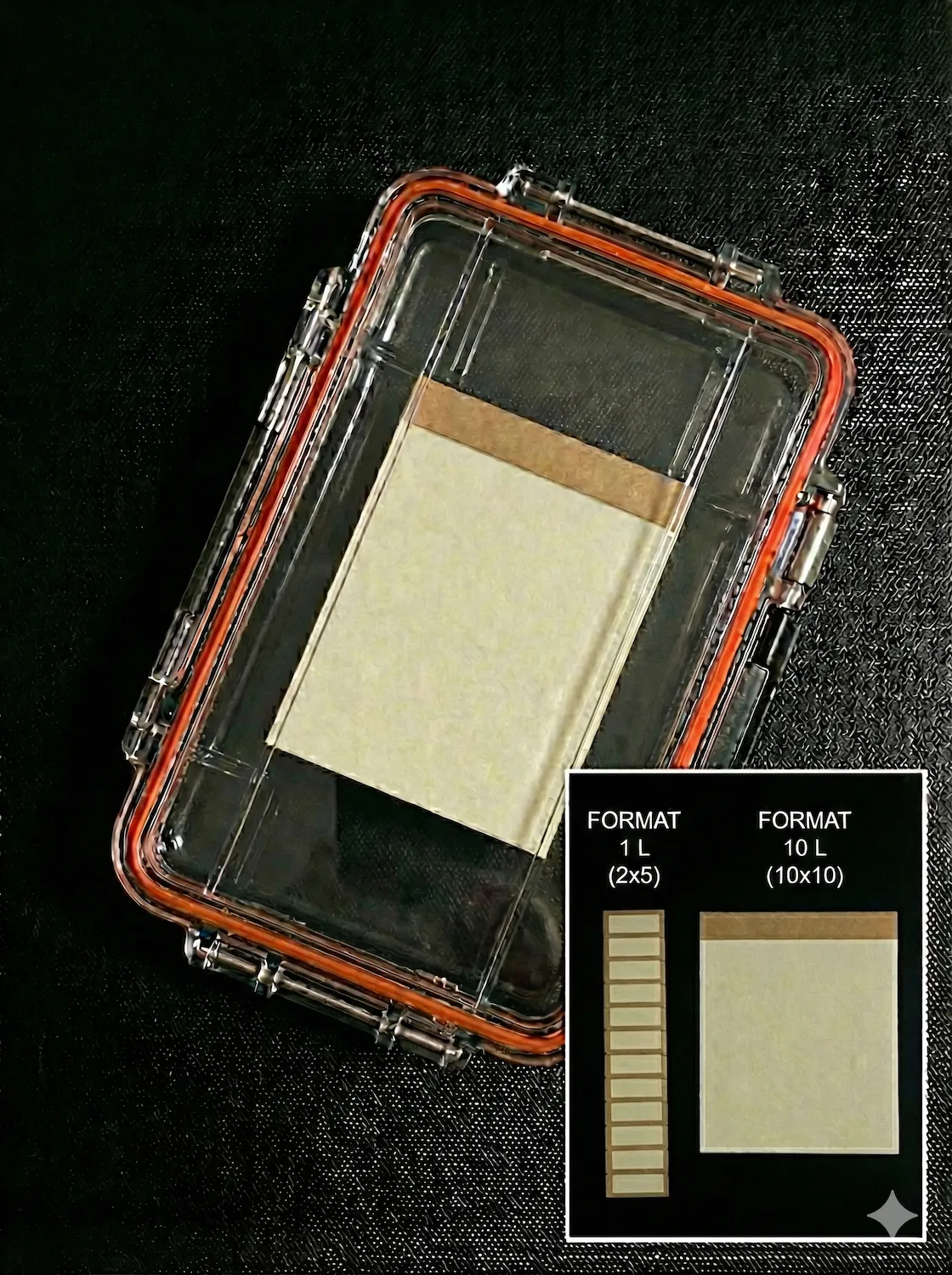
AS-B stickers are designed for easy integration into electronic equipment.
They are:
- Self-adhesive
- Available in multiple formats
- Suitable for waterproof electrical enclosures
- Compatible with small and large volumes
This solution allows easy integration of a moisture absorber directly into the device.
Summary
Humidity in an electronic device is a structural problem:
- IP-rated enclosures are not perfectly airtight
- Water vapour gradually penetrates enclosed volumes
- Condensation appears during temperature drops
An IP rating (standard IEC 60529) certifies protection against dust and liquid water, but neither airtightness nor vapour-tightness: under thermal cycling the enclosure “breathes” and exchanges humid air with the outside — a phenomenon that vent manufacturers document explicitly (W. L. Gore & Associates).
Under these conditions, the use of moisture absorbers suited to electronic enclosures is often essential to prevent equipment degradation.
The AirSponge AS-B product provides a durable and passive solution for ensuring internal humidity control, particularly in demanding industrial or outdoor environments.
Sources
- IPC-CC-830 — Qualification and Performance of Electrical Insulating Compound for Printed Wiring Assemblies: reference standard for conformal coatings (chemistries, thicknesses, thermal-cycling endurance).
- Chase / HumiSeal — The Importance of Conformal Coating Thickness: standardised thickness ranges and CTE-mismatch cracking.
- IEC 60529 — Degrees of protection provided by enclosures (IP Code): protection against solids and water, not against air or vapour.
- W. L. Gore & Associates — Protective vents for outdoor electronics: the “breathing” effect of IP enclosures.
- Sorbent Systems — Desiccant adsorption charts: silica gel isotherms, maximum capacity ~40% of weight.
- G. Thomson — An Evaluation of Silica Gel for Humidity Control, WAAC Newsletter: buffering capacity per %RH, collapse near saturation.