Best moisture absorbers 2026: comparison guide
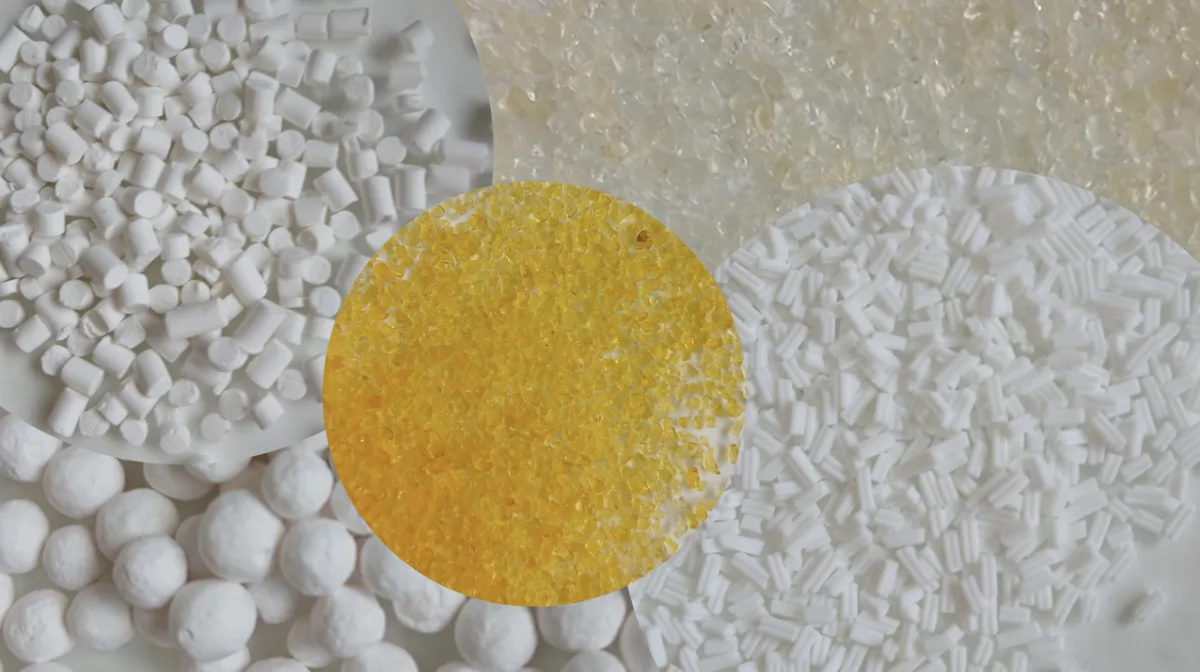
There are three main families of materials that capture moisture. Their effectiveness varies according to their structure, their adsorption capacity and their ease of regeneration.
At a glance — which moisture absorber for which use?
| Absorber | Capacity above 60% RH | Regenerates? | Best for |
|---|---|---|---|
| Silica gel (sachets) | Low (about 1× reference) | Only by baking at 120 °C+ | Packaging, shipping, short storage |
| Calcium chloride (tubs, tablets) | High but turns to brine | No — single use, must be emptied | Rooms, cellars, campers |
| Molecular sieve (zeolite) | Moderate, strong at low RH | Only by baking at 250–300 °C | Dry gases, lab and process use |
| SRD self-regenerating desiccant (AirSponge) | About 6× silica gel | Yes — spontaneously, with every temperature cycle | Sealed electronic enclosures (IP65+), cabinets, containers |
The table compares typical behaviour; capacity depends on the exact grade and format. For a sealed IP65+ enclosure, see the AirSponge Sticker AS-B.
What absorbs humidity?
Four families of materials absorb humidity from the air: mineral porous materials (silica gel, zeolite, activated alumina), superabsorbent polymers, dehydrating salts (calcium chloride) and natural fibers. Most retail products are a powder or granulate that absorbs moisture — silica gel beads or calcium chloride crystals — packed in sachets or tubs. The sections below compare how each family performs, and where a self-regenerating material changes the economics.
Mineral porous materials
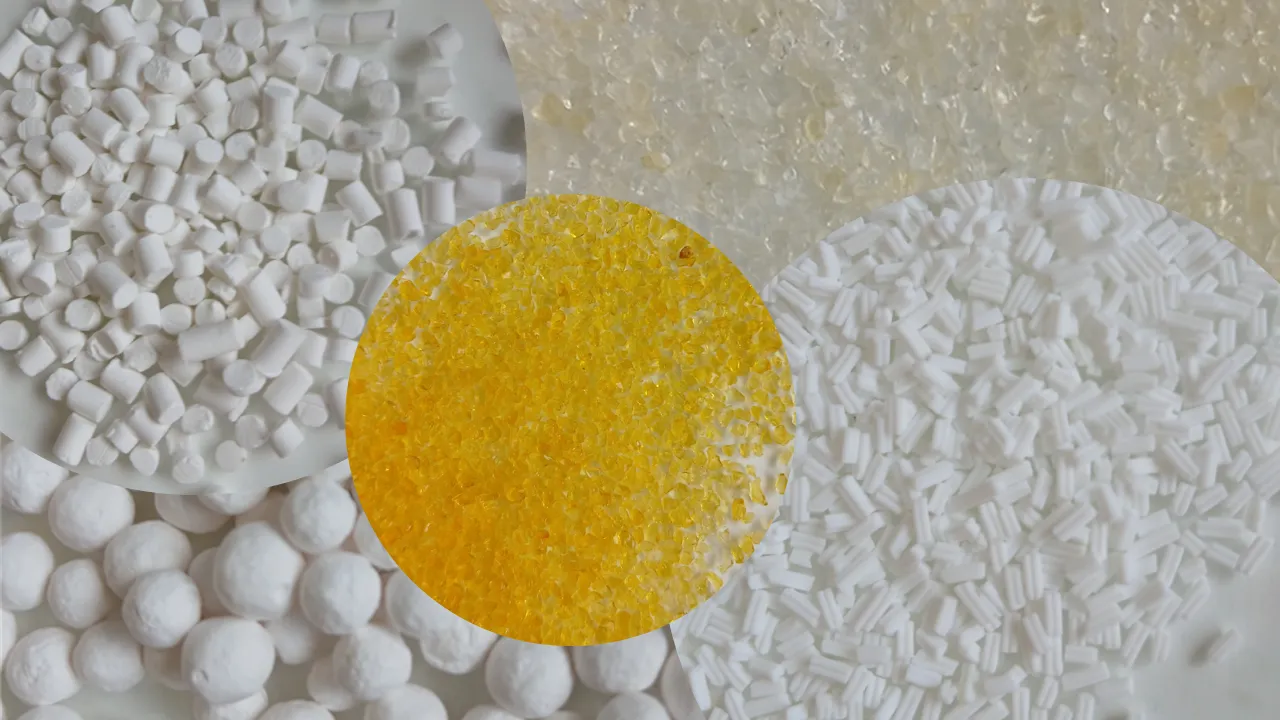
Mineral porous materials are very sturdy and do not change their structure in contact with water. They come in the form of powder or granules, such as silica gel, zeolite or Air Sponge. An exception: clay, which swells when in contact with water.
- Advantage: high solidity
- Disadvantage: adsorbs less water
Superabsorbent polymers
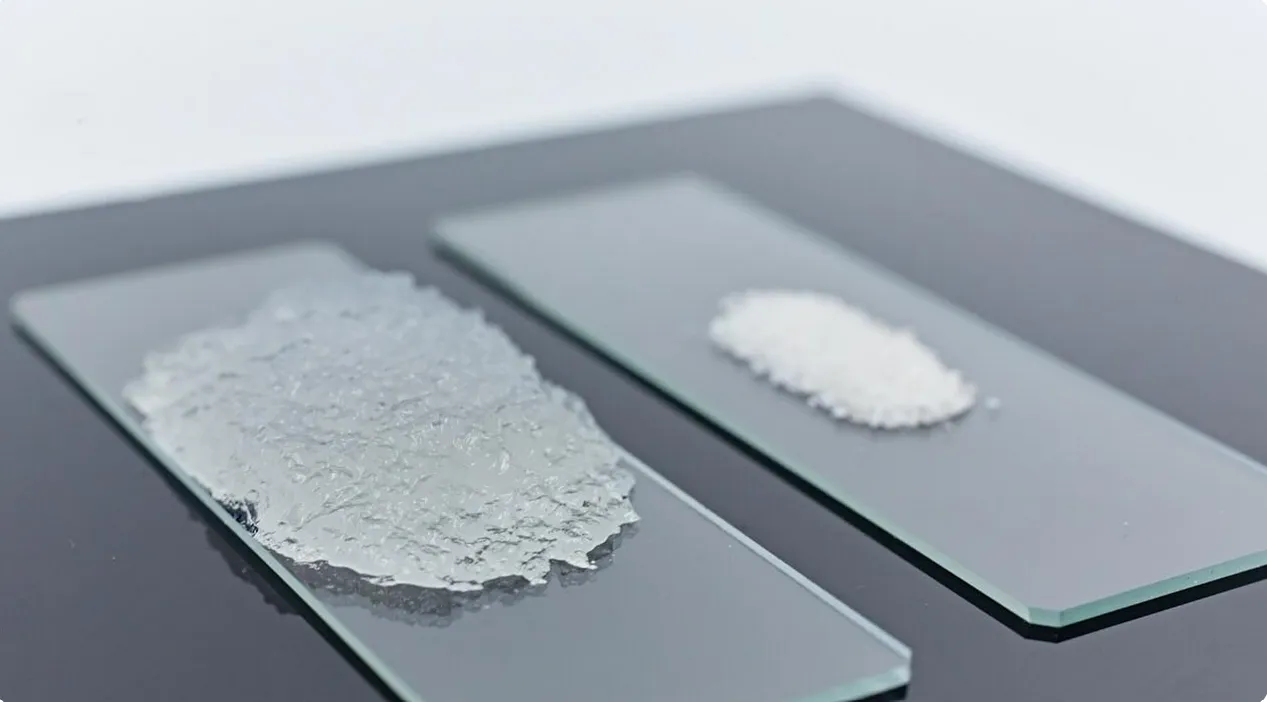
Superabsorbent polymers, or hydrogels, are molecular chains capable of absorbing large quantities of water. They are found notably in baby diapers.
- Advantage: high absorption capacity
- Disadvantage: can degrade over time and become fragile when swollen
Dehydrating salts
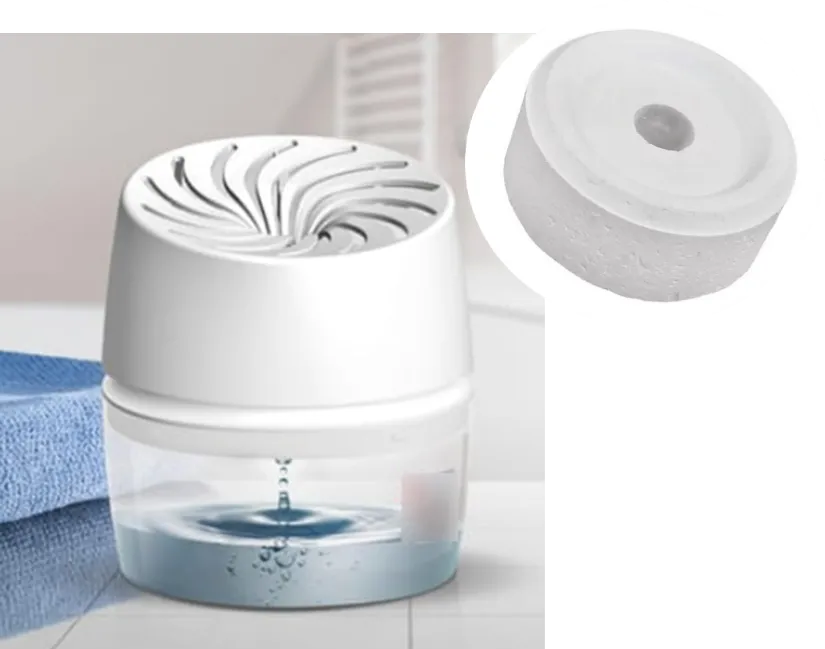
Dehydrating salts, like calcium chloride, react with water and liquefy. They are often used in tablet form in commercial dehumidifiers.
- Advantage: very absorbent
- Disadvantage: require regular replacement and emptying of the tank
Why choose Air Sponge?
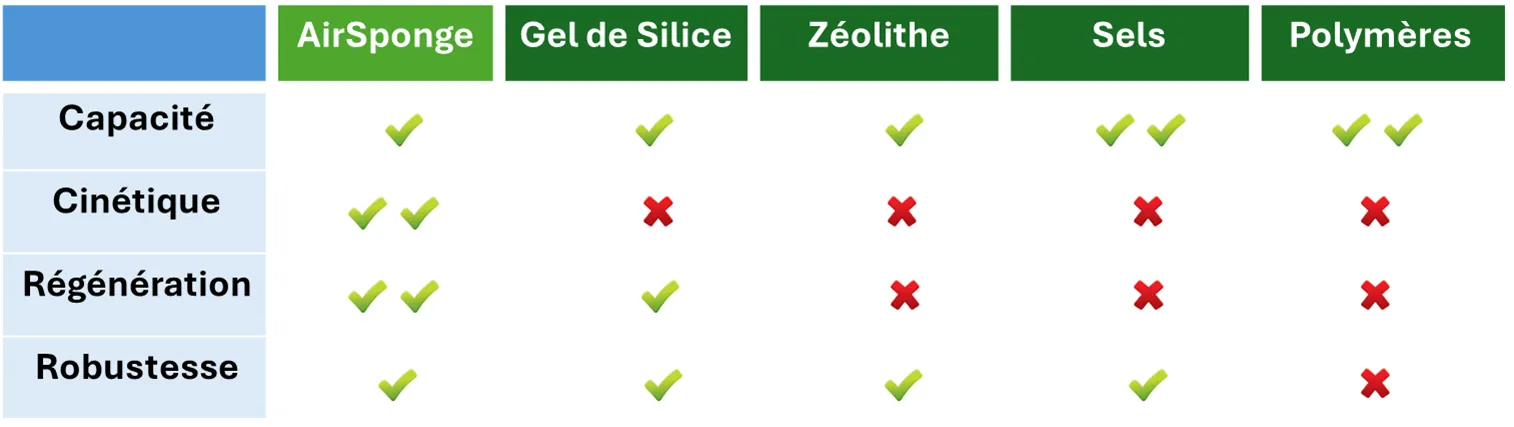
To effectively regulate humidity, a material must:
- Adsorb a large quantity of water
- Respond quickly to changes in humidity
- Regenerate without energy input
- Be sturdy and reusable
The Air Sponge product features optimized adsorption kinetics, allowing it to prevent condensation during rapid humidity changes. It regenerates naturally, without heat, as soon as the air returns to a normal level.
Conversely, salts and polymers, although effective in the short term, degrade or require constant maintenance. Silica gels and zeolites are solid but require regeneration at high temperature, which limits their practical use.
Why does Air Sponge adsorb so quickly?
In certain conditions, relative humidity can increase very rapidly:
- When an electronic box exposed to the sun is suddenly cooled by a downpour.
- When a hot appliance moves from a humid environment to an air-conditioned space.
To avoid condensation, the material must adsorb rapidly. Air Sponge maximizes the contact surface with air and reduces the diffusion distance of water in the porous network. The crystals are fixed on a flexible support, which deploys a very large surface and allows water molecules to be captured instantly.
This format offers several advantages:
- Easy to handle, cut or fold
- Adaptable to all formats
- Easy to attach with adhesive or glue
What does the So Sponge material look like?
The material is a white powder composed of crystals approximately 100 micrometers in size. These crystals are largely made up of void: a network of extremely fine pores through which water molecules circulate.
The pores measure an average of 10 nanometers in diameter, which is 10,000 times smaller than a hair. This structure produces a porous surface exceeding 200 m2 per gram, equivalent to the surface area of an apartment compressed into a thimble!
The pores are interconnected, allowing water to flow rapidly through the entire material. This organization guarantees homogeneous and sustainable humidity regulation.
How does the So Sponge material work?
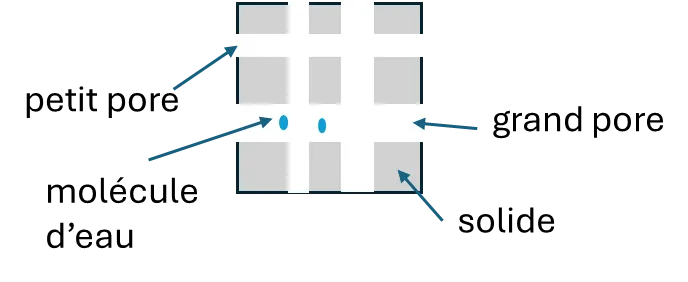
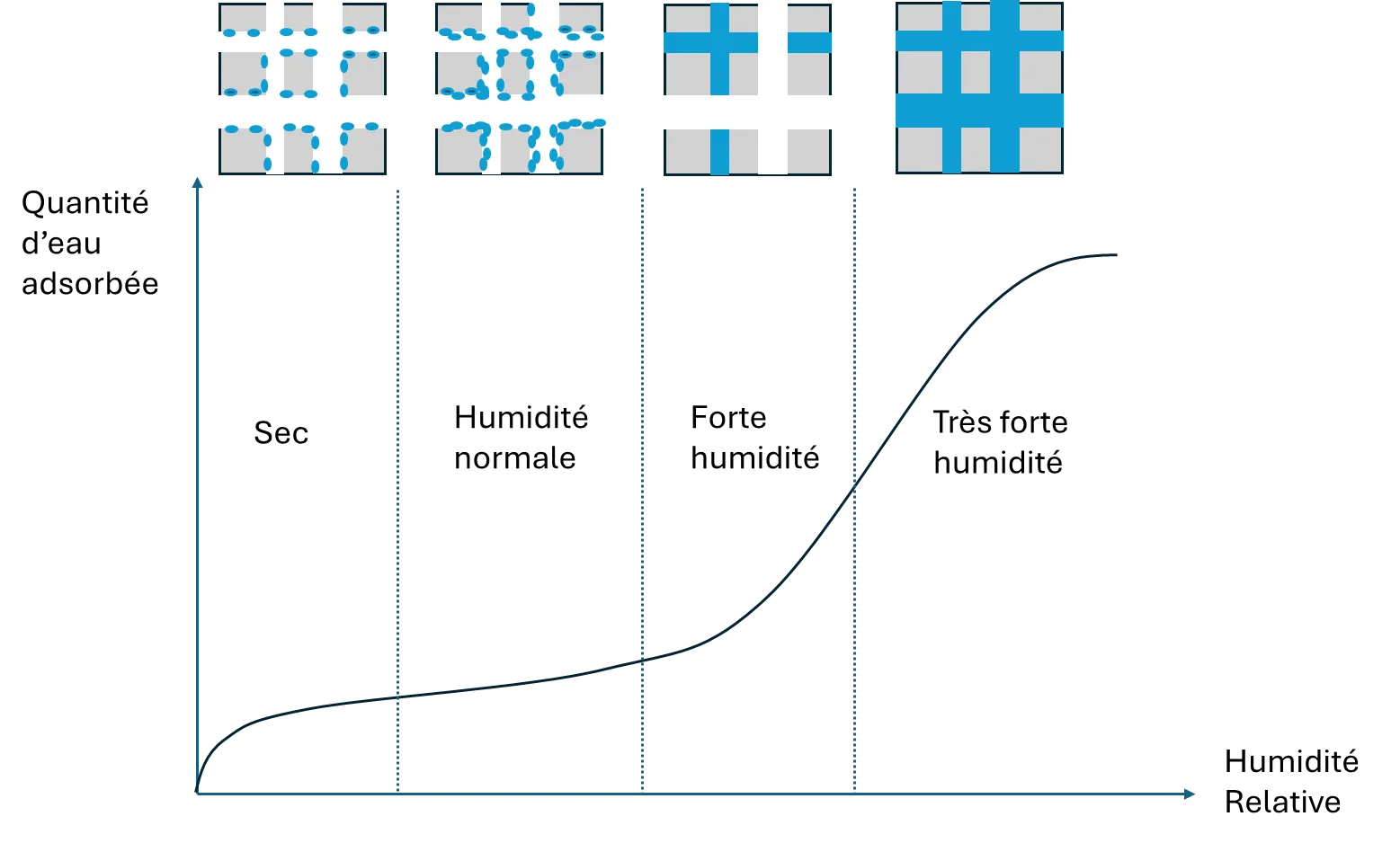
Water molecules present in the air contact the material’s surface and penetrate into the pores.
- When the air is dry, molecules simply attach to the surface.
- At a normal humidity level (around 50%), several layers of water form inside the pores.
- As humidity increases, pores fill completely with water, starting with the smallest ones.
This phenomenon is illustrated by a curve called an adsorption isotherm, essential for evaluating material performance. At 100% relative humidity, all pores are saturated and the porous network is completely filled with water.
In summary
Air Sponge combines performance, durability and ease of use. Its unique porous network delivers ultra-fast adsorption, natural regeneration and lasting efficiency, without maintenance or energy consumption. It is today one of the most effective moisture absorbents for preventing condensation and regulating air in any environment.
Quantified comparison: 5 solutions side by side
For a typical IP65+ electronic enclosure (1 L volume, temperate climate), absorbent solutions compare as follows:
| Criterion | Silica gel | Calcium chloride | Superabsorbent polymer | Breather vent (GORE) | AS-B sticker |
|---|---|---|---|---|---|
| Internal humidity regulation | ⚠️ saturates | ⚠️ saturates | ⚠️ degrades | ❌ (regulates pressure) | ✅ |
| Self-regenerating | ❌ | ❌ | ❌ | n/a | ✅ |
| Lifespan | 3-6 months | 3 months | 6-12 months | 3-5 years | Unlimited |
| Waste / enclosure / 10 yrs | ~150 g | ~500 g + brine | ~300 g | 0 | 0 g |
| Installation | Loose | Tub | Pack | Drilling | Adhesive <1 min |
| B2B industrial use | Short-term / packaging | Large volumes / containers | Rare | Pressure complement | Operating IP65+ enclosures |
Environmental and ESG impact
For a distributed fleet (telecom, EV charging, outdoor IoT), the difference is structural:
- Silica gel: recurring consumable, ~950,000 tonnes produced globally per year, not recyclable in standard streams
- Calcium chloride: corrosive brine at end of cycle, specific waste channel
- AS-B / AS-C (SRD material): one install, zero replacement, lifespan aligned with the host enclosure
ESPR (2024/1781) and CSRD / ESRS E5 regulations now require tracking and reducing these recurring consumables. Passive self-regenerating approach is a direct lever.
→ Learn more about our sustainability approach
For industrial use cases
At So Sponge, the SRD material is industrialized in two formats:
- AS-B Sticker for small volumes (IoT enclosures, cameras, sensors, in-cabinet EV charging electronics)
- AS-C Ribbon for large volumes (electrical cabinets, storage containers, technical rooms)
Published field tests:
- 85 days in 3 EV charging stations (with a French EV charging operator) — RH variability ÷ 3, condensation ÷ 2.6
- Climate chamber IP66 — zero condensation
Evaluating for design-in? Technical documentation (datasheet, adsorption isotherms, climate-chamber results), REACH/RoHS declarations and a free sizing study are available for R&D evaluations — order an evaluation roll or contact us.