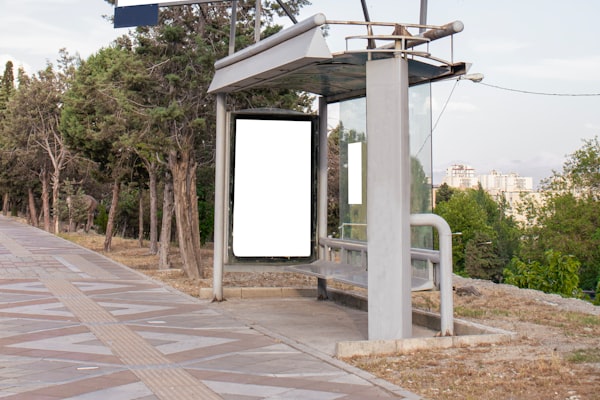
Outdoor advertising and bus shelters

Infrastructure & Storage Application

Outdoor advertising & bus shelter humidity protection IP65+

A bus shelter whose display fogs up in winter means an unreadable ad during peak hours — lost revenue for the advertiser, degraded image for the operator (JCDecaux, Clear Channel Outdoor, Outfront Media, Stroer, exterion Media), and a service ticket on a fleet dispersed across dozens of cities.

The AS-C tape protects the internal air of bus shelters, billboards, and outdoor DOOH screens with passive thermal regulation. For large-format DOOH screens with forced ventilation, AS-C complements on separate electronics compartments. Validated by the a French EV charging operator 85-day field study on 3 outdoor IP65 enclosures — 24,385 measurements winter 2025/2026.

8× usable capacity zone 60-90% RH 0 W consumption Compatible with IP65/IP66, IK10, urban furniture standards a French EV charging operator 85-day study validated

Why outdoor advertising suffers

Permanent thermal cycling on high advertising-value media assets

A bus shelter, billboard, or outdoor DOOH screen — classic 8 m² paper display, static backlit panel, digital LED totem, LCD or large-format LED screen — is permanently exposed to severe thermal cycling, in dense urban environments, over an operating lifetime of 8 to 15 years.

By day, the furniture heats up under the combined effect of direct sunlight (front display, variable exposure) and — for digital models — thermal output of LED or LCD components. At nightfall, rapid cooling. Internal pressure drops, outdoor air loaded with water vapor flows in through micro-leaks at display gaskets, power cable glands, and maintenance access doors.

Over 10 years of exposure, this represents more than 3,600 cumulative thermal cycles — far beyond the resilience of factory calcium chloride packs.

Three cumulative damages operators underestimate

1. Fogging on the inner display glass (advertising side)

On a backlit shelter, morning fog forms on the inner face of the glass on the advertising side, visible to users who see blurred or frosted ads for several hours. On Decaux/Clear Channel markets, this is the most frequent winter incident in temperate humid zones. Advertising audience value is directly eroded during the 6am-9am window — the most monetized.

2. Corrosion on lighting electronics and digital controllers

On backlit shelters, ballasts/LED drivers + LV connections oxidize progressively. On digital DOOH panels, the entire control system (CPU, 4G/5G modem for creative updates, ambient luminosity sensors) suffers. Result: occasional lighting failures, LED calibration drift, or screen freezes/reboots.

3. Accelerated aging of outdoor LED or LCD screens

Outdoor DOOH screens (high-brightness LED 2,500-7,500 nits or ruggedized LCD) have a nominal lifetime of 50,000-100,000 hours. In chronic humid environments, lifetime is divided by 1.5 to 2 through optical layer degradation, micro-corrosion of traces, and oxidation of LED matrix ribbon contacts.

Operational cost

Operational cost across an outdoor advertising fleet

For an outdoor advertising operator (JCDecaux, Clear Channel Outdoor, Outfront Media, Stroer, exterion Media, Lamar Advertising), real cost = eroded advertising value + maintenance OPEX + technical debt on the asset.

3,600+

cumulative thermal cycles

Over 10 years, passive outdoor furniture

$110-550

per field intervention

Urban furniture, PTC / SightCall

6am-9am

most monetized advertising peak

Audience peak overlaps morning fog

Several M$

eroded advertising value

Multi-thousand-face fleet, humid climate

On a fleet of 10,000 backlit shelters at a leading operator:

  • Avoidable humidity-related interventions: ~1-3% per year = 100-300 avoidable interventions/year = $11,000-165,000 OPEX/year
  • Advertising value degradation in winter morning window: not directly quantifiable but contractual review by advertisers on guaranteed audience
  • Accelerated LED screen aging on digital DOOH models: early replacement $5,500-16,500/screen on large-format DOOH
  • Operator brand image: high sensitivity as visible to the public daily

On a fleet of 1,000 digital DOOH totems at a premium operator:

  • Critical overheating failures from degraded internal humidity: tens of thousands of USD over 10 years in avoidable SAV OPEX
  • Digital audience eroded during freezes / reboots
  • High sensitivity of premium advertisers (luxury, automotive) to display quality

Structural question

Thermal regulation mode — critical for AS-C scope

Does your outdoor furniture have passive thermal regulation (natural convection cooling) or active (forced ventilation)? AS-C delivers different value in both cases.

1. Passive thermal regulation furniture — AS-C optimal scope

No active integrated system. Furniture relies on IP sealing, display geometry, and passive thermal dissipation. This is the context where AS-C delivers maximum value — the a French EV charging operator 85-day study applies scope-direct on enclosures of comparable volume.

Concerned furniture: classic bus shelters with paper advertising, static backlit shelters with low-consumption LED lighting (5-15 W) without ventilation, classic 8 m² urban backlit billboards, urban information totems without digital screen, classic 4×3 outdoor backlit panels, connected shelters with low-info screen (traffic info) without forced ventilation.

2. Digital furniture with partial active regulation — AS-C complementary scope

Localized extraction fan to evacuate LED or LCD heat, but no full internal volume climate control. AS-C complements by acting on internal air humidity in zones not swept by forced airflow.

Concerned: Outdoor LCD DOOH screens medium brightness (1,500-3,500 nits) with moderate ventilation, Smart City digital totems with touchscreen, digital connected shelters (JCDecaux Connected, Outfront Smart Shelter, Decaux Connected), digital MUPI medium format.

→ AS-C reduces fan trigger cycles → reduced electricity OPEX, extended fan lifetime.

3. Large-format DOOH with full active regulation — AS-C limited scope

Mandatory intensive active cooling (multiple forced ventilation, sometimes Peltier/compressor on premium models). High-brightness LED screens (5,000-7,500 nits) outdoor in full sun generate several hundred watts of heat. AS-C provides no value on the climate-controlled screen compartment, but can remain relevant on the separate control compartment.

Concerned: Large-format high-brightness LED DOOH (Daktronics, Absen, Lighthouse Technologies, Sansi, Unilumin LED outdoor), 8 m²+ DOOH screens in full sun, Stadium / venue displays outdoor, Building façade screens 40+ m².

→ Case-by-case study mandatory. AS-C scope typically reduced to separate control compartment.

Furniture typeThermal regulationAS-C scope
Classic shelter paper displayPassive✓ Optimal
Static backlit shelterPassive✓ Optimal
8 m² backlit urban panelPassive✓ Optimal
Wayfinding totem (no digital)Passive✓ Optimal
Connected shelter (info-only, no digital screen)Passive✓ Optimal
LCD DOOH medium brightness with fanPartial active✓ Complementary
Smart City digital touchscreen totemPartial active✓ Complementary
Large-format high-brightness LED DOOHFull active⚠ Control compartment only
40+ m² building façade screenFull active⚠ Control compartment only
Outdoor stadium displayFull active⚠ Control compartment only

Not sure of your fleet's regulation mode? So Sponge offers a rapid qualification sheet (3-5 visual and technical criteria). Request the sheet →

State of the art

Why current solutions don't work (on passive furniture)

Calcium chloride salts (Rubson, Wisedry, Damprid)

Default solution from most urban furniture manufacturers. Pack 5-50 g integrated at factory by volume.

  • Saturated within 6-12 months on exposed outdoor furniture
  • Never replaced once furniture is installed (dispersed fleet across dozens of cities, limited installation authorization)
  • Designed for transport and the first year

→ AS-C addresses this exact pain point on passive furniture.

Pressure equalization vent

Found on modern IP65/IP66 urban furniture — Gore Vent or equivalents.

  • Doesn't control internal humidity: water vapor passes through the membrane
  • The a French EV charging operator 85-day study confirms: on an outdoor IP65 enclosure with breather only, the correlation between internal and external RH stays at 0.54 (vs 0.02 with AS-C)

→ AS-C and pressure vents are complementary.

Anti-fog heating element on glass

Solution on some premium backlit shelters in cold climates. Heater integrated behind the glass to eliminate visible morning fog.

  • Consumes 30-150 W (~30% real duty cycle) on dispersed assets in large numbers = energy OPEX multiplied by thousands of units
  • Display footprint
  • Electromechanical component = additional point of failure
  • Treats the symptom (visible glass fog) not the root cause (internal humidity) — doesn't protect lighting electronics

→ AS-C addresses the root cause. Positive collateral on glass fog (dry internal air doesn't condense on the inner surface of the glass).

Peltier cooling / forced ventilation (digital premium furniture)

Found on large-format DOOH screens. Mandatory active solution to evacuate high-brightness LED heat.

  • Climate control manages T° + RH only in the climate-controlled screen compartment
  • The separate control compartment (modem, CPU, power supply) is typically not climate-controlled and remains vulnerable to humidity

→ On this furniture type, AS-C only adds to the separate control compartment.

Choose your format

Which AS-C format for your furniture type (passive regulation)

Furniture typeInternal volumeRecommended AS-C format
Classic 4-6 seat shelter display + lateral ad cases200-500 L per caseAS-C tape (multiple meters cumulated)
Static backlit shelter100-300 L per caseAS-C tape (sized surface)
8 m² backlit urban panel100-250 LAS-C tape
4×3 outdoor backlit panel50-150 LAS-C tape
Urban wayfinding totem no digital screen30-100 LAS-C tape
Compact MUPI50-100 LAS-C tape
Outdoor wayfinding kiosk20-60 LAS-B/L or AS-C by volume

Special cases requiring prior qualification (full active regulation):

  • Large-format high-brightness LED DOOH: control compartment only
  • 40+ m² building façade screen: joint technical study So Sponge + manufacturer engineering team

Integration

How to integrate in practice

Classic backlit shelter (passive)

AS-C tape (5-8 cm width, sized cumulated length) bonds to inner walls of lateral ad cases and — if applicable — lighting compartment. Application: 5-10 minutes per shelter during routine maintenance. No mechanical or electrical modification.

8 m² backlit urban panel (passive)

Apply AS-C tape on main inner case wall, away from hot components (LED drivers, ballasts), ideally upper area. Surface sized by AS-C calculator.

Smart City digital touchscreen totem (partial active)

Apply AS-C tape in the control compartment (CPU, modem, luminosity sensor), away from screen extraction fan airflow. The actively-cooled screen compartment doesn't need AS-C.

Large-format LED DOOH (full active)

For a high-brightness LED DOOH panel, AS-C deployment is limited to the separate non-climate-controlled electronics compartment (typically communication / HV power / auxiliary sensors compartment). The actively-ventilated screen compartment doesn't need AS-C. Joint technical study So Sponge + manufacturer engineering team recommended.

Animation

Silica gel vs SRD: adsorption isotherms under humidity cycling

Observe how the compared materials behave over a single cycle, then across time.

0.9 0.8 0.7 0.6 0.5 0.4 0.3 0.2 0.1 0 0 20 40 60 80 100 Relative humidity (%) Water adsorbed (mL/g) Cap 0.4 mL/g Silica accumulated: 0.00 mL/g SRD current load: 0.00 mL/g Silica gel (isotherm) SRD (isotherm)
Scrub timeline slow-mo
↤ cycle 1 slow-mo fast cycles →

Cycle

1

Current RH

50%

Silica gel saturation 0%

Cap 0.4 mL/g

⚠ REPLACE
SRD saturation 5%

Cap 0.87 mL/g

0 cycles complete

Field proof

field study — 85 days / 24,385 measurements

The field study is the most directly applicable So Sponge field proof for passively-regulated outdoor advertising furniture: 3 outdoor IP65 enclosures, 85 days, 24,385 measurements at 5-minute intervals, in real winter 2025/2026 conditions on enclosures of comparable volume to a medium urban furniture case.

÷ 2.6

time in condensation zone

Control vs AS-C-equipped enclosure

÷ 3

internal RH variability

Marked stabilization of internal climate

0.02 vs 0.54

internal/external RH correlation

Regulation independent of external climate

Real-conditions field study, not a lab test: 85 days of continuous measurements on outdoor IP65 enclosures in winter exposure. For backlit shelter ad cases and 8 m² urban panels with passive regulation, the SRD mechanism still applies — a personalized sizing study is recommended to validate scope on your specific fleet.

FAQ

Outdoor advertising and anti-condensation

How do I know if my outdoor furniture has active or passive thermal regulation?

Three quick criteria: (1) presence of digital screen — a touchscreen shelter or high-brightness LED panel likely has active ventilation; a paper display or static backlit shelter is passive; (2) visible ventilation events — a visible extraction fan or air grilles signal active regulation; (3) noise during operation — a high-brightness LED DOOH panel emits a slight ventilation noise, a classic backlit shelter is silent.

My backlit shelters show a peak of morning fog in winter — can AS-C really change that?

Yes, provided shelters are passively regulated — which is the case for nearly all static backlit MUPI models. Morning fog is caused by day/night thermal cycles bringing humid outdoor air. The a French EV charging operator 85-day study on 3 outdoor IP65 enclosures of comparable volume (24,385 measurements, winter 2025/2026) demonstrates a 2.6× reduction in time spent in condensation zone and a 0.02 correlation between internal and external RH (vs 0.54 for the control enclosure). Observed effect: the inner display glass on the advertising side no longer condenses — internal air maintained below 60% RH.

Does AS-C also protect advertising value during the 6am-9am window?

Yes — actually the main sales argument for advertising operators. The 6am-9am winter morning window overlaps with the morning fog peak. By eliminating internal condensation, AS-C maintains advertising display legibility during this most monetized window — directly preserving guaranteed audience value to advertisers.

On a high-brightness LED large-format DOOH (5,000+ nits) — does AS-C provide value?

Case-by-case study. On the actively-cooled screen compartment, AS-C provides no value — active regulation already maintains RH below 60%. However, the separate control compartment (modem, CPU, HV power, ambient luminosity sensors) is typically not climate-controlled and AS-C remains fully relevant there. So Sponge accompanies the technical study with your engineering team to identify the applicable perimeter.

Compatibility with urban furniture standards?

No identified incompatibility. These standards (EN 12767 obstacles, EN 12899 traffic signs, accessibility standards) cover urban safety and accessibility requirements — they don't specify anti-condensation accessory composition. SRD material is passive, inert (mesoporous aluminum oxide), REACH and RoHS compliant.

What about my 8-year-old shelter fleet?

Retrofit possible as preventive intervention. AS-C bonds to deployed shelter during routine maintenance (advertising change, glass cleaning, lighting ballast replacement). Retrofit prevents further degradation and stabilizes future performance, without repairing existing corrosion. Typical estimated ROI: 2-4 years.

Does AS-C void my furniture manufacturer's IP65 warranty?

No. AS-C is a passive accessory placed inside the case, with no modification of external enclosure or sealing gaskets. IP65 warranty preserved. For large-scale deployments, prior notification to manufacturer is recommended best practice.

MOQ and lead time for an advertising operator?

Standard MOQ: surface sized by furniture model. Lead time 6-8 weeks. Express on request. Tiered pricing by volume.

Performance in tropical humid climate (SE Asia, Caribbean, Equatorial Africa)?

Precisely the use case where AS-C delivers the most value. Atmospheric humidity density in tropical zones creates a permanent cumulative load on outdoor furniture, and corrosion accelerates significantly. AS-C maintains internal RH below 60% independently of external RH — field study demonstrates 0.02 correlation between internal and external RH (vs 0.54 for unprotected enclosure). Relevant for outdoor advertising deployments in Southeast Asia, Latin America, Sub-Saharan Africa.

CSRD and carbon reporting: does AS-C provide an argument on scope 3?

Yes. By extending urban furniture and electronics lifetime, AS-C reduces asset renewal frequency — therefore reducing carbon footprint reported annually under scope 3. Relevant argument for advertising operators subject to CSRD (most major European players since 2024).

Evaluation

Request your free samples

Test the AS-C tape on your own shelters, panels, or totems. So Sponge provides free samples for B2B evaluation, a rapid qualification sheet of regulation mode, and a free sizing study for multi-city deployments.

Going further

Related technical resources