Outdoor maritime storage container — AS-C anti-condensation protection

Infrastructure & Storage Application

Anti-humidity and anti-condensation for storage containers and self-storage

A closed container outdoors is a thermally extreme system: at night the temperature drops, internal humidity exceeds 90% RH and condenses on walls as droplets. In the morning, those droplets run down — this is called « container rain ». On stored cardboard, archives, furniture, electronics: mold, oxidation, claims.

The AS-C tape protects internal air of 10/20/40ft maritime containers, self-storage boxes and outdoor archive units. 1-year field-validated at CAPSA, French leader in container conversion.

RH maintained < 80% continuously 1-year CAPSA field-validated 0 W — no power required Eliminates « container rain »

« Container rain »

A phenomenon specific to closed-container storage

A closed non-climatized container is a thermally extreme system. The trapped air contains a quantity of water vapor (RH at time T). Over the day/night thermal cycle:

  • During the day: temperature rises (sun-exposed walls, internal T 35-50°C), RH mechanically drops, water vapor stays in the air
  • At night: temperature falls (sometimes 10-15°C in a few hours), RH rises sharply
  • If RH > 90%, air reaches dew point and vapor condenses on internal surfaces (roof, walls, stored goods)
  • By morning, droplets run down: this is « container rain »

Possible consequences on stored goods

Occurrence varies — depends on local climate, container exposure, and especially what is stored. A box of newspaper paper reacts very differently from steel furniture or a PC. On a fleet level, the cumulative effect remains measurable even if individual cases are random.

1. Mold and odors on cardboard, textiles, paper archives

Cardboard, books, paper archives, textiles stored in container or self-storage box absorb air humidity. Beyond 70% continuous RH, fungal development begins. Goods become unfit for long-term storage: stains, odors, collapsed cardboard support. Real measurable claim rate at self-storage operators.

2. Oxidation of metal items (furniture, tools, appliances)

Metal furniture, tools, appliances (washing machine, fridge, stove) stored in self-storage suffer accelerated oxidation at RH > 70%. Rust spots, hinge degradation, electrical failures upon reassembly. Frequent disputes upon return to renter.

3. Stored electronics degradation (PCs, TVs, instruments)

Stored electronics (computers, audio-video, measurement instruments) suffer internal condensation on PCB. Upon recommissioning, failures or immediate breakdowns. On premium boxes or technical archive containers (lab, medical), this is the main risk.

Operational cost

Operational cost on a box or container fleet

2-4 months

Rubson saturation cycle

Calcium chloride pouches (Rubson, Wisedry) — saturate and need replacement

4-6 ×

replacements per box per year

Round trips — multiplied by fleet size

1 year

CAPSA field test AS-C

No degradation, no replacement

< 80% RH

maintained continuously

Vs > 90% on the control container (without AS-C)

For a fleet operator — beyond avoided claims (random, hard to quantify), the real value levers are:

  • Brand image: fewer disputes = fewer negative Google reviews = B2C differentiation — the most tangible lever
  • Eliminating Rubson replacement operational burden: recurring round trips, per-box tracking, hazardous waste collection (corrosive calcium chloride brine)
  • CSRD scope 3 argument: elimination of calcium chloride consumables (hazardous waste) + extended lifetime of stored goods — valuable in operator's CSR report
  • Premiumization: positioning as "passively regulated box" for premium archiving targets (legal, medical, technical)

Scope

Verticals and storage types covered

Self-storage — B2C operators

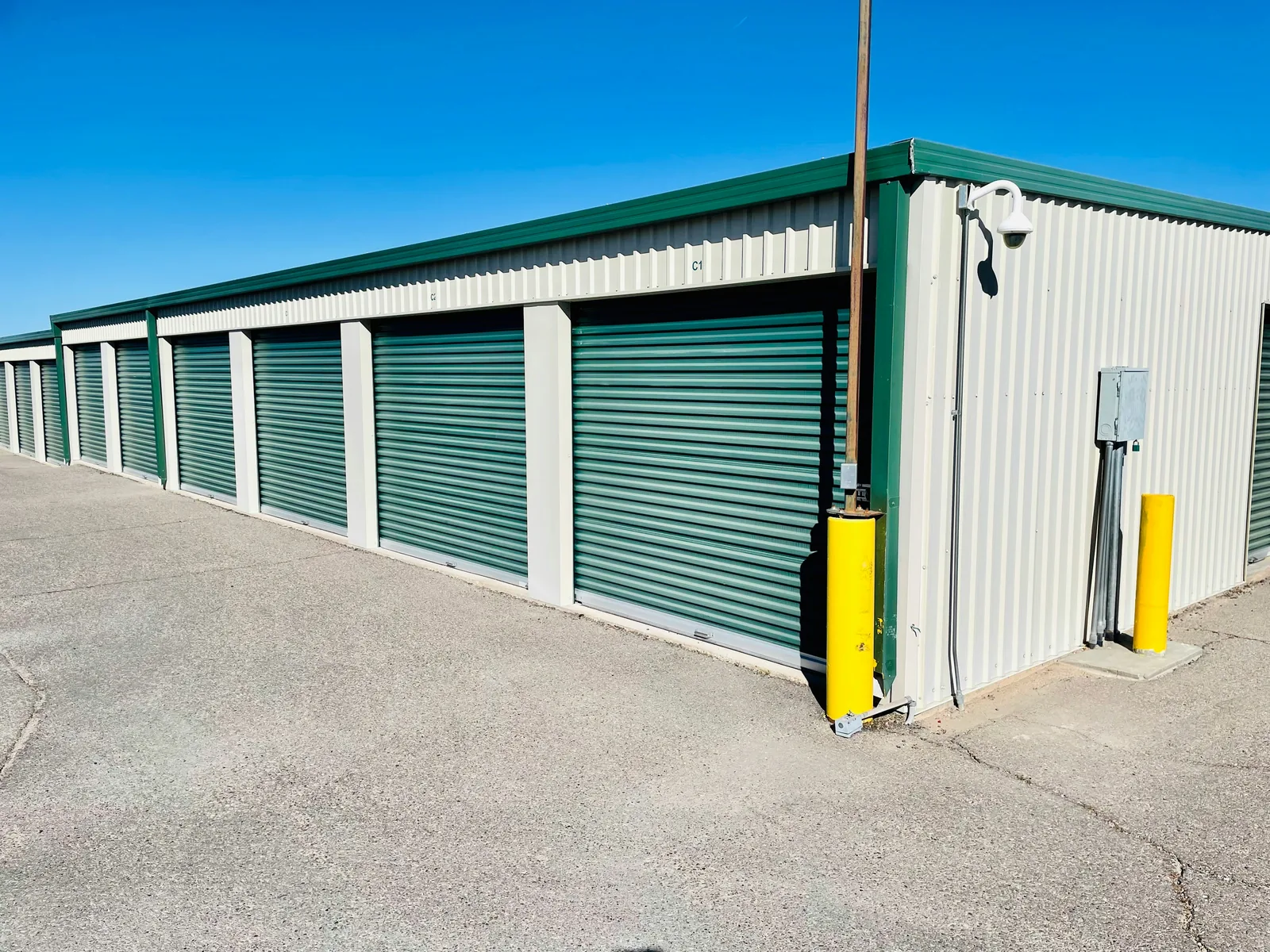
  • Outdoor self-storage (3-30 m³ boxes) — major French and European chains
  • Individual and professional storage units
  • Long-term consignment (relocation, expatriation, succession)
  • Seasonal storage (garden furniture, sports equipment, event decor)

Corporate archiving

  • Legal archiving (law firms, accounting expertise, notaries)
  • Medical archiving (radiology, patient records, biomedical samples)
  • HR and administrative archiving (mid-cap, ETI)
  • Lab/medical instrument storage awaiting redeployment

Maritime containers & logistics

  • 10/20/40ft containers in static storage (before/after transport)
  • Reefer containers in extended idle periods between cycles
  • Temporary logistics platforms (construction, BTP, events)
  • Export-import buffer storage (customs, transit)

Container converters & modular use

  • CAPSA and other maritime container converters for professional or event use
  • Modular construction site offices (BTP, infrastructure)
  • Event containers (pop-up shop, restaurant, exhibition)
  • Habitat / hospitality modules (tiny house, converted container)

State of the art

Why current solutions aren't always suitable

Calcium chloride salts (Rubson, Wisedry, Damprid) — the sector incumbent

  • Most widely used solution today in self-storage and container storage
  • Saturate quickly and generate corrosive brine (calcium chloride dissolved + water)
  • Leak risk on stored goods (stains, corrosion on metal and paper)
  • Regular replacement (2-4 month cycle) — recurring operator round trips, per-box tracking, mental load
  • Several kg of hazardous waste per installation/year (brine = waste requiring specific collection)

→ AS-C is dry, inert, unlimited lifespan. No brine, no replacement round trips, no risk to goods.

Forced ventilation / aeration

  • Requires electrical power (impossible on outdoor self-storage boxes)
  • Ineffective if outside RH > inside RH (humid summer, oceanic climate)
  • Reduced security (ventilation = openings = theft)

→ AS-C works closed container, zero power.

Sprayed cork insulation for containers

  • Significant capex (~$550 incl. labor)
  • Roll-out at scale harder on installed fleet (box / container occupancy rate)

→ AS-C deploys in minutes per unit, even on a loaded container.

Format selection

AS-C dimensioning per container type

Container typeInternal volumeAS-C strips 2 m × 8 cm
Self-storage box S3-5 m³1-2 strips
Self-storage box M5-15 m³2-3 strips
Self-storage box L / XL15-30 m³3-5 strips
10ft container (CAPSA tested)~16 m³3-4 strips
Standard 20ft container~33 m³4-6 strips
Standard 40ft container~67 m³8-12 strips
High cube 40ft container~76 m³10-14 strips
20ft reefer container~28 m³4-5 strips

Indicative dimensioning — varies by storage density and local ambient RH. Free personalized study for fleets > 50 units.

Animation

Silica gel vs SRD: adsorption isotherms under humidity cycling

Observe how the compared materials behave over a single cycle, then across time.

0.9 0.8 0.7 0.6 0.5 0.4 0.3 0.2 0.1 0 0 20 40 60 80 100 Relative humidity (%) Water adsorbed (mL/g) Cap 0.4 mL/g Silica accumulated: 0.00 mL/g SRD current load: 0.00 mL/g Silica gel (isotherm) SRD (isotherm)
Scrub timeline slow-mo
↤ cycle 1 slow-mo fast cycles →

Cycle

1

Current RH

50%

Silica gel saturation 0%

Cap 0.4 mL/g

⚠ REPLACE
SRD saturation 5%

Cap 0.87 mL/g

0 cycles complete

Field validation — customer reference

1-year test at CAPSA — results

CAPSA, French specialist in design, transformation and conversion of maritime containers into modular professional and event spaces, provided two non-insulated 10ft containers for a long-duration AS-C tape field experiment in real conditions.

3-phase protocol

Phase 1 — Container selection and instrumentation

Two identical 10ft containers, equipped with humidity and temperature sensors (professional testers) for rigorous monitoring of day/night thermal cycles.

Phase 2 — Preliminary phase (3 days)

Measurements in both empty containers to validate identical reaction to ambient conditions — eliminates any bias from location, exposure or wall state difference.

Phase 3 — AS-C installation in one container (continuous testing)

Dimensioned AS-C tape installed in only one of the two containers (the other = control without AS-C). Continuous readings over several months.

Key results

  • Control container (no AS-C): RH > 90% at night, internal condensation (« container rain ») observed regularly
  • AS-C container: RH maintained below 80% continuously, no internal condensation
  • Spontaneous diurnal regeneration of the tape observed on the curve — efficacy maintained throughout the test
  • No performance degradation after nearly 1 year in the container

FAQ

Storage container and anti-condensation

What is « container rain »?

Phenomenon where internal moisture condenses on the roof and walls of a closed container under day/night thermal cycles. At night, temperature drops, moist air (>90% RH) reaches dew point and water deposits on surfaces. In the morning, droplets run down like rain. Causes mold, oxidation and degradation of stored goods.

Is AS-C tape effective on a non-insulated 10ft container?

Yes — exactly the case tested at CAPSA for nearly a year. AS-C maintained internal humidity below 80% RH continuously, despite extreme thermal cycles of non-insulated maritime containers. No performance degradation after 1 year.

What AS-C dimensioning for a 20ft container?

For an empty 20ft container (33 m³), plan 4 to 6 AS-C strips 2 m × 8 cm bonded high on side walls. For a container loaded with cardboard boxes, 6 to 8 strips depending on storage density. Free dimensioning study on request.

Compatible with refrigerated container (reefer)?

Yes without interaction with the cooling system. AS-C is passive, consumes no energy and doesn't disturb T regulation. Especially useful on reefers in extended idle periods (between transport cycles) where residual humidity can accumulate.

Compatible with individual self-storage box?

Yes — AS-C format adapts to any box size (3 m³, 10 m³, 30 m³). 1 to 3 strips for small boxes, up to 4-6 for XL boxes. AS-C protects stored goods (cardboard, archives, furniture, electronics) without electrical power required in the box.

My container is in full sun in summer (40°C+ inside) — does AS-C resist?

AS-C operating range: -20°C to +70°C. Covers extreme conditions of exposed containers. SRD material is inert to UV / outdoor thermal cycles. Performance maintained in CAPSA test all seasons.

Need to open the container regularly to ventilate after AS-C installation?

No. AS-C is self-regenerating: adsorbs humidity when RH > 60%, releases it when RH drops (spontaneous regeneration during the day when T° rises). No manual ventilation required — the tape handles the cycle automatically, container closed.

MOQ and lead time for self-storage operator with 100-box fleet?

Standard MOQ: 50 AS-C strips 2 m × 8 cm. For a 100-box fleet (200-400 strips depending on dimensioning), 4-6 weeks lead time after confirmation. Volume tiered pricing.

Difference with Rubson / calcium chloride (the sector incumbent)?

Calcium chloride salts (Rubson, Wisedry, Damprid) are the most-used solution today in self-storage and container storage. But they saturate in 2-4 months and generate corrosive brine (hazardous waste). On a 100-box fleet, that's 4-6 replacement round trips per box per year — heavy operational management, per-box tracking, mental load, leak risk on stored goods. AS-C: passive, self-regenerating, unlimited lifespan — zero round trips, zero brine.

CSRD scope 3 argument for self-storage operator?

Yes — on two concrete dimensions. (1) AS-C eliminates Rubson / calcium chloride consumables and their corrosive brine (hazardous waste requiring collection), replacing dozens of kg of waste/year per installation. (2) It extends the lifetime of stored goods. Zero energy consumption. Argument valuable in CSR reports of self-storage operators and logistics providers.
Evaluation

Request your free samples

Evaluate the AS-C tape on your own containers or boxes. So Sponge provides free samples for B2B evaluation and offers a free dimensioning study for fleets ≥ 20 units.

Going further

Related technical resources