Activated alumina vs silica gel: which desiccant for enclosures?
The short answer
Silica gel, activated alumina and molecular sieve are all porous adsorbents that pull water vapour out of the air. They differ in three things that matter for a sealed enclosure: the humidity range where they work best, the temperature they need to be dried again, and what happens once they are full. In a box that cycles between day and night, the useful question is not “which one holds the most water” but “which one gives that water back at the right moment and takes it again the next night, without anyone opening the lid”. Only a self-regenerating desiccant does that; it happens to be a mesoporous alumina.
So Sponge manufactures that material. Method and sources are at the end of the page.
See the validated use cases · Request a free sample kit
Three materials, one mechanism
All three work by adsorption: water molecules attach to the walls of pores so small that their combined surface runs to hundreds of square metres per gram. What differs is the pore size and the chemistry of the wall, and that sets the shape of the adsorption curve, the capacity at a given relative humidity.
Silica gel is an amorphous silicon dioxide with a specific surface of 750 to 800 m²/g. Type A gel has pores around 2.5 nm, type B between 4.5 and 7 nm. It adsorbs up to about 37 % of its weight in humid air and is dried again at about 120 °C for one to two hours. The blue cobalt chloride indicator that used to signal saturation is restricted in Europe; current indicating gels use other dyes.
Activated alumina is a porous aluminium oxide obtained by dehydrating aluminium hydroxide. It is chosen over silica gel when mechanical strength, thermal stability or resistance to liquid water matter: a bead of activated alumina does not shatter when it meets a drop of water, a bead of silica gel can. Regeneration needs more heat, typically 150 to 200 °C, and up to 315 °C in industrial dryers.
Molecular sieve is a synthetic zeolite with pores of a fixed size, 3, 4, 5 or 10 ångströms. It holds 19 to 24 % of its weight in water depending on the grade and, unlike the other two, keeps most of that capacity at very low humidity, which is why it dries solvents and compressed gases so well. It needs 175 to 315 °C to regenerate.
SRD, the self-regenerating desiccant, is a transition alumina, a mesoporous aluminium oxide whose pore structure allows capillary condensation of water vapour. The material was developed at Université Lyon 1 with IFP Energies nouvelles from aluminas used as catalyst supports in refining. It starts adsorbing at around 60 % relative humidity, holds about eight times the useful capacity of silica gel between 60 and 90 % RH, and releases the water again during the warm phase of the daily cycle, at ambient temperature, inside the enclosure. The material page shows the adsorption and desorption curves.
Activated alumina vs silica gel vs molecular sieve: the table
| Criterion | Silica gel | Activated alumina (industrial) | Molecular sieve | SRD (mesoporous alumina, AS-B sticker) |
|---|---|---|---|---|
| Water capacity, saturated | Up to 37 % of its weight | High, close to silica gel | 19 to 24 % of its weight | Not the relevant figure: it cycles |
| Behaviour below 60 % RH | Adsorbs | Adsorbs | Adsorbs strongly | Inactive by design |
| Behaviour at 60 to 90 % RH | Adsorbs until full | Adsorbs until full | Limited extra capacity | Eight times the useful capacity of silica gel |
| Regeneration | About 120 °C, 1 to 2 h, in an oven | 150 to 200 °C typical, up to 315 °C | 175 to 315 °C | Spontaneous at ambient temperature, inside the enclosure |
| Reuse without opening the enclosure | No | No | No | Yes, unlimited cycles |
| Contact with liquid water | Bead can shatter | Withstands it | Withstands it | Bonded material, no beads |
| Dust and abrasion | Low | Medium (hard bead, abrades) | Low | None, material is bound in a sticker |
| Usual format | Sachet, beads | Loose beads, sachet | Beads, sachet | Self-adhesive 50 × 20 mm sticker, one per litre |
| Saturation indicator | Optional dye | No | No | Not needed |
| Typical use | Packaging, transport, small boxes | Compressed air and gas drying, high humidity | Solvent and gas drying, very low dew points | Sealed electronic enclosures, 0.5 to 100 L |
Data as of 28 September 2026. Capacities and regeneration temperatures from the sources listed at the end; “high” for activated alumina is the qualitative rating used by suppliers, no single figure applies across grades. Competitor columns describe the material type, not one product.
Request a free sample kit · Size your enclosure
Why the humidity range matters more than the capacity
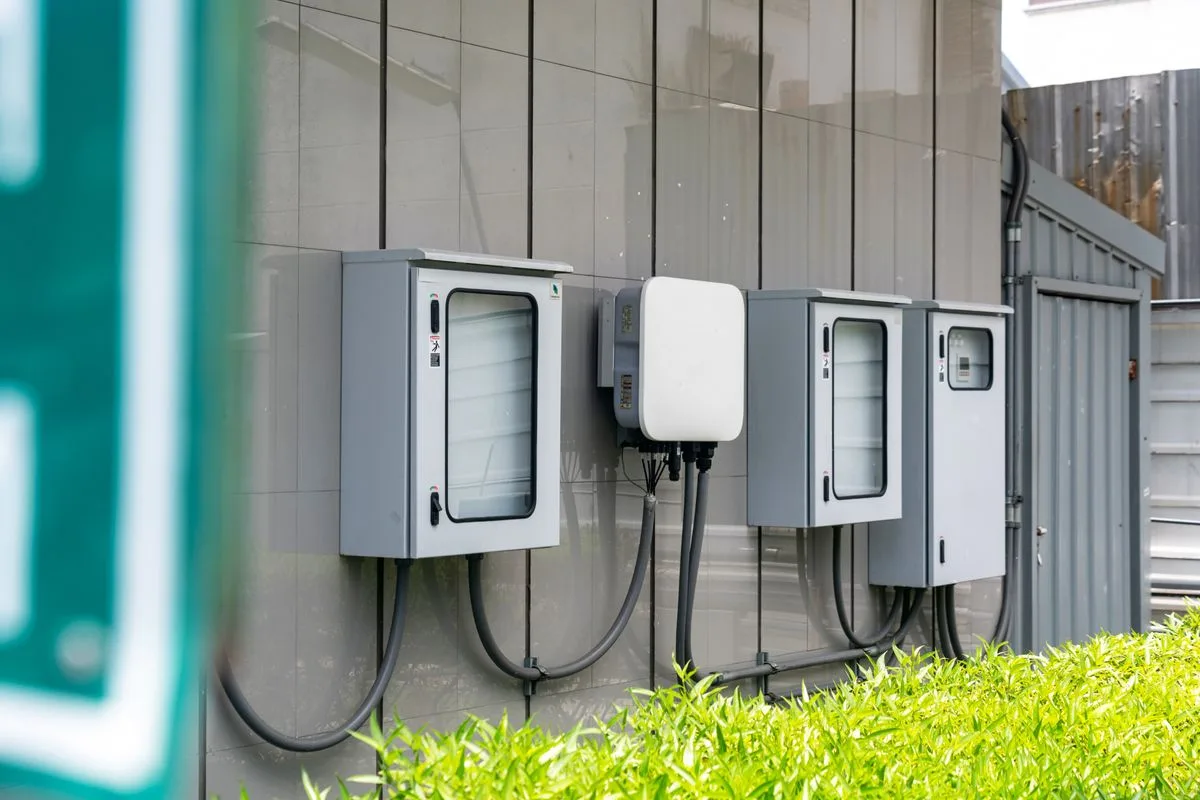
A sealed IP65 or IP67 enclosure is not a dry gas line. It breathes: every day the air inside warms and pushes out through the seals, every night it cools and draws humid air back in. The mechanism is described in IP65 enclosures breathe. The desiccant inside therefore sees humidity that swings between, say, 35 % in the afternoon and 95 % at dawn, and condensation only threatens at the top of that swing.
A material that adsorbs strongly at 30 % RH, which is what a molecular sieve and, to a lesser degree, silica gel and activated alumina do, spends its capacity on air that was never going to condense. It fills up in weeks and then does nothing. A material that ignores the dry hours and only captures water above 60 % RH keeps its capacity for the moment that counts. That is the reason the SRD material was engineered with a threshold, not as a flaw of the others: silica gel and molecular sieve are excellent where the goal is the lowest possible dew point in a closed volume that never reopens to humid air.
The second consequence is regeneration. Silica gel, activated alumina and molecular sieve all give their water back, but only in an oven, at 120 to 315 °C, outside the enclosure. In the field that means a site visit, or a replacement sachet. The SRD material gives its water back at the temperature of an afternoon sun on the box, because capillary condensation in mesopores is reversible with a hysteresis that lets the material fill at night and empty by day. Nothing to replace, nothing to power.
Desiccant types, in one paragraph each
- Silica gel: the default sachet. Cheap, safe, easy to regenerate in an oven, capacity up to 37 % of its weight. Fills up in a breathing enclosure and has to be swapped. See Reusable and rechargeable desiccants.
- Activated alumina: the industrial dryer bead. Tougher than silica gel, tolerates liquid water and heat, regenerates hotter. Mostly sold in bulk for compressed-air and process gas dryers, rarely in enclosure sachets.
- Molecular sieve: the low-dew-point specialist. Fixed pore size, strong adsorption even in dry air, the most demanding to regenerate. Used for solvents, gases, insulated glass units.
- Calcium chloride: not an adsorbent but a deliquescent salt that dissolves in the water it captures. Very high capacity, produces brine, needs a container. Covered in Calcium chloride: the forgotten bulk desiccant.
- Clay (bentonite): the low-cost packaging desiccant, lower capacity than silica gel, not regenerated in practice.
- SRD, mesoporous alumina: the self-regenerating option for enclosures that breathe. Threshold at about 60 % RH, cycles indefinitely at ambient temperature, sticker format. See the material.
Which desiccant for which job
- Compressed air, process gas, solvent drying: activated alumina or molecular sieve, in a dryer with a regeneration cycle. Capacity at low humidity and thermal robustness are what you pay for.
- Packaging and transport of goods: silica gel or clay sachets, sized for the trip, thrown away or oven-dried at arrival.
- Sealed electronic enclosure in the field, 0.5 to 100 litres: a self-regenerating desiccant bonded to the lid, one 50 × 20 mm sticker per litre, because the enclosure breathes and nobody will come back to change a sachet. The AS-B sticker is that format.
- Cabinets, shelters and containers above one cubic metre: the same material as a 200 × 8 cm ribbon, the AS-C ribbon, alone or next to a heater. The heater question is treated in Enclosure heater vs desiccant.
What the field says
On a 0.6-litre IP67 camera enclosure, 48 hours in a climate chamber at −1 to +3 °C and 90 to 94 % RH left glass and optics dry with a single 10 cm² SRD strip. On an autonomous agricultural robot, a silica gel sachet and a pressure compensator were already fitted and were not enough; the sticker removed the residual moisture. Both cases, with protocol and results, are on the validated use cases page; no customer is named.
How we compared, and our position
So Sponge manufactures the SRD material compared here, as the AS-B sticker and the AS-C ribbon. Figures for silica gel (capacity up to 37 %, regeneration at about 120 °C, surface 750 to 800 m²/g, pore sizes, cobalt indicator restriction) and molecular sieve (19 to 24 % capacity by grade, regeneration 175 to 315 °C) are taken from the public references listed below. Activated alumina figures are the regeneration range given by desiccant suppliers; its capacity is rated qualitatively because it varies by grade. The SRD figures are So Sponge’s own characterisation, shown on the material page. This page will be revised when better public data appears.
Related comparisons: Enclosure heater vs desiccant · Reusable and rechargeable desiccants · Silica gel vs So Sponge AS-B, lab test · All anti-condensation solutions compared
Order AS-B online, from €100 excl. VAT
Sources
- Wikipedia, Silica gel: capacity up to 37 % of its weight, regeneration at about 120 °C for 1 to 2 hours, specific surface 750 to 800 m²/g, pore sizes, cobalt chloride indicator restricted in Europe
- Wikipedia, Molecular sieve: water capacity 19 to 20 % (3A), 20 to 21 % (4A, 5A), 23 to 24 % (10X, 13X); regeneration 175 to 315 °C
- SSE, Activated alumina desiccant vs silica gel, molecular sieve and activated carbon: regeneration 150 to 200 °C for activated alumina, 100 to 120 °C for silica gel, 200 to 300 °C for molecular sieve; qualitative capacity ratings
- So Sponge, self-regenerating mesoporous material: material page and validated use cases