What is condensation? Simple and clear explanations
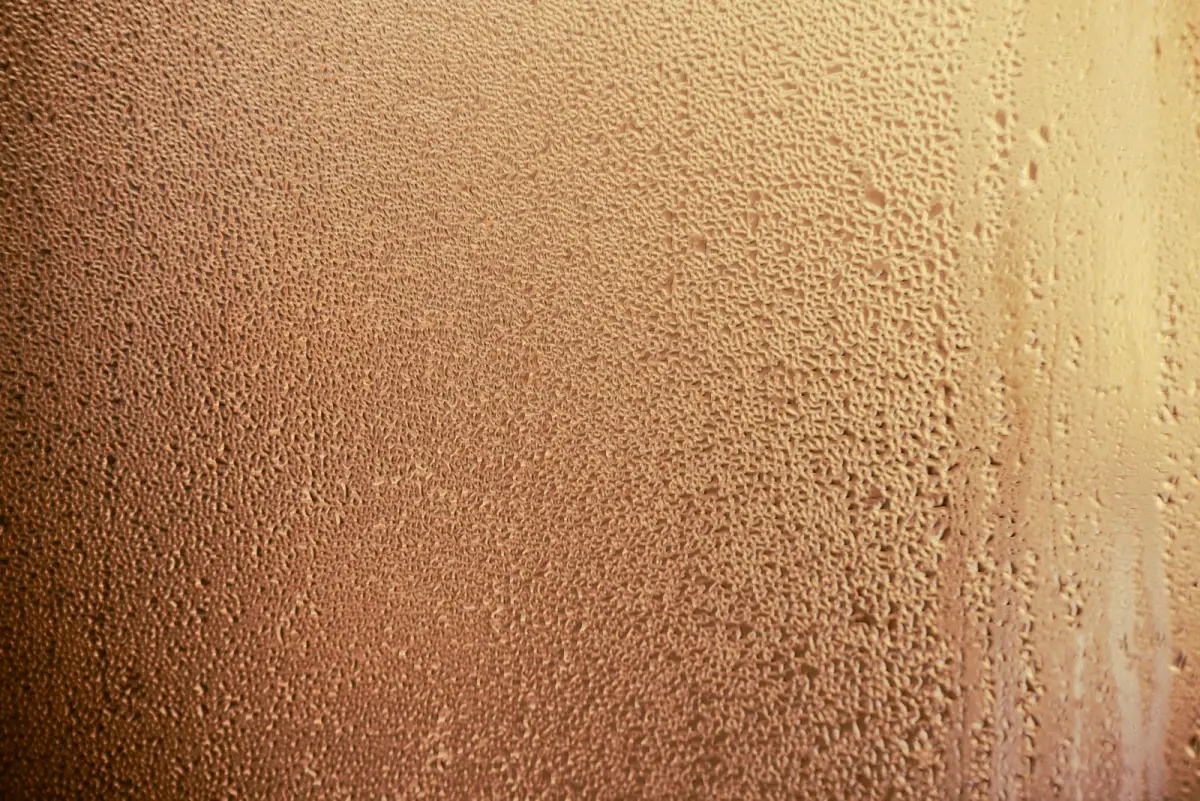
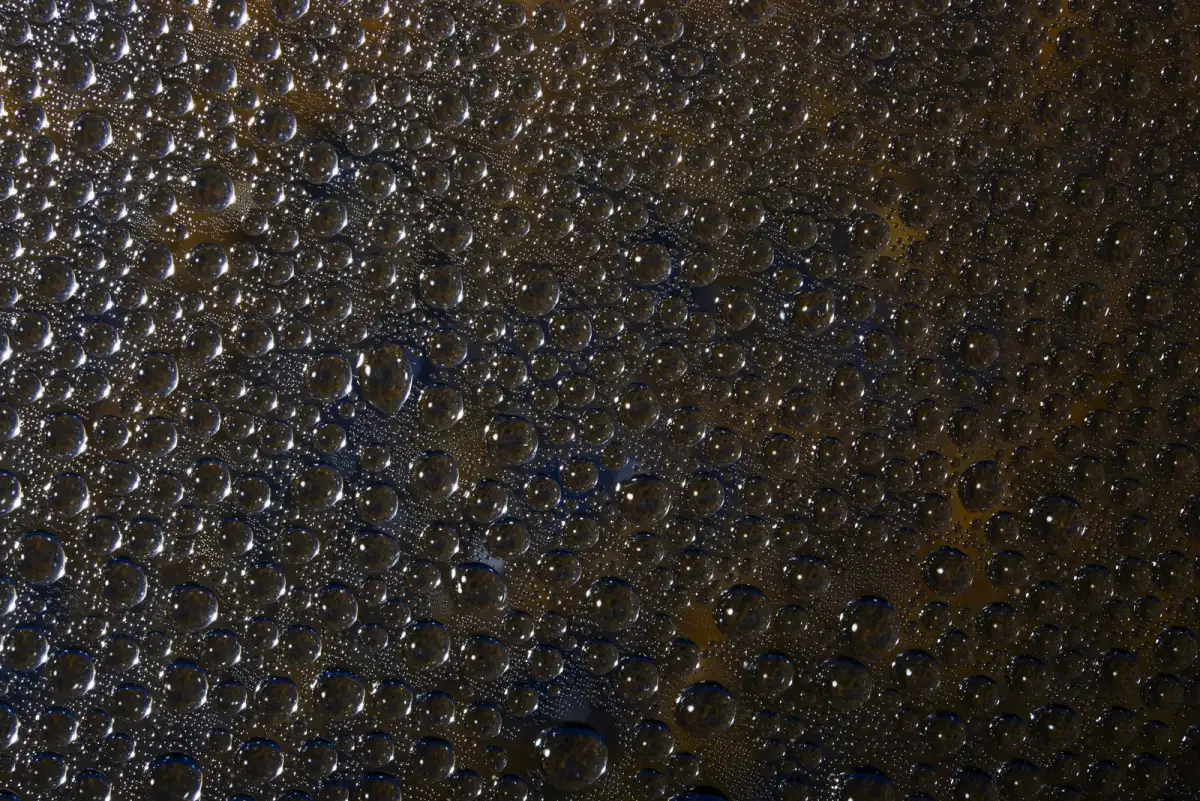
Condensation is the process by which water vapor in the air turns back into liquid water. It happens when humid air cools below its dew point or reaches saturation (100 % relative humidity) — typically on contact with a colder surface such as a window, a metal wall or the ceiling of a storage container.
Condensation in a table — when does humid air start to condense?
| Air temperature | Relative humidity | Dew point (condensation starts on any surface below) |
|---|---|---|
| 20 °C | 50 % | 9.3 °C |
| 20 °C | 70 % | 14.4 °C |
| 25 °C | 80 % | 21.3 °C |
| 30 °C | 60 % | 21.4 °C |
| 10 °C | 90 % | 8.4 °C |
Values from the Magnus formula. Example: in a room at 20 °C and 70 % RH, a window pane at 14 °C is already below the dew point, so condensation forms on it.
Condensation definition: what does condensation mean?
In everyday language, condensation means the droplets, fog or film of water that appear on a cold surface — a bathroom mirror, a cold drink, the inside of an enclosure. In physics, it is the phase change opposite to evaporation: water goes from gas to liquid and releases latent heat in the process. Related transitions: liquid → gas is evaporation, vapor → ice is deposition (frost), and ice → vapor is sublimation.
How does condensation form?
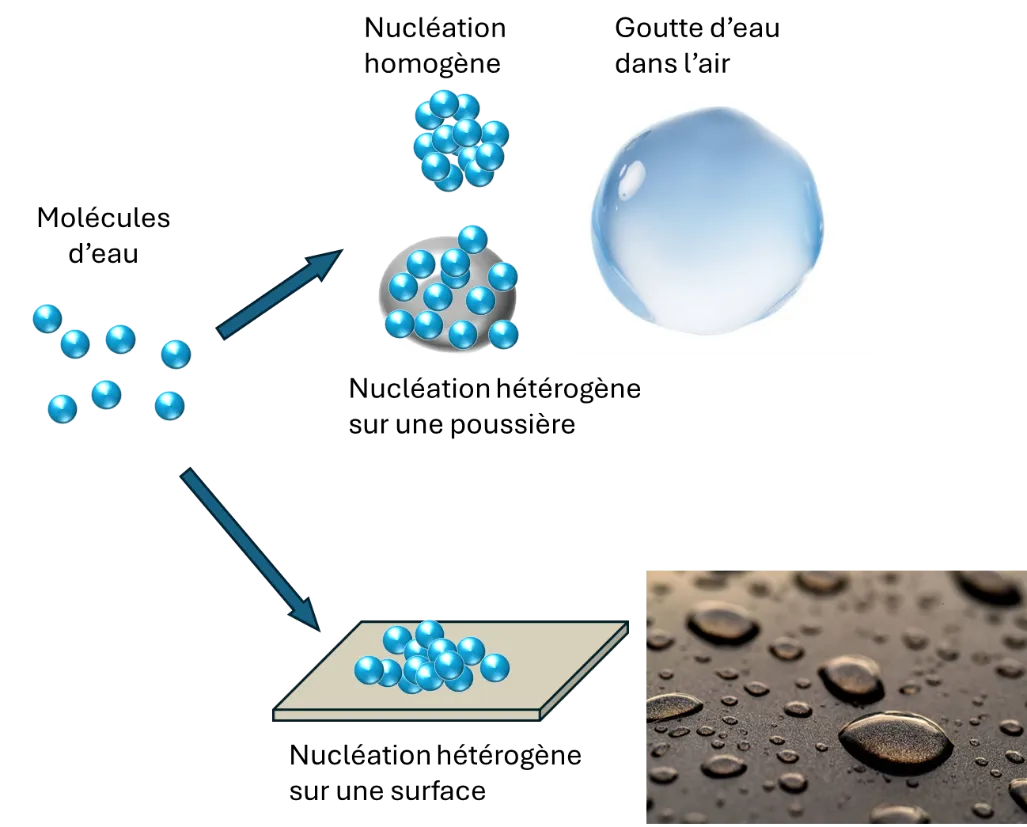
Air naturally contains water vapor. When vapor concentration exceeds a certain threshold, water molecules cluster together through a nucleation process that creates the initial droplets.
Two nucleation types exist:
- Homogeneous nucleation: Rare; involves only water molecules interacting with each other.
- Heterogeneous nucleation: Common; occurs when water vapor contacts solid surfaces like dust, pollen, or cold walls.
Examples include raindrops forming around particles in clouds and morning dew appearing on plants.
When does condensation occur?
Condensation happens when relative humidity reaches 100%, meaning air cannot hold additional moisture. Two conditions trigger this:
- Water vapor concentration increases in the surrounding air.
- Temperature drops, reducing air’s capacity to retain water vapor.
When warm humid air touches cold surfaces, the dew point is reached and water droplets form.
Why is condensation a problem in enclosed spaces?
In storage containers or poorly ventilated rooms, condensation can quickly become a humidity problem. When humid air touches cold walls or ceilings, water deposits as droplets.
Over time, this promotes:
- Corrosion of metal surfaces
- Degradation of stored materials
- Deterioration of cardboard and packaging
Controlling temperature and relative humidity effectively prevents these issues.
For sealed outdoor IP-rated enclosures, see our practical guide on how to prevent condensation in enclosures.
Condensation FAQ
What is condensation in short answer?
Condensation is water vapor turning back into liquid water. When humid air cools below its dew point — on a cold window, a metal enclosure wall or a container ceiling — the vapor it carries condenses into droplets.
Why does condensation happen?
Because cooling air loses its capacity to hold water vapor. When air, or a surface it touches, drops below the dew point, the excess vapor turns into liquid droplets. The two drivers are temperature swings and moisture sources — detailed in our guide to how condensation occurs.
Is condensation warming or cooling?
Condensation is a warming process: turning vapor into liquid releases latent heat, about 2,260 joules per gram of water. This released energy is what fuels cloud formation and storms. The reverse process, evaporation, absorbs heat — which is why sweating cools you down.
At what humidity does condensation occur?
When local relative humidity reaches 100 %. A cold surface can hit this saturation point locally even when the room average is far lower — that surface temperature is the dew point.
Summary
Condensation transforms water vapor into liquid when air becomes too humid or cools. It occurs everywhere: in nature, but also in enclosed environments like buildings and containers. Understanding this phenomenon is essential for preventing humidity problems and protecting sensitive surfaces.
Discover the So Sponge technology to fight humidity effectively and effortlessly.
So Sponge solution
Permanently stop condensation inside an IP enclosure
Classic desiccants saturate and must be replaced. So Sponge's SRD material regenerates spontaneously at room temperature: once installed, the AS-B sticker regulates internal humidity indefinitely, with no energy, no maintenance. Designed for IP65+ electronic enclosures.