Moisture control: methods that actually work in enclosed spaces
Moisture control is the set of methods used to keep the relative humidity of a space below the level where condensation, corrosion or mold appear — for most equipment and stored goods, below 60 % RH. The right method depends on one question: is the space ventilated, powered, or sealed?
Background reading: what is condensation and the relative humidity formula.
Why moisture builds up in enclosed spaces
Any enclosed volume — an IP-rated enclosure, an electrical cabinet, a shipping container — breathes with temperature swings. Warm air carries water vapor in; when the walls cool at night, relative humidity climbs until the dew point is reached and droplets form. Gaskets slow this exchange but never stop it: water molecules are small enough to migrate through most seals over weeks.
The four moisture control methods
1. Ventilation. Replacing humid inside air with drier outside air. Free and effective — when outside air actually is drier, and when the space may be opened. Useless for sealed enclosures, and counterproductive in humid climates.
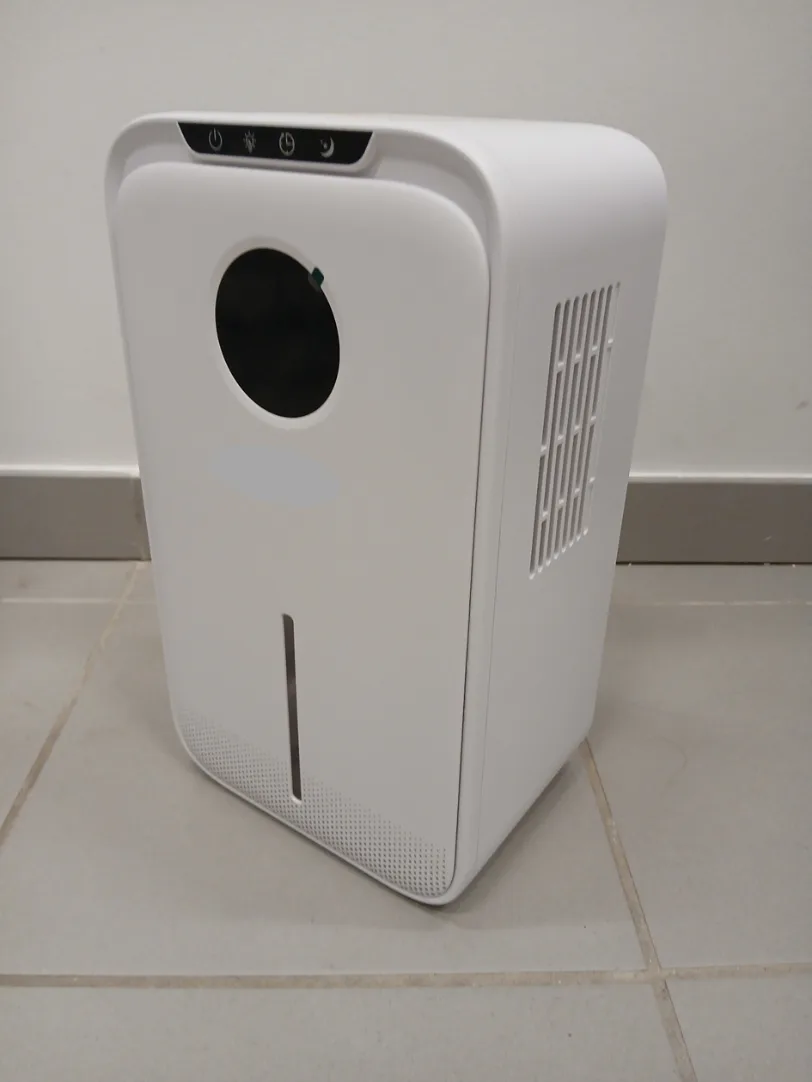
2. Heating and dehumidifiers. Raising temperature lowers relative humidity; condensing or desiccant-wheel dehumidifiers extract water actively. Both work well but need permanent power, maintenance, and space — realistic for buildings and large shelters, not for a 5-liter enclosure.
3. Desiccants. Materials that adsorb water vapor passively: silica gel, clays, calcium chloride and mineral porous materials. The only method that works in a sealed, unpowered volume. The classic limitation is saturation — sachets must be replaced every few weeks or months. Self-regenerating desiccants (SRD) remove that limitation: they release the adsorbed water back outside the critical hours and recover on their own, indefinitely.
4. Membrane vents. Breathable membranes (e.g. PTFE vents) equalize pressure and let vapor escape — they reduce how much moisture gets trapped but cannot dry the air below outside humidity. Best used in combination with a desiccant.
Choosing by type of space
- Sealed IP65+ enclosure (0.1–20 L) — desiccant only. A self-regenerating AS-B sticker regulates RH with zero power and no replacement.
- Electrical cabinet, container, self-storage (above 20 L) — desiccant strips sized to the volume: AS-C ribbon, or ventilation when the environment allows it.
- Buildings and living spaces — ventilation first, then dehumidification; keep 40–60 % RH.
Passive vs active: the economics
Active methods (heating, dehumidifiers) cost energy every day they run. Consumable desiccants cost replacement labor — often more than the product itself in industrial settings. A regenerating desiccant is the only zero-marginal-cost option: one installation, no energy, no consumable.
So Sponge solution
Moisture control without energy or maintenance
So Sponge's SRD material adsorbs water vapor above 60 % RH and regenerates spontaneously at room temperature. AS-B stickers for sealed enclosures, AS-C ribbons for cabinets and containers — zero power, unlimited lifespan, made in France.