Managing Humidity in IP65+ Enclosures

Understanding the mechanisms, evaluating solutions, and choosing the right approach for your environment

Understanding Moisture in IP65+ Enclosures

The Paradox of the Sealed Enclosure

An enclosure rated IP65 or above guarantees protection against liquid water in accordance with the IEC 60529 standard. This level of protection is often mistakenly interpreted as protection against all forms of moisture. However, the IP rating does not cover water vapour.

In any sealed volume subjected to temperature variations — day/night cycles, heat generated by electronic components, transportation — the internal air expands and then contracts. These pressure variations induce air exchanges with the exterior via seals, membranes, or micro-leaks. With each cooling cycle, water vapour is introduced and the internal relative humidity increases.

Beyond 60% relative humidity (RH), the risks of corrosion, leakage currents, and electronic failures increase significantly.

Liquid water (rain, projections, condensation or cleaning),
Dust and solid particles are likely to enter the housing.

The level of protection is indicated by two numbers after the mention IP (for example IP65, IP66 or IP67), which specify the resistance of the case against intrusions of solids and liquids.

Where do we find these boxes?

Humidity problems affect many electrical and electronic devices. Electrical installations may suffer damage due to humidity. Some components are particularly sensitive, such as junction boxes or electrical panels placed outside dampness damage. Some components are particularly sensitive, such as junction boxes or electrical panels placed outside.

Humidity is also a real problem for sensors and electronic devices, especially those that are subject to extreme weather conditions.

Our everyday objects contain more and more sensors: temperature, humidity, pH, movement, rain, pressure... the last few years have seen an explosion in the number of connected objects.

The same trend is visible in the professional context, where processes are increasingly automated and where data acquisition is becoming widespread in all fields (agriculture, biotechnology, museums, museums, medical, automotive, etc.).

Sensors subject to climatic hazards

Rain sensors
outdoor motion detection cameras
pool pH sensors
humidity detectors

Other devices containing electronics are also particularly affected by humidity problems: outdoor lights, drones,

Why does condensation occur despite a waterproof IP box?

Why do these devices, although equipped with waterproof boxes certified by the IP standard, still encounter condensation problems? To understand, it is necessary to analyze:

The limits of IP boxes,
The mechanisms of humidity in the air,
The dew temperature phenomenon,
And the right humidity control solutions.

The limits of IP boxes

IP boxes do not guarantee airtightness. Air and water vapor can flow slowly through: do not guarantee airtightness. Air and water vapor can flow slowly through:

The joints,
Cable transits,
Assembly defects,
Mechanical wear.

Even an outdoor waterproof electrical box can therefore let moisture in gradually.

Why is watertightness deteriorating?

Temperature variations → internal pressure variations,
Mechanical constraints,
Contact with chemical products,
Frequent openings.

The more a watertight electrical junction box is handled, the more the risk increases.

The Challenge of Humidity in Sealed Systems

When the device is placed in a humid area, ambient humidity eventually penetrates.

Example

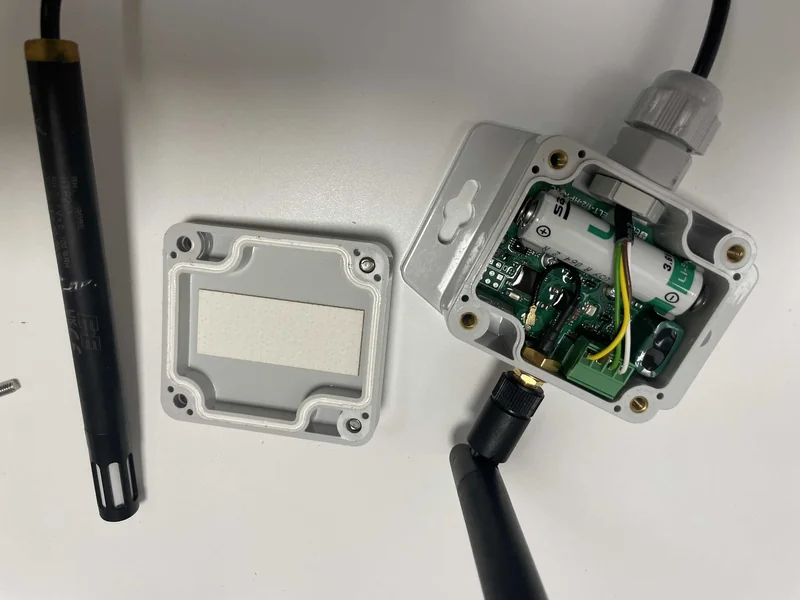
This sensor has one probe inside the housing and another one outside. It is therefore very easy to assess air exchange by comparing the humidity inside and outside the case.

Over the long term, we can see that indoor humidity follows the same trends as outdoor humidity: the case is therefore not completely waterproof. On the other hand, a closer look at a few days shows that the exchange is very slow.

Our laboratory tests show

Internal relative humidity follows external variations,
The exchange is slow but continuous,
No standard IP box is completely airtight.

Result: the concentration of water vapor increases in the confined volume.

Silica Gel vs SRD: Comparative Analysis

This section provides a factual comparison between classic silica gel and SRD technology, including configurations where silica gel remains the most appropriate choice.

Compared Adsorption Curves

The graph below illustrates the behaviour of both materials across the full range of relative humidity. The red zone (70–100% RH) corresponds to the critical range for electronic reliability.

For a given level of relative humidity and temperature in a box, it is very easy to calculate below what temperature condensation forms: Relative humidity and temperature in a box, it is very easy to calculate below what temperature condensation forms:

°C
0°C100°C
%
10 %100 %
Point de rosée (Tr)
°C

Behaviour in the Critical Zone (70–100% RH)

The IP standard does not guarantee airtightness,
Joints may deteriorate over time
Humidity from the air may enter the enclosures

Consequences of humidity in an electronic device

The effects of moisture on electronic systems manifest through several distinct mechanisms:

Directs

Corrosion,
Short circuits,
Component failure.

Indirect

Fog on screens or cameras,
loss of optical performance,
Degradation of solar panels,
Sensor malfunction.

Conclusion

Poor humidity control significantly reduces the life of equipment.

Humidity Mitigation Solutions: Overview and Limitations

Traditional Desiccants: Silica Gel

Silica gel is the most widely used and best-documented solution. It is particularly effective in the following configurations: stable-temperature environments, indoor applications, systems subject to planned maintenance, and storage or transport phases.

Its limitations become critical in thermally unstable environments: very low residual capacity beyond 50% RH, irreversible saturation without external heating, and progressive drift in the absence of regeneration.

The thermal expansion coefficients of solder joints are very different from those of varnishes, generating mechanical stress when the system is subjected to temperature cycles. This can happen when the internal components of the device generate heat, or when the device experiences regular external temperature changes. It is interesting to note that the failure of tropicalization varnishes is therefore favored by significant and rapid thermal variations, which are precisely favorable conditions for the appearance of condensation.
It does not prevent condensation from damaging the other components of the system.

Breather Vents and Pressure Equalisation Membranes

To avoid condensation, the most obvious solution is to heat the inside of the case to reduce relative humidity.
However, it is a solution that is difficult to implement in small volumes and involves risks: if the heating is poorly controlled, the temperature can damage the components.

Internal Heating, Ventilation, and Coatings

Pressure compensating plugs (or pressure balancing plugs) are commercially available, sometimes sold as “anti-condensation”. Attention, these plugs above all limit the wear of the joints, but have no immediate effect on condensation.

Discover the proof in pictures “How to avoid condensation in electrical boxes?”“How to avoid condensation in electrical boxes?”

Silica gel

Silica gel is a very effective and inexpensive desiccant that adsorbs water vapor. In a perfectly airtight environment, it is therefore very effective. Silica gel is a very effective and inexpensive desiccant that adsorbs water vapor. In a perfectly airtight environment, it is therefore very effective.

The disadvantage of silica gel is that it loses its adsorption capacity for when the relative humidity is greater than about 70%. When humid air enters the housing, the silica gel is saturated and becomes inactive.

Moreover, silica gel is marketed in the form of beads contained in bags. For moving objects, the bags will move and potentially damage the internal components of the case.

Sustainable solution: Air Sponge AS-B

The patented AS-B product was designed to avoid condensation under extreme conditions: AS-B patented product was designed to avoid condensation under extreme conditions:

High humidity outside,
rapid temperature drop,
Repeated thermal cycles.

It works as a passive humidity regulator, without energy, without maintenance.

Why is it more efficient than silica gel?

Strong adsorption capacity at high relative humidity
Efficiency maintained beyond 70% RH,
Spontaneous regeneration around 70% humidity,
No permanent saturation.

Limits the risks associated with joint wear

The AS-B product is also a risk limiter in the event of liquid water entering the housings, for example in the event of seal wear. It will in fact very significantly accelerate the evaporation of water and thus make it possible to extract liquid water much more quickly.

A sustainable product

The AS-B product can withstand extreme temperature and humidity conditions. It was subjected to the laboratory at temperatures between -25°C and 110°C and to humidity levels between 8% and 100% without any degradation being observed.

Integration into devices

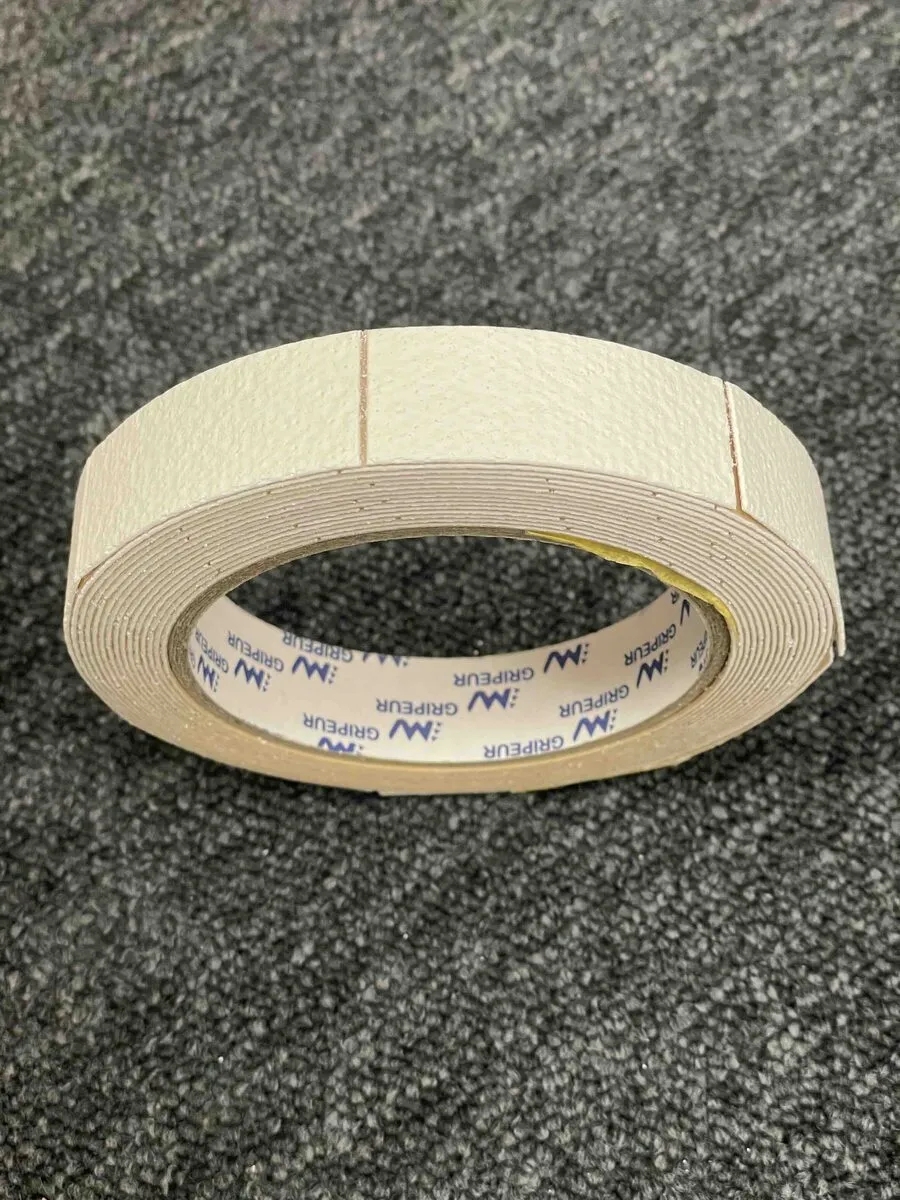
AS-B labels are:

Self-adhesive,
Available in several formats,
Adapted to waterproof electrical boxes,
Compatible with small and large volumes.

Synthesis

Humidity in electronic devices is a structural problem:

IP boxes are not airtight,
The water vapor penetrates slowly,
Condensation occurs during temperature drops.

Real control of internal humidity is essential to avoid the deterioration of equipment.
Air Sponge AS-B is a sustainable and passive solution, suitable for demanding industrial environments.

Discover the AS-B product

Your guide is unlocked!

The guide "Managing Humidity in IP65+ Enclosures" is now available. The So Sponge team wishes you happy reading!

READ THE GUIDE NOW